
HIGHLAND, UTAH · UTAH COUNTY
Rooval Roofing Serving Highland, Utah — Licensed, Local, Lehi-Based
Highland homes deal with a combination of canyon wind, winter snow, ice, and strong high-elevation sun. Rooval Roofing is based in nearby Lehi and serves Highland homeowners with roof repairs, replacements, storm-damage work, inspections, and maintenance.
Whether you are dealing with a leak, missing shingles, storm damage, or an aging roof, the first step is understanding what condition the roof is actually in. Our inspections are designed to document what we find so you can make an informed decision about repair, replacement, or maintenance.
⭐⭐⭐⭐⭐ 5.0
Google Reviews
Licensed & Insured
Utah GC Lic. #13861046-5501
10+ years
Serving Utah County
55+
Roofs Completed
Roofing Engineered for Highland's Snow, Wind, and Fire Code
Highland sits at the mouth of American Fork Canyon, with its eastern neighborhoods climbing the bench toward the mountain. Design wind speed here is the same 103 mph that applies across this part of Utah County. What sets Highland apart is snow, a newly adopted wildfire code and map, and a housing stock built mostly in the 2000s. At City Hall’s 4,899-foot elevation, the ground snow load is 54 lb/ft², well above the valley floor, and it climbs further on the upper bench.
103 mph
Ultimate design wind speed at Highland City Hall (ASCE 7-22, Risk Category II)
54 lb/ft²
Ground snow load at Highland City Hall, 4,899 ft (ASCE 7-22 Hazard Tool)
2024 IWUIC
Wildfire code Highland adopted July 7, 2026, with its WUI map
2021 IRC
Adopted residential code governing your re-roof permit
Ice barrier coverage we install to code
With 54 lb/ft² of ground snow at City Hall and more on the bench, ice dams at the eaves are a regular Highland winter problem. Utah’s residential code (R905.1.2) requires an ice barrier, either two cemented underlayment layers or a self-adhering membrane, from the eave to at least 24 inches inside the exterior wall line, and at least 36 inches up the slope on roofs pitched 8:12 or steeper. We install to this spec on every Highland re-roof.
Permits pulled through Highland City
Highland requires a permit whenever a roof is added, removed, or changed. Permits go through the Building Division at Highland City Hall (5400 W Civic Center Dr, 801-756-5751), under the adopted 2021 International Residential Code. We pull the permit and schedule the inspections so an unpermitted re-roof never becomes a problem when you sell.
Highland's new Wildland-Urban Interface code
On July 7, 2026, the City Council voted 5-0 to adopt the 2024 International Wildland-Urban Interface Code and a state-approved WUI map, both taking effect January 1 to line up with state law. City staff and the fire chief told the council the code isn’t retroactive: existing homes don’t have to retrofit, and when an owner builds an addition, only the new or changed portions must comply. New construction in the mapped area also needs fire sprinklers. If your home is in the mapped area, we check with the Building Division whether your re-roof counts as work that must meet the WUI roof rules before we recommend materials.
Highland's Sensitive Lands rules and steep bench lots
Chapter 8 of Highland’s Development Code, “Sensitive Lands” (Ordinance O-2023-20), governs building on the steep bench and foothill lots along the city’s eastern edge. Section 8-105 bars development on slopes over 25% and within a 50-foot setback of slopes over 40%, and the chapter requires extra analysis for property with slopes over 15%. These rules target new development rather than re-roofs, but they explain why so many east-side lots are steep, which affects access, staging, and safety setup on a replacement.
Is Your Highland Roof Reaching the 20-Year Mark?
Highland’s median home was built in 2004, and about 36% of the city’s housing units went up between 2000 and 2009. Any original roof from that building boom is now 17 to 26 years old, and those roofs are aging on roughly the same schedule across a large share of Highland’s subdivisions.
17–26 yrs
Age of any original roof installed during that 2000–2009 boom that has never been replaced.
What to look for on a 2000s-era Highland roof
Granule loss, brittle or curling shingle tabs, and flashing leaks at dormers and valleys are the common signs we see on original builder-grade roofs from Highland’s boom years. A free inspection tells you whether you’re looking at a repair or a full replacement.
Complete Roofing Services in Highland, UT
Every service starts with an evaluation of the roof and a clear explanation of what needs to be done.
Roof Replacement
Full tear-off with fastening built for Highland’s 103 mph design wind speed, ice barrier to R905.1.2, and Class A fire-rated assemblies where the WUI code applies.
Roof Repair
Leak tracing, flashing and pipe boot repair, and ice dam damage restoration for the boom-era roofs common across Highland’s 2000s subdivisions.
Metal Roofing
Standing seam and stone-coated steel systems that shed Highland’s heavy bench snow, with Class A fire-rated assembly options for properties in the mapped WUI area.
Roof Tune-Up & Maintenance
Pipe boot replacement, flashing resealing, nail pop repair, and attic airflow checks, especially valuable for original 2000s-era roofs nearing the end of their service life.
Gutters & Drainage
Seamless gutters and downspouts sized to carry spring snowmelt away from the foundation, with heat cable at the eaves where ice dams keep coming back, and noncombustible gutter materials for homes in the mapped WUI area.
Tile & Slate Roofing
Clay, concrete, natural and synthetic slate, with a structural dead-load check first, since Highland’s ground snow load starts at 54 lb/ft² at City Hall and rises on the bench.
Storm Damage Restoration
Hail and wind damage inspection with date-stamped photo documentation for your insurance adjuster. We work for you, never the insurer.
Flat & Low-Slope (TPO/PVC/EPDM)
TPO, PVC, and EPDM membranes with tapered insulation for garages, additions, porch roofs, and light commercial buildings, sloped so snowmelt drains instead of ponding and refreezing.
Free Roof Inspection
A full on-site evaluation with a photo report and an honest repair-or-replace recommendation, no obligation.
5.0 ⭐⭐⭐⭐⭐ from Google Reviews
Utah GC Lic. #13861046-5501
Posted on Google
 Kendall Hawkins
Trustindex verifies that the original source of the review is Google.
We had leaks at our commercial warehouse bldg and Matthew jumped right on it for me, same day fix and was a great communicator throughout (texts and pictures etc). He helped me out and now is on my shortlist for roofers in the valley. Would recommend Rooval!Posted on Google CaseyWe had a roof leak and Matt was quick to respond and came out the next morning. He didn't try to pitch a whole roof replacement or anything he didn't think was necessary and the pricing was fair. I would recommend Rooval for a quick inspection/repair.Posted on Google
 kaden pieksmaMatthew and his team are extremely timely, easy to work with, knowledgeable, and offer competitive pricing. I would recommend them for any roofing needs.Posted on Google
 Stan JensenI was quite impressed with Matthew. He sent me a text to let me know he was on his way and he was actually on my doorstep probably less than one hour after I contacted them. We had a mystery roof leak that was dripping water through a can light in our hallway each time we've had a downpour of heavy rain. He quickly diagnosed the problem, made the repairs, checked in my attic for residual moisture, and left me with a warranty, and all was done in probably less than a couple of hours. He was very personable and pleasant to work with. I have confidence I don't need to worry anymore whenever we get a heavy rainstorm!Posted on Google
 Kara AdamsIf you need any roofing stuff done I would definitely recommend this company because of their great employees , especially Matt. He was very helpful and super nice. If we have any roofing problems in the future I will definitely come back to this company. I will definitely be putting this company number as a contact in my phone.Posted on Google
 Rob DuffinExperienced and honest. Highly recommend!Posted on Google
 Ben ChandiaMatthew is one of the best at what he does. He takes the extra time to go through and educate you on the reality of your situation and will then give you the best option available. He's a true pro and great at what he does.Posted on Google
 Landon TolmanMatthew, is a stellar guy Definitely someone you can trust doing business with!Posted on Google
 Oriana GrandiaHere's the deal, we made a mistake. We didn't go with Rooval Roofing for our new roof and we are regretting it now. We picked a company that wasn't as highly rated, but was a bit cheaper. We got what we paid for. Our roof has numerous issues and we aren't happy. We talked with Rooval and even though we didn't contract them for our roof they are still nice enough to help fix the problems we are having. This is a classic example of "you get what you pay for" so if you're on the fence I hope this review sways you in the right direction, and Rooval Roofing is the right choice! The company and its employees are first class. Don't make the mistake we did. The shortest road is always the longest.Posted on Google
 Rob OckeyGreat service, quick and reasonable pricing. Would call back if needed.
Highland Neighborhoods, HOA Review, and the WUI Map
Highland’s roofing needs vary by neighborhood, both for HOA architectural review and for whether a property sits inside the city’s mapped Wildland-Urban Interface area. We help you work through both.
HOA architectural review
Many Highland subdivisions have HOAs whose CC&Rs require architectural approval of shingle color, material, and profile before a re-roof begins. Check your HOA’s documents first. We supply the product specs, sample boards, and color documentation your HOA packet needs, but approval comes from your HOA, not from us.
The eastern bench neighborhoods
The neighborhoods along Highland’s eastern edge sit closest to the canyon mouth and the mountain. They have the steepest lots, snow loads that rise with elevation, and, in parts of the area, the mapped WUI boundary.
Do you live in Highland's mapped WUI area?
According to the July 7, 2026 council minutes, the adopted map covers three areas rated at the state’s risk level 5 or higher: the Beacon Hill/Twin Bridges area, a portion of Sky Estates near the clubhouse, and the eastern portion of the Viewpoint subdivision along the mountain. Under the city code, if any part of a lot is inside the mapped area, improvements on that lot must meet the WUI code. Ask us and we’ll help confirm whether your property falls inside the boundary.
Two Roofs We Were Called Out To
These two recent projects from Highland and nearby Utah County neighborhoods show how we inspect, evaluate, and solve different roofing needs.
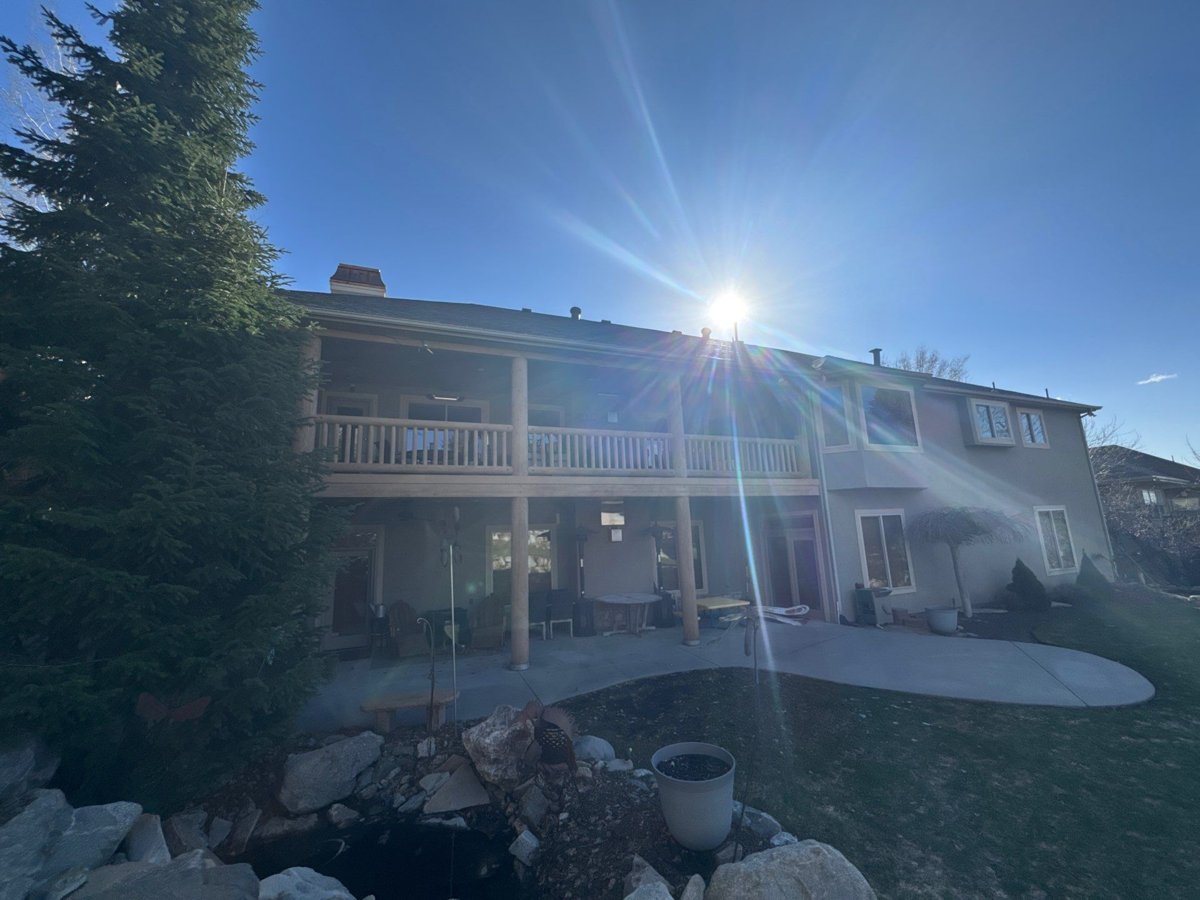
Highland, UT · 2026
Sometimes it really is just a repair
A Highland homeowner called after a windstorm blew shingles into their yard. Our inspection found that only a few shingles were missing and the rest of the roof was in good condition. We replaced the missing shingles with matching materials, saving the homeowner from an unnecessary full replacement.
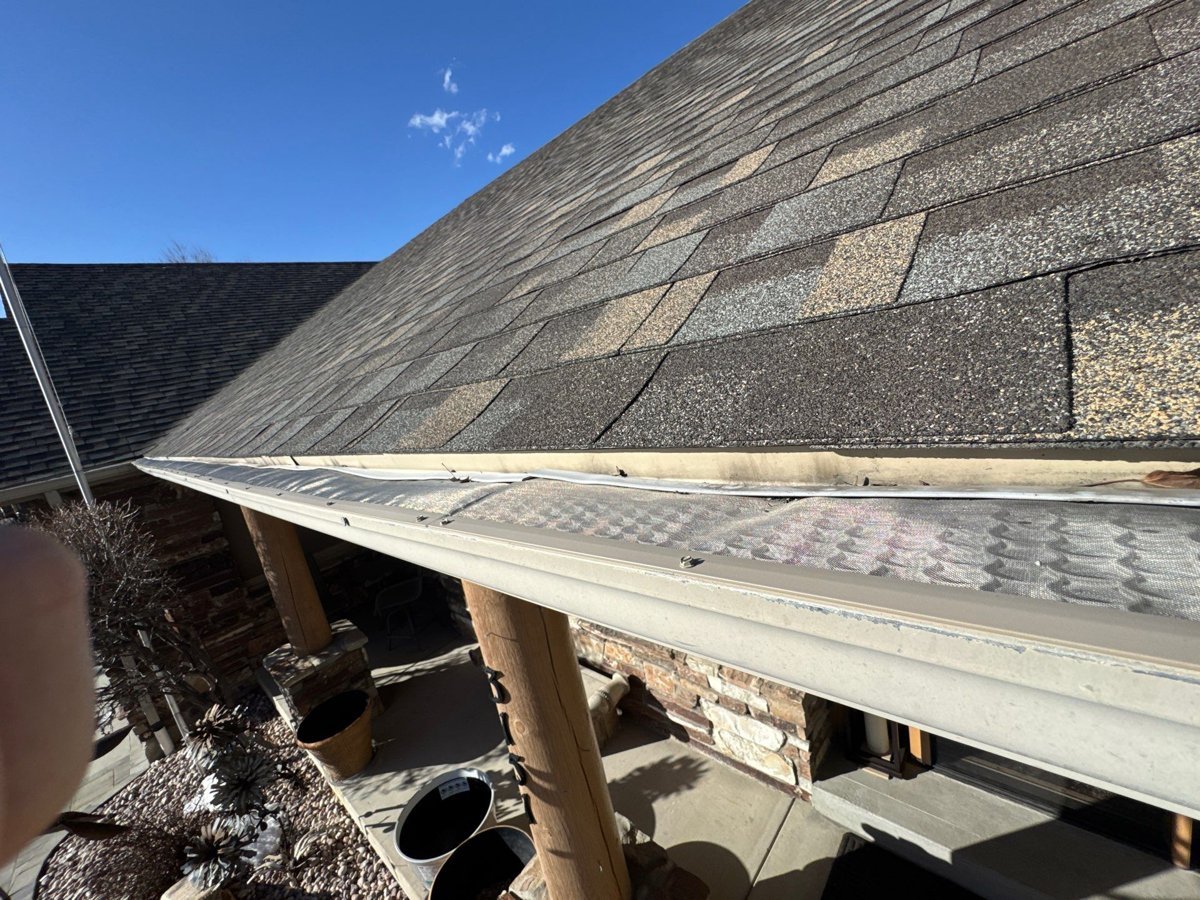
Highland, UT · 2026
Over Half The Roof Was Gone
A major storm stripped away more than half the shingles on this Highland home. We documented the storm damage with clear photos of all roof slopes, checked the interior attic space for leaks, and provided the homeowner with a complete report to submit directly to their home insurance company.
How We Handle Your Highland Roof, Start to Finish
Every Rooval inspection follows four simple steps, so you receive clear facts about your roof:
01
Free On-Site Inspection
We inspect the roof and attic, photograph all elevations, and check for the wear patterns common on Highland’s original 2000s-era roofs and snow-load stress on bench-lot homes.
02
Firm, Written Quote
An exact, itemized price before any work begins, with no hidden fees and no surprise change orders.
03
Permits, HOA Paperwork, and WUI Confirmation Handled Where Required
We submit through Highland City’s Building Division, confirm whether your address falls in the mapped WUI area, and assemble your HOA architectural review packet. Highland books inspections Monday through Thursday through its online portal or by phone, and at least 24 hours ahead. We handle the scheduling.
04
The Work
Tear-off, deck repair where needed, ice barrier installed to R905.1.2, and precision installation using materials rated for Highland’s design wind speed, including Class A fire-rated assemblies for WUI-mapped properties.
05
Magnetic Cleanup and Walkthrough
Magnetic nail sweep of your yard and driveway, a final roof walkthrough with you, and a written workmanship warranty.
You receive a complete photo record so you can see exactly what we see.
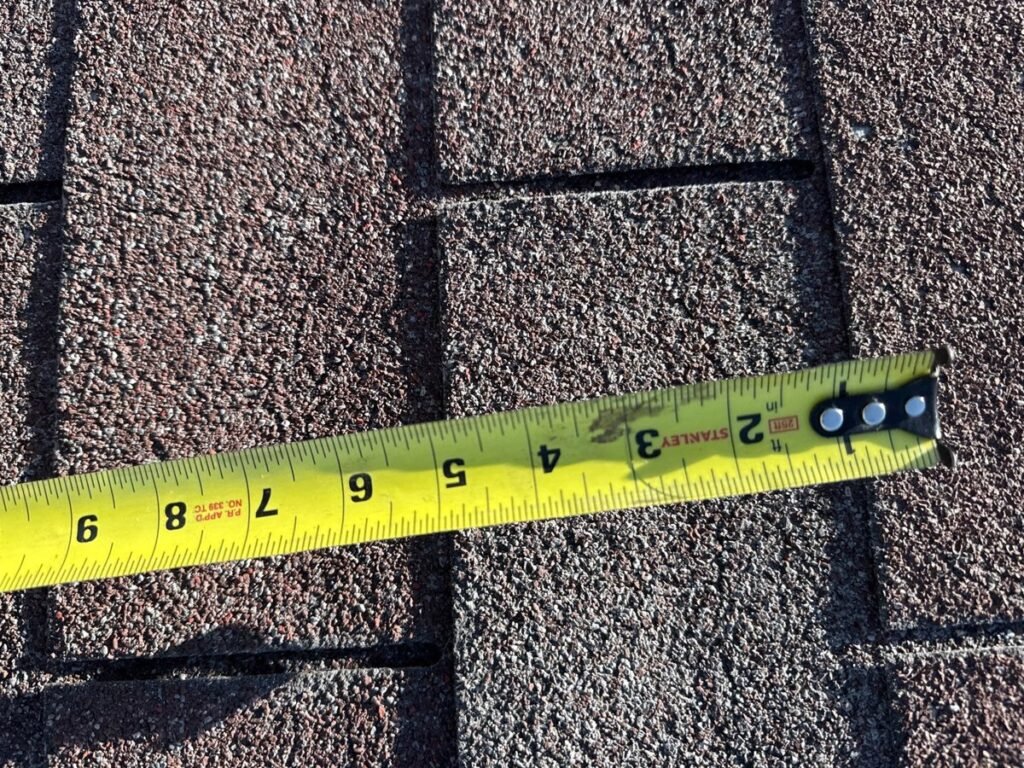
Measuring and documenting damage on site
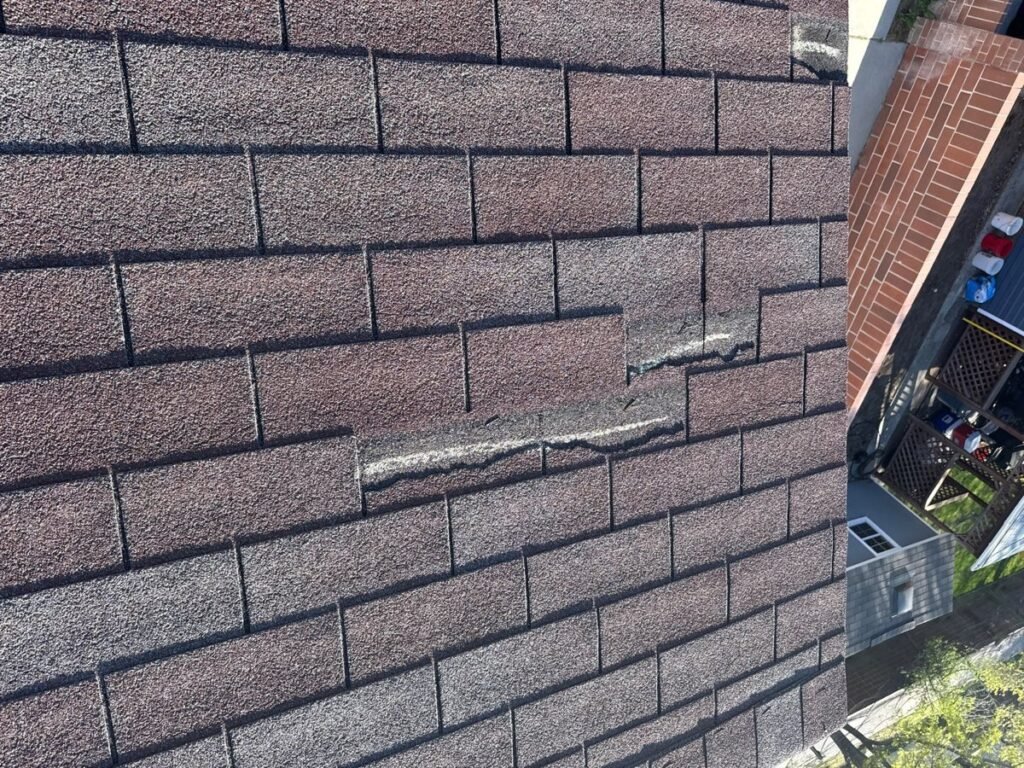
A cracked shingle found during inspection
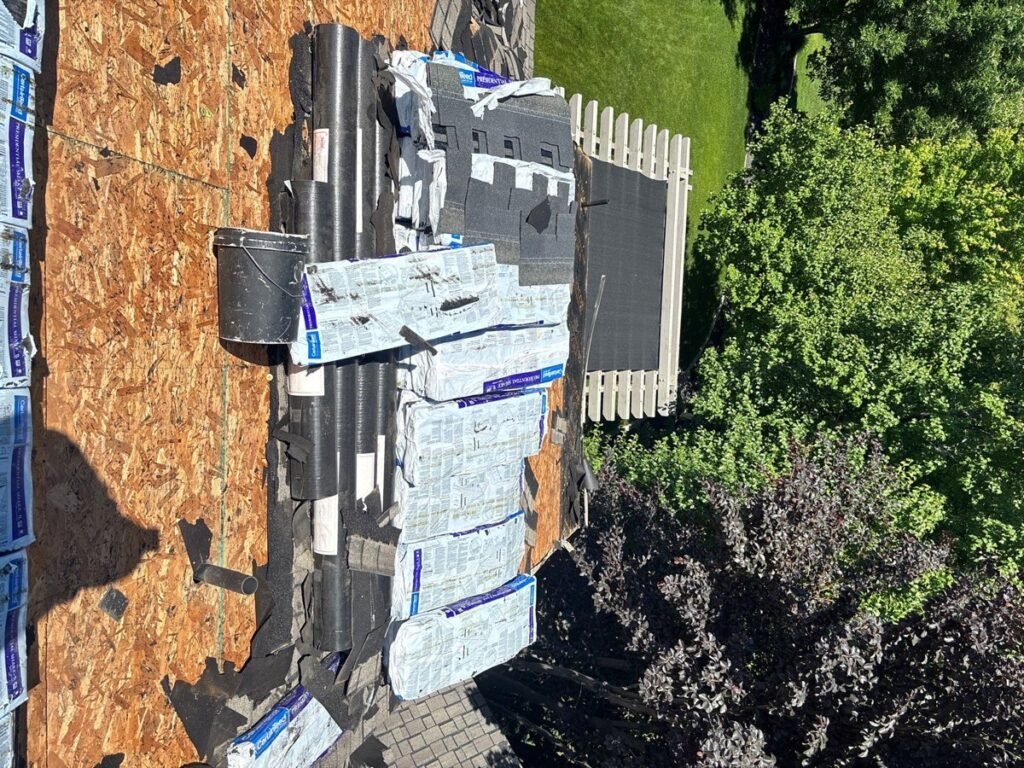
Deck exposed and underlayment going down
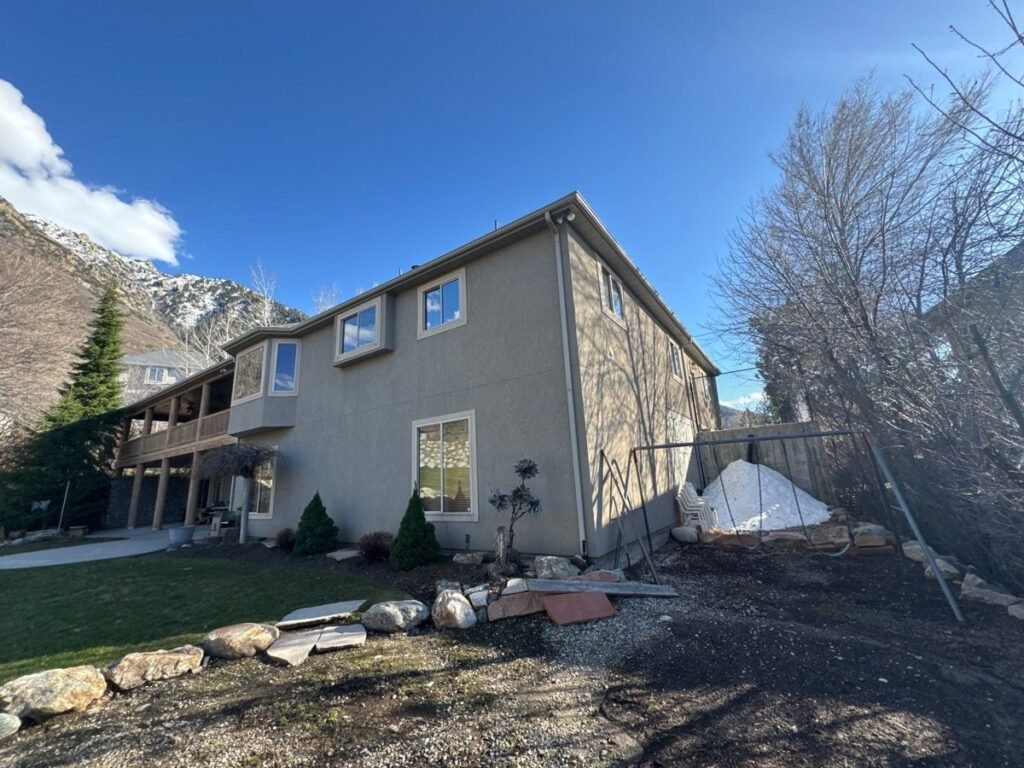
Property protected during the visit
After a Wind or Hail Storm
If wind or hail hits Highland, damage isn’t always visible from the ground. During an inspection, we photograph the roof slopes and document visible damage so you have a dated record of what was found. If the damage is related to a storm, that documentation can also help you keep organized records for an insurance claim.
Why Homeowners Choose Rooval Roofing
01
Licensed & Insured
Utah GC License #13861046-5501, verifiable with the Utah Division of Professional Licensing, fully licensed and insured for every job in Highland and Utah County.
02
Permits Pulled Where Required
We pull all necessary Highland City permits and schedule required inspections as needed for your project scope.
03
Documented Inspections
Every inspection includes dated photos you keep, not just a verbal opinion.
04
HOA Paperwork Assistance
We prepare and submit HOA architectural review documentation for Highland subdivisions when needed.
05
WUI-Compliant Materials on Request
Class A fire-rated assemblies and ember-resistant venting for homes in or near Highland’s mapped WUI area.
06
Workmanship Warranty
Written warranty on every repair, replacement, and installation we complete.
07
Flexible Financing
Monthly payment plans available for unexpected repairs or full replacements. See our financing page.
08
We Work for You, Not the Insurer
We provide full photo documentation for your adjuster and never ask you to sign over your insurance claim.
Meet the Duo Behind Rooval Roofing

Matthew Thompson
Owner
Matthew has spent most of his life in construction and started Rooval Roofing around a simple idea: homeowners deserve clear answers and respectful treatment when dealing with one of the most important parts of their home.
He still gets on roofs himself because staying close to the work matters.

Agustina Thompson
Co-Founder
Agustina manages scheduling, materials, and daily business operations, helping keep projects organized from the first conversation through completion.
“Want to learn more about our team? Read our full story, license information, and crew details. Meet the full Rooval Roofing team →“
What Determines Your Roof Price in Highland
There’s no flat rate for a roof: Highland’s mix of valley-adjacent and bench-elevation homes, plus the WUI code in some neighborhoods, means every quote is based on your specific roof, not a one-size price. These are the real factors that set your number:
Size and Pitch
Total square footage, slope steepness, and height directly set labor, staging, and material quantity.
Deck Condition
How much rotted or water-damaged plywood/OSB is found once old materials are stripped, disclosed at a clear per-sheet rate before replacement. This is common on original 2000s-era decking.
Material Tier
Standard architectural shingles vs. Class 4 impact shingles, metal, or tile, each with a different install and warranty tier.
WUI Area Status
If your lot is inside Highland’s mapped WUI area and the work falls under the WUI code, fire-rated roof materials can be required, which costs more than a standard replacement. We confirm this before quoting.
You’ll get a firm, itemized written price after your free on-site inspection, with no guessing from the street.
Frequently Asked Questions: Roofing in Highland, UT
Do I need a permit to replace my roof in Highland?
Yes. Highland City’s building FAQ says a permit is required whenever a roof is added, removed, or changed. Permits go through the Building Division (5400 W Civic Center Dr, 801-756-5751) under the adopted 2021 International Residential Code, with fees based on the job’s valuation. We pull the permit and coordinate the required inspections.
How does Highland's new Wildland-Urban Interface code affect my roof?
On July 7, 2026, Highland adopted the 2024 International Wildland-Urban Interface Code and a WUI map covering the Beacon Hill/Twin Bridges area, part of Sky Estates near the clubhouse, and the eastern Viewpoint subdivision. It takes effect January 1. According to the council minutes, the code isn’t retroactive, so existing homes don’t have to retrofit, and additions only need to bring the new or changed portions into compliance. If your home is in the mapped area, we confirm with the city whether your re-roof must meet the WUI roof requirements before choosing materials.
My Highland home was built in the early 2000s. Do I need a repair or a full replacement?
You’re in good company: Highland’s median home was built in 2004, and about 36% of its housing units date from 2000 to 2009. An original roof from those years is now 17 to 26 years old. Some still have life in them and some don’t, and a free inspection tells you which one you have.
Will Rooval handle my Highland HOA's architectural review process?
Yes, where your HOA requires one. Many Highland subdivisions need Architectural Review Committee approval on shingle color, material, and profile before work begins. We supply the product specs, sample boards, and documentation for your packet and adjust the order if the committee asks for changes.
How can I check that a Highland roofer is licensed?
Look the company up on the Utah Division of Professional Licensing search before you sign anything. Roofing work in Utah requires a state contractor license. Ours is Utah GC License #13861046-5501.
How do Highland's snow and wind affect what roof I need?
The ASCE 7-22 Hazard Tool puts Highland City Hall at a 103 mph design wind speed and a 54 lb/ft² ground snow load, and snow loads climb higher on the eastern bench. Snow is usually the bigger factor here. It drives ice-barrier coverage, deck and fastening choices, and whether a heavy material like tile needs a structural check first.
How do I choose a roofing contractor in Highland?
Start with things you can check yourself: our 5.0 Google rating, our Utah GC license (#13861046-5501), 10+ years working in Utah County, and 55+ completed roofs. Then ask any contractor you’re considering for a written, itemized quote and dated inspection photos, and compare them side by side.
How do I book a free roof inspection in Highland?
Use our online booking form or call (385) 424-8810. You’ll get a roof and attic inspection, dated photos of what we find, and a plain answer on whether you need a repair or a replacement.
Get Your Free Roof Inspection In Highland, UT
Whether you’re dealing with a leak, storm damage, or an aging roof, start with a documented inspection and a clear assessment of your options.
★ ★ ★ ★ ★ 5.0 · 34 Google Reviews Utah GC Lic. #13861046-5501