Call us today for a free estimate. +1 (385) 424-8810
Call us today for a free estimate. +1 (385) 424-8810
Call us today for a free estimate. +1 (385) 424-8810

Last updated: July 2026
The Straight Answer
Wind, not hail, causes the most roof damage in Utah County, and it doesn’t take a headline storm to do it — an ordinary windy afternoon along the Spanish Fork Canyon corridor can crease and lift shingles just enough to let water in later. That quiet, cumulative damage is the real story here, more than any single storm event. If your shingles look creased, lifted, or slightly out of place rather than dimpled, wind is almost always the explanation, not hail.
Utah County sits right in the path of some genuinely strong canyon winds — the Spanish Fork Canyon corridor in particular funnels gusts that catch a lot of people off guard, especially if they moved here from somewhere calmer. Those winds don’t need a dramatic storm to do damage. A regular windy afternoon, the kind that barely makes the news, can be enough to lift and crease shingles over and over until a roof is quietly compromised — long before anyone notices a leak.
That’s the part that trips people up. Hail damage announces itself — dimples and bruising you can usually spot without much trouble. Wind damage is sneakier. It shows up as shingles that look creased, lifted at the edges, or just slightly out of place, and it’s easy to glance at a roof and see nothing wrong at all. Nobody puts “check the roof after a windy day” on their to-do list — but around here, it’s honestly worth adding.
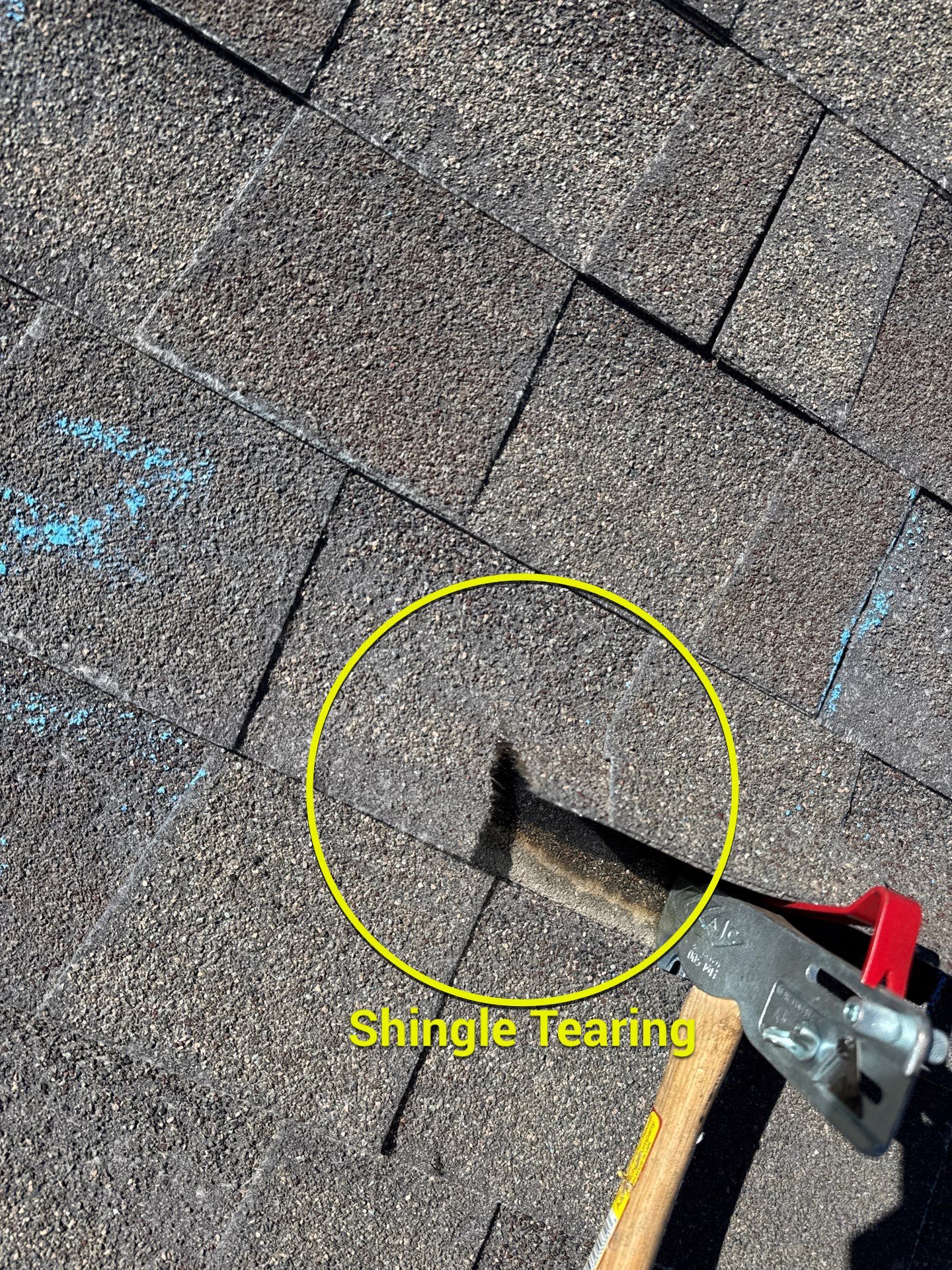
When wind gets under the edge of a shingle, it flexes it — sometimes just once, sometimes over and over on the same windy days. That flexing creates a crease, a visible line where the shingle has bent and started to lose its seal. A lifted shingle is one that’s been pried up enough that it isn’t lying flat anymore, even if it hasn’t blown off completely.
Neither of those is cosmetic. A creased or lifted shingle doesn’t seal the way it’s supposed to, which means water has a way in that wasn’t there before. It doesn’t have to be dramatic — a small crease today can turn into a real leak after enough freeze-thaw cycles or enough windy afternoons stacked on top of each other.
Plenty of Utah County and Salt Lake valley roofs are still carrying damage from the September 2020 windstorm, whether the homeowner realizes it or not. That storm tore through with hurricane-force gusts and left a trail of lifted shingles, missing sections, and creased roofing across the valley — and because wind damage doesn’t always announce itself right away, some of it has been quietly aging under the radar for years. If your roof hasn’t been looked at since 2020, that’s reason enough on its own to have someone take a look.
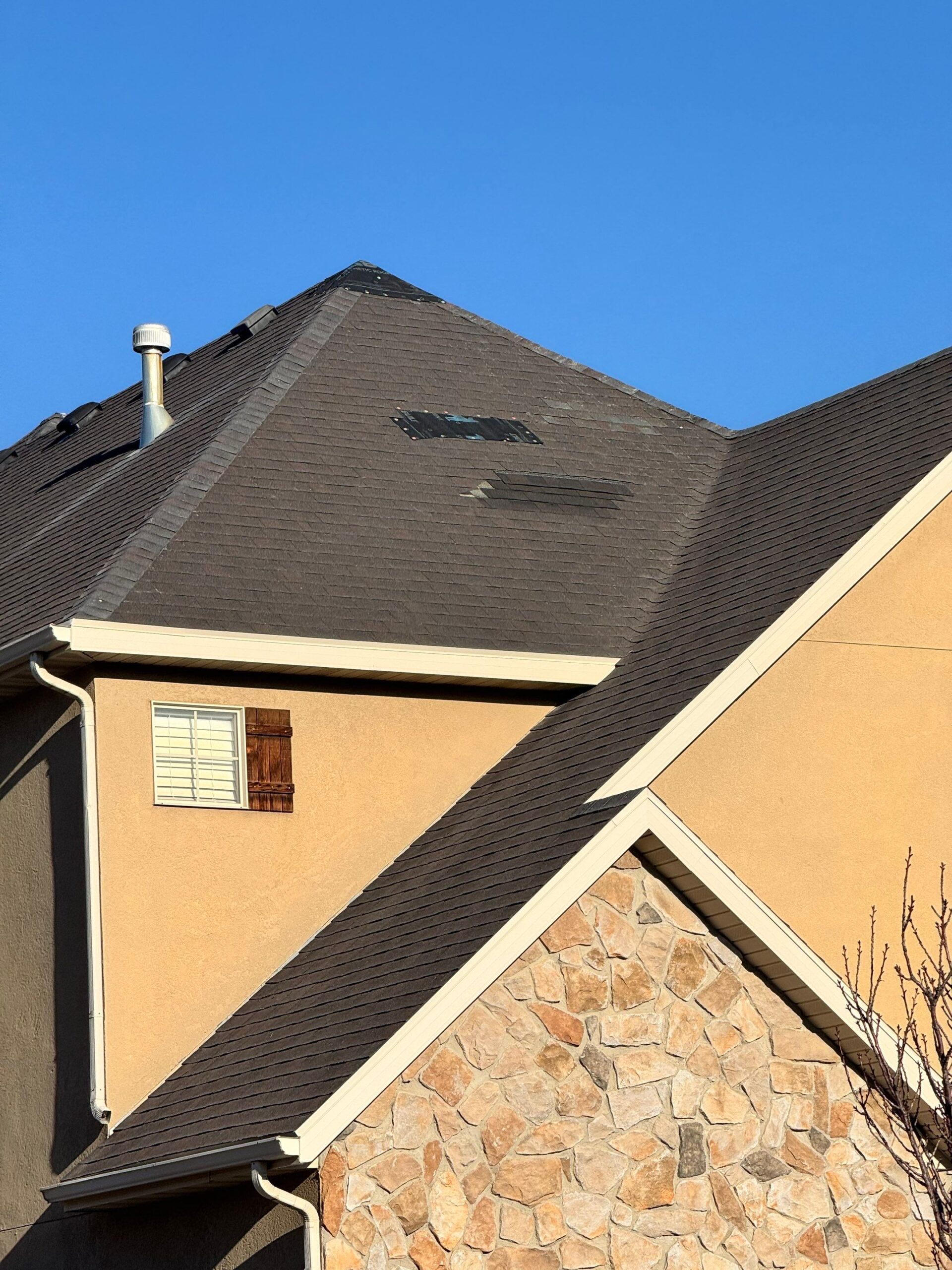
You don’t need to climb up on the roof to get a decent read on things. From the ground, with a pair of eyes and maybe some binoculars, look for:
If any of that looks off, it’s worth a second opinion from someone who knows what they’re looking at. We’d rather tell you your roof is fine than have it surprise you next spring.
Wind doesn’t get the same reputation hail does, but around Utah County it’s the one doing most of the quiet damage — creased shingles, lifted edges, and roofs that have been carrying 2020-windstorm damage without anyone ever taking a second look. If a windy week has you wondering about your own roof, that’s a good instinct to listen to.
You also don’t need to pay for the whole thing out of pocket if something needs fixing. A lot of our neighbors choose to get a new roof on our money — easy financing, friendly terms, no need to drain your savings over something the wind did, not you. Call or text us at 385-424-8810, or get a straight answer on your roof — no cost, no obligation, just an honest look at what your project needs, and financing options if you want them.
For more on knowing when it’s actually time to replace your roof, see our guide: Signs Your Roof Needs Replacing in Utah.
Hail leaves round dimples or bruising you can usually spot on sight. Wind damage shows up as creased, lifted, or missing shingles — often less obvious, but just as likely to let water in over time.
Yes. Utah County’s canyon winds can do real damage on an ordinary windy day, no storm warning required. That’s exactly why it’s worth checking after windy stretches, not just after headline-making weather.
It’s possible, especially if it hasn’t been inspected since. Wind damage can sit quietly for years before it turns into a leak, so older, unaddressed wind damage is worth ruling out.
No — a ground-level look, ideally with binoculars, catches most of the obvious signs (creased or missing shingles, granules in the gutters, bent flashing). If anything looks off, that’s the time to call someone rather than climb up yourself.
Yes. We work throughout Payson, Spanish Fork, Mapleton, and Salt Lake City, and we’re happy to take a look and give you a straight answer — no cost, no obligation, no pressure either way.