
After a Utah hailstorm or windstorm, the damage that matters is often invisible from the ground. This guide shows what our inspectors look for during a free storm damage roof inspection, exactly how Rooval Roofing photographs and writes up hail and wind damage, and what documentation you receive and own afterward.
Rooval Roofing is a local Lehi crew with a 5.0-star Google rating. Our inspections are free, our repairs carry a workmanship warranty, and if your roof is fine, the write-up says so.
Utah’s Two Storm Threats: Hail and Wind
Monsoon-season hail (July–August)
Utah’s hail arrives with the summer monsoon — short, intense thunderstorms, mostly July through August, that can hammer one neighborhood and miss the next street over. NOAA’s NCEI Storm Events Database is the public record of those events, logged by county and date.
Canyon windstorms (fall and winter)
The wind threat is different: downslope windstorms that pour out of the Wasatch canyons in fall and winter and hit hardest at roof edges, ridges, and corners. Both threats are covered in depth on the repair pages — this guide is about how we record what they leave behind.
How Hail Damage Shows Up in an Inspection
On a hail inspection, the job isn’t just finding damage — it’s recording it so you can see exactly what’s there and where.
A bruise, found by hand and marked
Hail bruises rarely photograph well from a distance, so the inspector finds them by touch — a soft spot where granules were driven into the mat — then notes the slope and location so each photo can be placed on the roof.
Granule loss, in close-up
The camera goes in tight on each impact: a round mark with a dark exposed-asphalt center, ringed by displaced granules. A gutter shot showing granule wash-down backs it up.
Cracks in the shingle mat
Where an impact has fractured the fiberglass mat, we photograph the crack up close and note it as functional damage — the waterproof layer itself, not just the surface. Industry research from IBHS ties mat fracture mostly to hail 1.25 inches and larger.
A dented vent as a size record
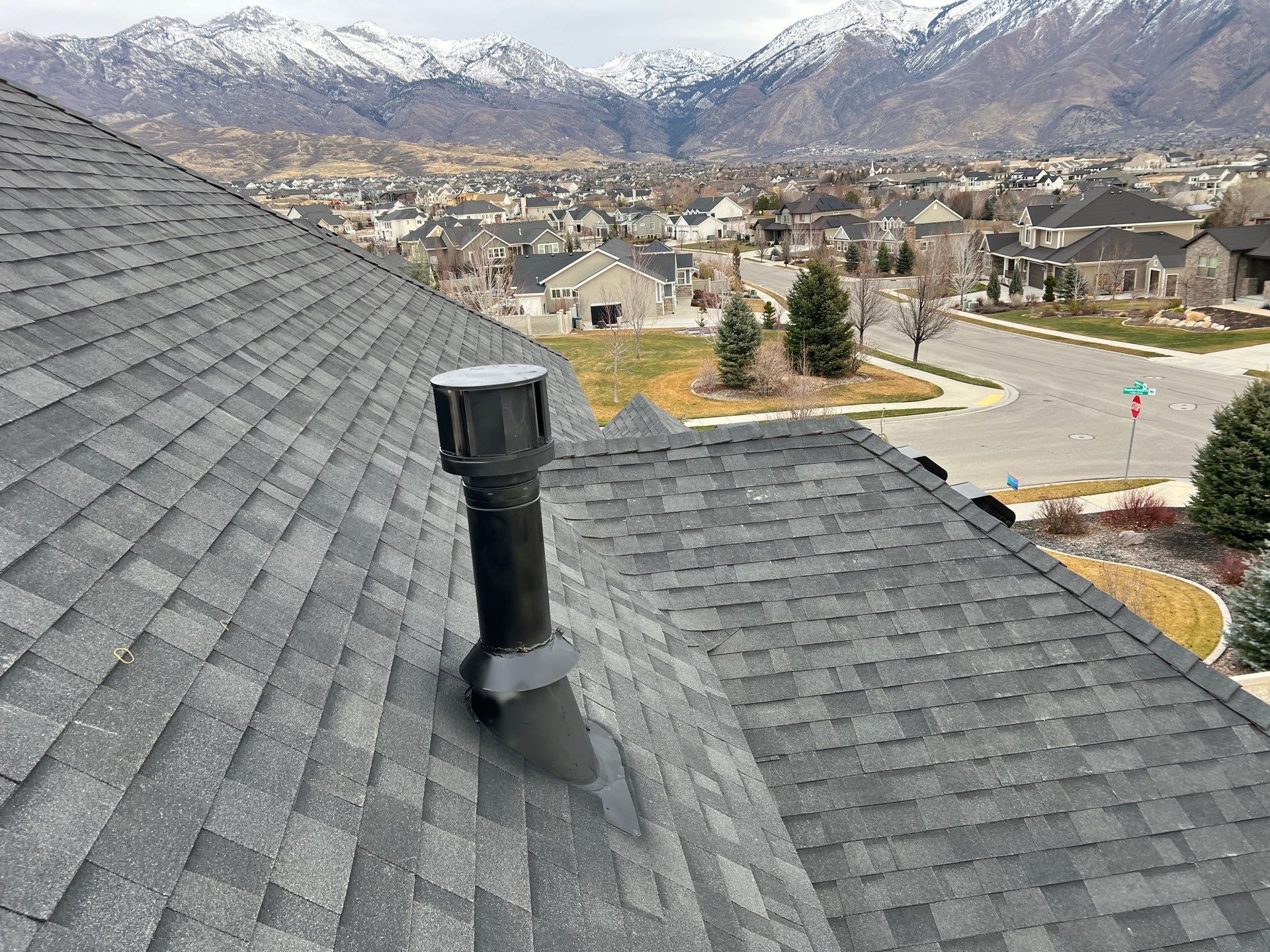
Soft metals — vent caps, flashing, gutters — hold dents permanently, so they make a reliable record of how big the hail was. We photograph them alongside a reference for scale.
Everything above gets repaired by the same crew under one workmanship warranty — that’s our hail damage repair page.
How Wind Damage Shows Up in an Inspection
Wind leaves subtler tracks than hail, so the recording method changes: more raking angles, more hands-on checks.
A crease, photographed edge-on
A wind crease is nearly invisible straight-on, so we shoot it low and edge-on, where the fold line catches the light, and note which slope and course it sits in.
The broken-seal check
The inspector gently tests bond lines by hand; a shingle that lifts freely has a failed seal strip. We photograph the lifted edge mid-check so the failure is visible, not just described.
Edge and ridge overview shots
Because uplift concentrates at ridges, rakes, and corners, every write-up includes wide shots of those zones — missing tabs, torn shingles, lifted flashing — so the pattern of damage reads at a glance.
Exposed decking, flagged urgent
Bare underlayment or wood gets photographed first and flagged at the top of the write-up, because it’s the one finding that shouldn’t wait for a convenient week. If that’s your roof today, skip the reading and call (385) 424-8810.
Everything above is repaired by the same crew under one workmanship warranty — details on our wind damage repair page.
Why You Can’t See Most of It From the Ground
Bruises are found by touch. Creases show only at an angle. Broken seals show only when a hand tests the bond. A drive-by look — yours or a contractor’s — catches almost none of it, which is why our inspections mean boots on every slope. And please don’t climb up yourself: after a storm, shingles can be loose, decking can be soft, and no photo is worth a fall. That’s what the free inspection is for.
How Rooval Photographs and Writes Up Storm Damage
The inspection walk-through
Every slope gets walked, not sampled. We check the field of each slope, every penetration — vents, pipe boots, chimneys, skylights — the flashing, the ridges and edges, and the soft metals around the roof. It’s thorough, and it’s free.
How we photograph
Two kinds of shots, always paired: overview photos that show where on the roof a problem sits, and close-ups of each impact, crease, or failure. Photos are date-stamped, organized slope by slope, and yours to keep.
The written summary
You get a plain-English write-up: which slopes are affected, what type of damage we found, what we recommend, and a a written estimate. We inspect your roof and document storm damage for your records, so you have exactly what you need to file your insurance claim. We walk you through the claims process and help you handle your part as the homeowner — you file the claim, and we make sure nothing’s missing. The Utah Insurance Department publishes consumer guidance at insurance.utah.gov.
Ready when you are: Schedule My Free Inspection.
What You Receive (and Keep)
- The full photo set — overviews and close-ups, organized by slope, date-stamped.
- The written findings summary — plain English, no jargon, including “no damage found” when that’s the truth.
- A written estimate if repairs are recommended.
It’s your documentation. You own it.
When to Get Inspected
Two moments are worth a call: after any hailstorm you could hear hitting the house or see bouncing off the driveway, and after a hard canyon-wind day — the kind that has patio furniture in the neighbor’s yard. Fresh marks are easiest to find before weather softens them, and a broken seal or open bruise gives the next storm a head start on the same spot. Call (385) 424-8810 and we’ll get you on the schedule.
Why Homeowners Choose Rooval for Storm Inspections
- We’ll tell you if there’s no damage. A good share of our inspections end with “your roof is fine” — and that write-up is free too.
- Local Lehi crew, serving 16 Wasatch Front cities.
- 5.0 stars on Google.
- Licensed and insured.
- Workmanship warranty on repairs, and financing available.
We inspect and photograph storm damage in Lehi, Provo, Orem, Highland, Draper, Sandy, and ten more cities — see every service area. And if your roof’s trouble has nothing to do with a storm, start with roof repair or roof replacement instead.
Storm Damage Documentation FAQs
What do your inspection photos actually show?
Two things, always paired: where a problem sits on the roof (overview shots by slope) and what it looks like up close (each bruise, crease, dent, or crack). Photos are date-stamped and organized so you can follow them without having been on the roof.
How is wind damage recorded differently from hail?
Hail marks are round and photograph best straight-on and in close-up, backed by dented soft metals as a size record. Wind damage hides in folds and seals, so it takes edge-on angles, hands-on seal checks photographed mid-test, and wide shots of ridges and edges where uplift concentrates.
Can I share the photos and write-up with anyone I want?
Yes — it’s your documentation. Send it to whoever you like; we keep a copy on file so we can stand behind what we found.
What exactly do I get afterward?
The full photo set, a plain-English written summary of what we found and where, and a repair recommendation with pricing if repairs make sense. All of it is yours to keep.
How soon after a storm should I schedule?
Soon — fresh damage is the easiest to find and photograph before rain washes granules away and the marks weather in, and every open bruise or broken seal gives the next storm a ready-made starting point. It’s also safer to have us look than to wonder from a ladder.
Will you tell me if my roof is actually fine?
Yes — in writing. Plenty of Utah roofs come through a storm without functional damage, and telling you so is part of the job. We’d rather earn the call you make five years from now than invent work today.
Helpful next steps
- Book a free roof inspection — a local crew checks and documents everything, no obligation.
- See 10 years of Utah storm history — NOAA hail and wind records for Salt Lake and Utah Counties, in plain English.
- What a roof replacement costs in Utah — honest 2026 numbers and what actually drives them.
- How to catch a roof leak early — the warning signs inside and outside your home.
Get Your Roof Fixed Right — Once
Local Lehi roofers — workmanship warranty — financing available.
Book My Free Inspection
Schedule My Free Inspection
Or call (385) 424-8810