Summary:
For most Utah homes, architectural asphalt shingles offer a reliable balance of cost, durability, and wind resistance. Homes on exposed benches or in hail-prone areas may benefit from Class 4 impact-resistant shingles. If you want the look of slate or cedar on a standard roof frame, synthetic slate and shake or stone-coated steel are strong options, while natural slate suits only homes framed to carry its weight.
When it’s time to replace your roof, the choices pile up fast. One contractor bids basic 3-tab shingles, another says architectural shingles are all you need, and a third insists your home needs an expensive Class 4 impact upgrade.
Meanwhile, every bid promises a “lifetime warranty,” yet the estimates range from $15,000 to over $40,000.
The truth is, no single shingle is right for every Utah home. While four out of five American homes use asphalt, today’s options run from basic builder-grade strips to rubberized impact shingles, cedar shakes, natural slate, synthetic slate, and stone-coated steel.
Along the Wasatch Front, the right choice depends less on sales talk and more on our climate: strong sun at 4,500 feet, heavy snow, ice dams, canyon gusts over 100 mph, and sudden bench hail.
This guide compares each shingle type by weight, code limits, real-world lifespan, and Utah performance, so you can weigh bids with confidence.
Shingle Types Compared: Lifespan, Weight, Slope, and Cost
Here’s how the main types stack up side by side. Minimum slopes come from the 2021 International Residential Code (IRC), which Utah adopts statewide. Slope is rise over run (4:12 means the roof rises 4 inches for every 12 inches across), and weight is per “square,” or 100 sq ft of roof.
| Shingle Type | Typical Service Life | Weight per 100 sq ft | Code Minimum Slope | Fire Rating | Maintenance Level | Upfront Cost Tier |
| 3-Tab Asphalt | ~20 years | 190 to 203 lb | 2:12 | Class A | Moderate | $ |
| Architectural Asphalt | ~30 years | 211 to 225 lb | 2:12 | Class A | Low to Moderate | $$ |
| Designer Asphalt | Varies by product | ~418 lb | 2:12 | Class A | Low to Moderate | $$$ |
| Impact-Resistant (Class 4) Asphalt | Varies by product | ~300 lb | 2:12 | Class A | Low to Moderate | $$$ |
| Wood Shakes & Shingles | ~25 years | ~250 to 350 lb (dry) | 3:12 | Class A (treated only) | High | $$$ |
| Natural Slate | 20 to 75+ years (grade-based) | 700 to 1,870 lb | 4:12 | Noncombustible (assembly-dependent) | Low (repairs need a specialist) | $$$$$ |
| Synthetic Slate & Shake | Varies by product | 281 to 311 lb | 4:12 (3:12 with special underlayment) | Class A (with rated underlayment) | Low | $$$$ |
| Metal & Stone-Coated Steel Shingles | 40 to 80 years | ~150 lb (stone-coated) | 3:12 | Class A (as a listed assembly) | Low | $$$$ |
Sources: InterNACHI, North Country Slate, CertainTeed XT 25, Landmark, Grand Manor, Landmark Premium, Brava, DECRA, National Slate Association; 2021 IRC R905.2.2, IRC R905.4.2, R905.6.2, R905.8.2.
One pattern runs through the whole table: the heavier and longer-lasting the material, the more it costs and the more your roof frame has to carry. Keep that trade-off in mind as you read below.
Asphalt Shingles: From Basic 3-Tab to Impact-Resistant
Asphalt is where most Utah homeowners start: it’s affordable, widely installed, and meets code on almost any roof. The differences between asphalt types come down to layers, which drive weight, wind resistance, and price.
3-Tab Shingles: The Budget Option, with Utah Drawbacks
If your home was built in a Wasatch Front subdivision between 1990 and 2005, there’s a good chance it has 3-tab shingles, the original builder-grade option.
- Construction: A single flat fiberglass mat coated in asphalt, with two slots that divide each strip into three equal tabs.
- Weight: 190 to 203 lb per square, the lightest and cheapest asphalt option.
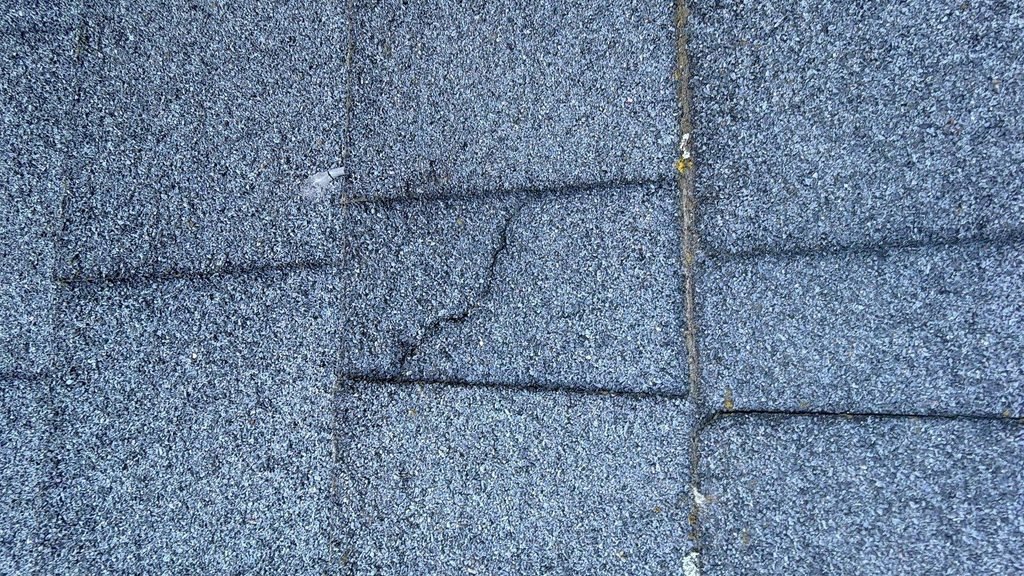
Caption: A cracked tab on a 3-tab asphalt shingle roof, found during an inspection. American Fork, Utah, September 2026.
The trade-off is durability. With one thin layer, aging adhesive strips let go in canyon windstorms, and tabs crease, snap, or end up in the yard. In Utah’s temperature swings, 3-tab roofs rarely reach their 20-year rated life without repairs.
That’s why we generally recommend 3-tab only for detached garages, sheds, outbuildings, or homes scheduled for teardown.
Architectural Shingles: The Best Fit for Most Wasatch Front Homes
Architectural shingles, also called dimensional or laminated shingles, are the upgrade most homeowners choose, making up about 80% of roof replacements in Utah and Salt Lake counties.
Bonded layers create staggered tabs and deep shadow lines, so the roof looks thicker from the street.
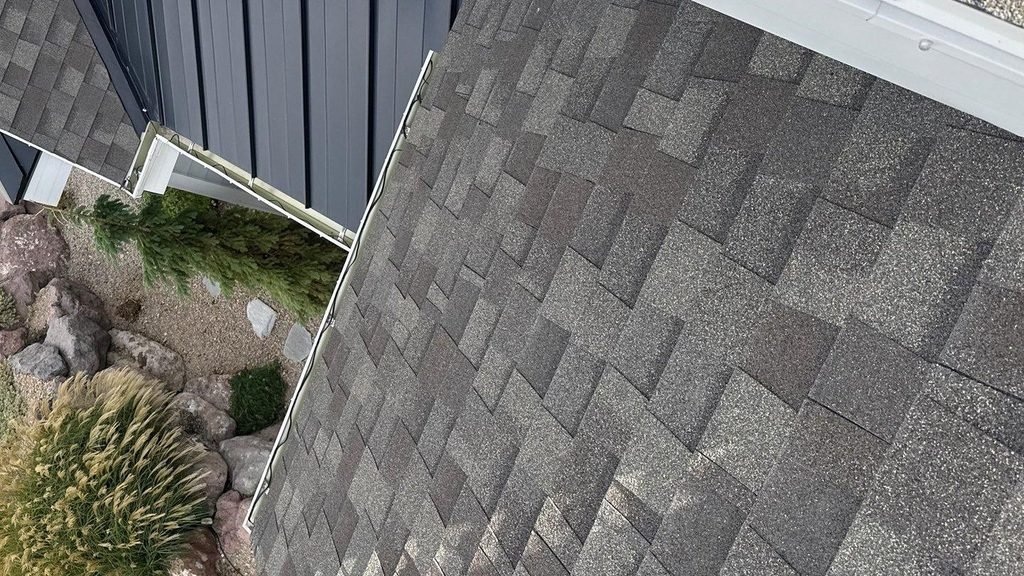
Caption: Architectural (dimensional) asphalt shingles, with staggered tabs and shadow lines. Lehi, Utah, October 2025.
- Strength: The extra layer makes them stiffer and far more tear-resistant than single-layer 3-tab.
- Service life: About 30 years with balanced attic ventilation.
They meet Utah’s wind code on roofs as low as 2:12 with no framing upgrades, which is why many homeowners see them as a practical middle ground between cost and performance.
| Not sure if you have 3-tab or architectural shingles? Schedule a free roof inspection, and we’ll identify your shingle type and how much life it has left. Schedule my free inspection → |
Designer Shingles: Slate or Shake Looks Without Reframing
If you love the look of hand-split cedar or quarried slate but don’t want to re-engineer your roof, designer shingles are worth a look. These premium asphalt lines are cut into sculpted shapes, scalloped edges, and thick, layered profiles.
They weigh up to 418 lb per square, nearly double architectural shingles, and that thickness helps them hold their granules under high-altitude sun. There’s no independent lifespan rating for them beyond the manufacturer’s warranty.
Impact-Resistant (Class 3 & 4) Shingles for Wasatch Bench Hail
Hail is the other big reason Utah homeowners upgrade. Along the Traverse Mountain corridor, the Davis County bench, and open valley wind paths, one summer storm can mean an insurance claim, and then another. Impact-resistant shingles are designed to resist cracking from those hits.
How they work: Many manufacturers blend their asphalt with SBS (styrene-butadiene-styrene), a rubber-like polymer. It keeps the shingle flexible even in freezing weather, so it’s better able to absorb a hailstone’s impact rather than crack.
How they’re rated: the UL 2218 test drops steel balls onto the shingle from set heights.
- Class 3: passes a 1.75-inch steel ball dropped from 17 feet. Many everyday architectural lines, such as GAF Timberline HDZ, carry this rating.
- Class 4: passes a 2-inch steel ball dropped from 20 feet, twice on the same spot. These heavy-duty lines weigh about 300 lb per square.
Class 4 may be worth considering for homes in hail-prone areas, especially when an insurance discount or long-term durability justifies the extra cost. Just remember that a lab rating isn’t a guarantee; the ratings section below explains why.
| Planning a Full Reroof? We inspect the deck up front, tear off cleanly, and fully waterproof the underlayment on every install. See our Utah roof replacement process → |
Beyond Asphalt: Wood, Slate, Synthetic, and Metal Shingles
When a historic home, a mountain look, or a roof meant to last generations calls for something other than asphalt, four more shingle types come into play, each with its own trade-offs on weight, slope, and code.
Wood Shakes & Shingles: Classic Look, Tough Climate
Wood roofing, usually Western Red Cedar, weathers from honey-brown to silver-gray. It comes as sawn shingles, which are smooth and evenly tapered, or split shakes, which are thicker and rougher.
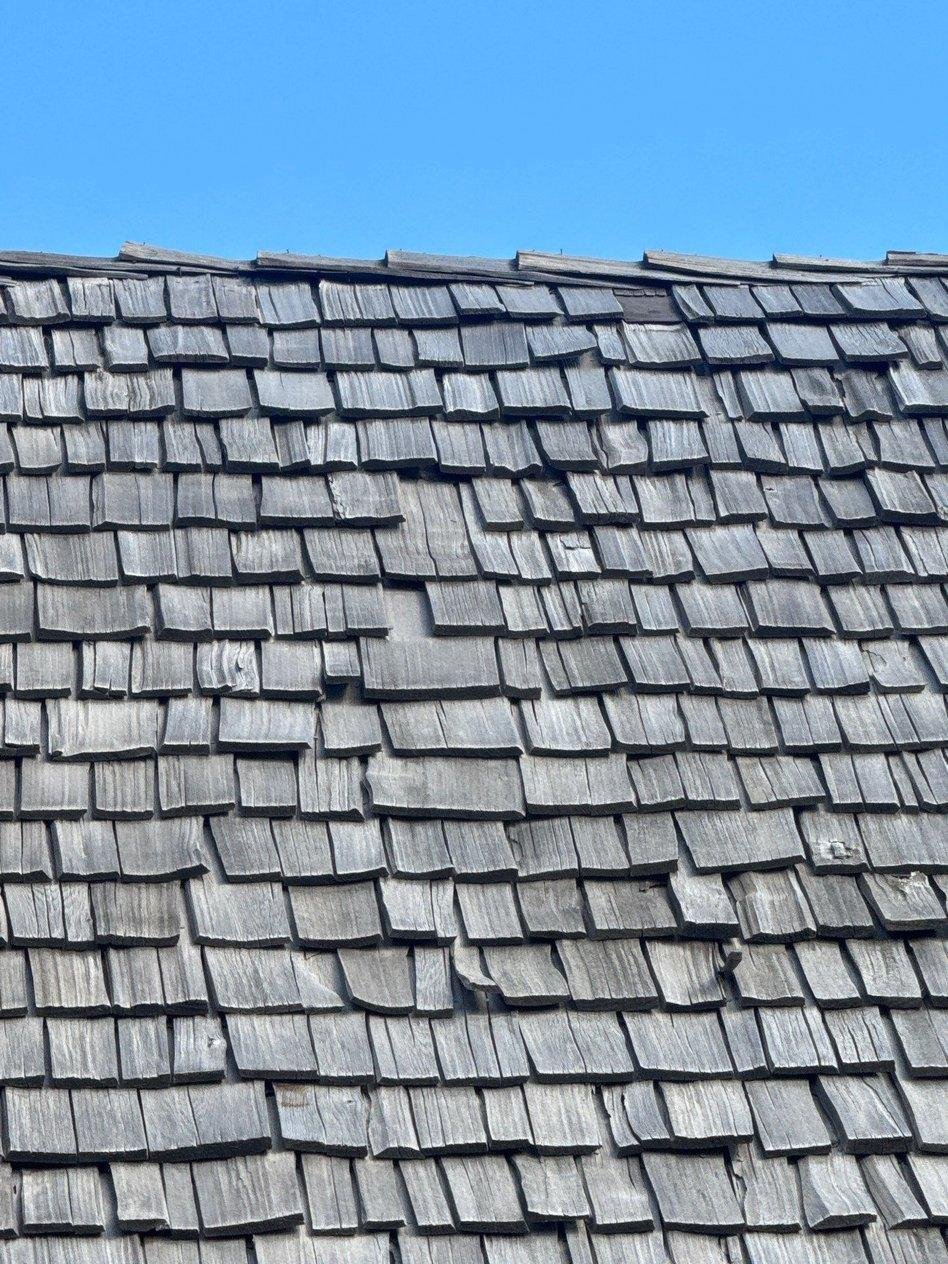
Caption: An older cedar shake roof, weathered gray. Eureka, Utah, March 2026.
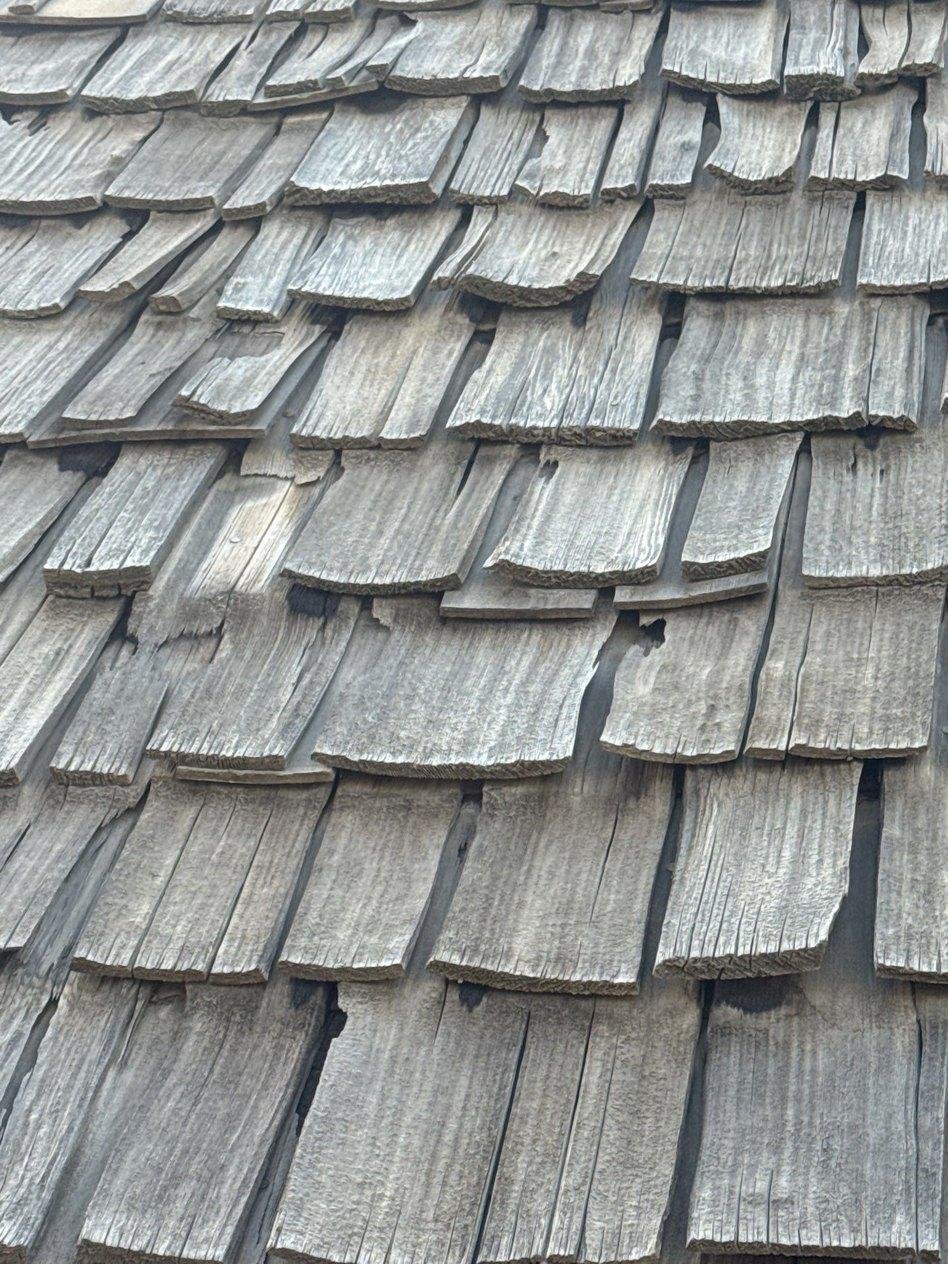
Caption: Thick, split edges set wood shakes apart from sawn wood shingles. Eureka, Utah, March 2026.
InterNACHI rates cedar roofs at about 25 years in ideal conditions. Utah is far from ideal for wood:
- Dry air: Untreated shakes dry out, curl, and split under the summer sun.
- Freeze-thaw: In shaded valleys, winter moisture and freeze-thaw cycles can lead to moss.
- Fire code: Because wood burns, code requires fire-retardant pressure treatment (IRC R902.2) and a fire-resistant cap sheet underneath to reach a Class A rating. In many foothill wildfire zones, untreated wood shake isn’t allowed at all.
Natural Slate: 75+ Years, If Your Frame Can Carry It
Natural slate is real stone, quarried and split into thin roofing tiles. Under ASTM C406, it’s graded by expected life: S1 lasts 75+ years, S2 lasts 40 to 75 years, and S3 lasts 20 to 40 years.
High-grade slate won’t rot, absorb water, or burn, and top-grade slate can outlast most other residential roofing materials. The catch is weight.
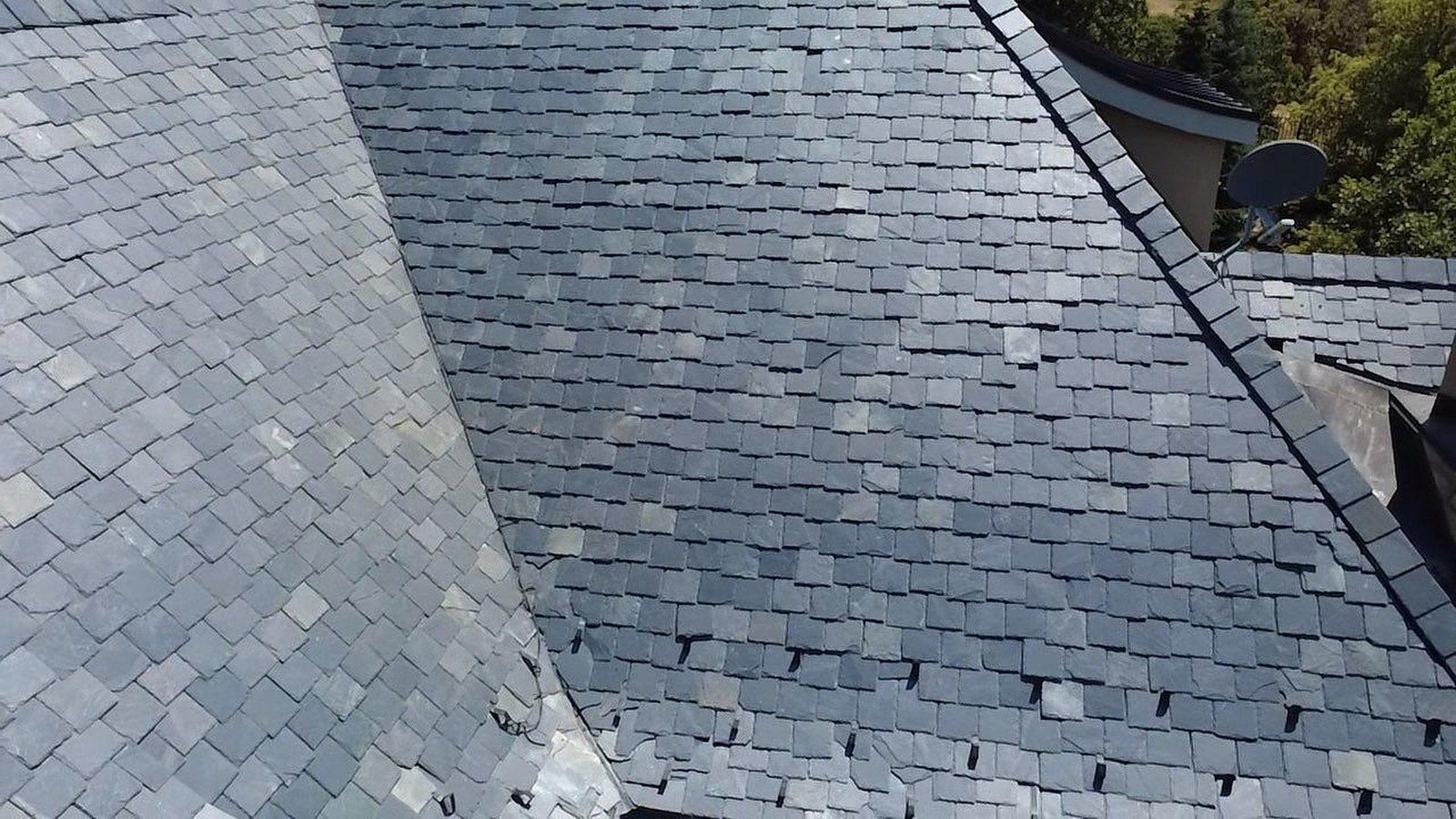
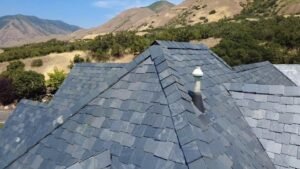
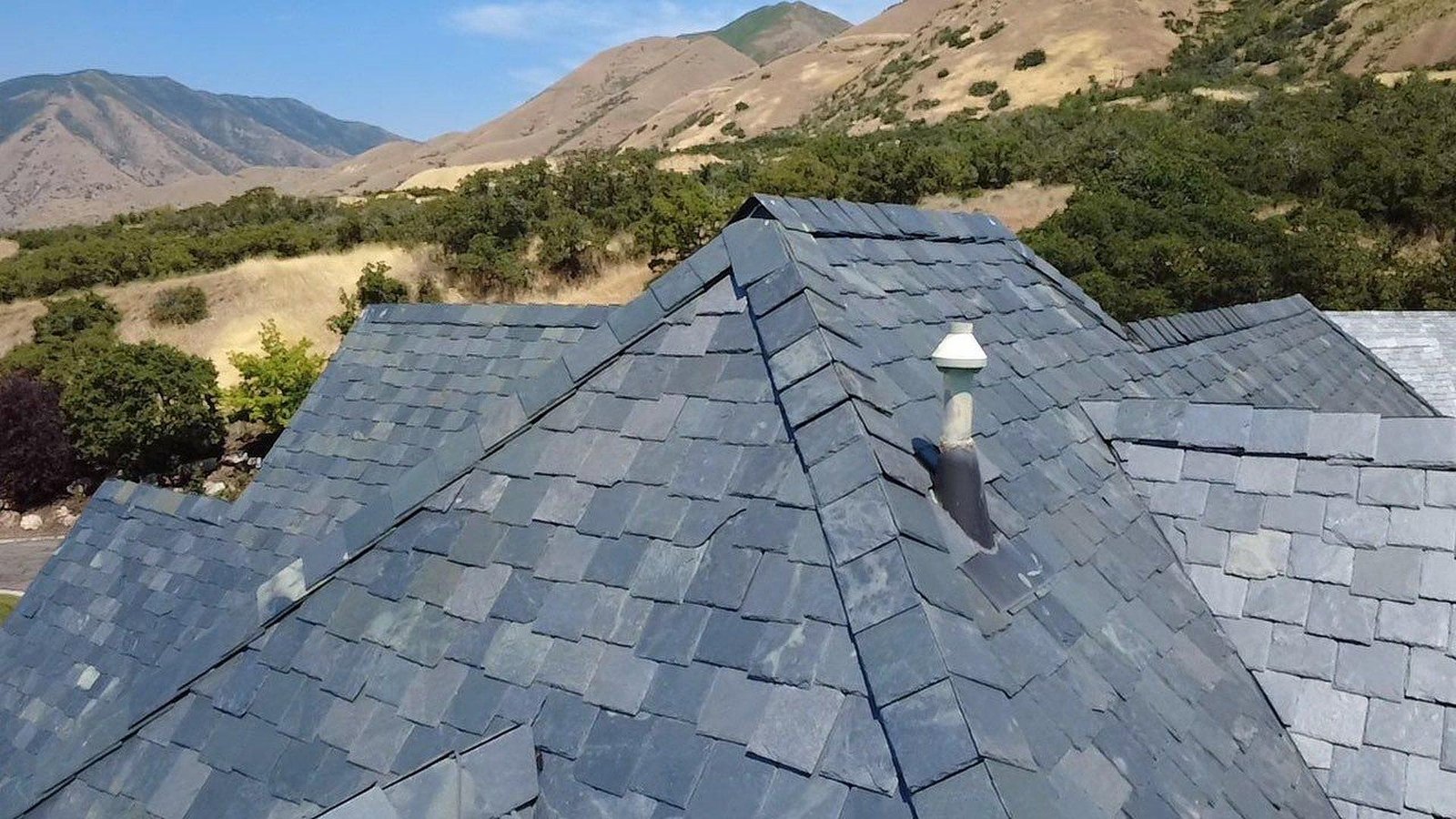
Caption: A natural slate roof on a custom home. Slate needs framing built for its weight. Mapleton, Utah, July 2025.
- Weight: A standard quarter-inch slate roof weighs about 935 lb per square, and thicker cuts top 1,800 lb. That’s more than four times the weight of asphalt.
- Where it fits: Mostly custom or historic homes whose rafters or trusses were designed from the start to carry heavy loads.
Synthetic Slate & Shake: The Look Without the Weight
Synthetic shingles give you the look of slate or cedar shake without the weight or framing work of natural slate, and with fewer fire-code limits than wood. Brands like DaVinci Roofscapes and Brava mold them from polymers with UV stabilizers and fire retardants.
- Weight: 281 to 311 lb per square, less than a third of natural slate, so they go straight onto standard framing.
- Impact: Most premium lines are rated UL 2218 Class 4.
- Fire: They reach Class A over plywood only with the manufacturer’s gypsum-core underlayment. Over plain felt, the rating drops to Class C, so ask your installer which one they’re using.
Metal & Stone-Coated Steel Shingles: Light and Long-Lasting
Metal shingles are individual interlocking pieces, each with less than 3 sq ft of exposed surface (IRC Chapter 2). They’re stamped to look like slate or shake and need a slope of 3:12 or steeper.
The most popular version in Utah is stone-coated steel: steel pressed into shake, shingle, or tile shapes and coated with ceramic granules.
- Weight: About 150 lb per square, actually lighter than 3-tab asphalt.
- Impact: UL 2218 Class 4.
- Noise: A common worry, but over solid decking and synthetic underlayment, rain sounds about the same as on asphalt.
Solar Shingles: What to Know Before You Buy
Solar shingles build solar cells directly into nailable roofing shingles, so you get solar power without rack-mounted panels.
- Tax credit: The Section 25D federal tax credit expired for equipment placed in service after December 31, 2025, so you’ll pay the full, unsubsidized price.
Utah Climate: What It Means for Your Shingles
Now that you know the main shingle types, the next question is how each one holds up where you live. The guide below covers Utah’s five main roof stresses, what each one does to a roof, and which shingles handle it best.
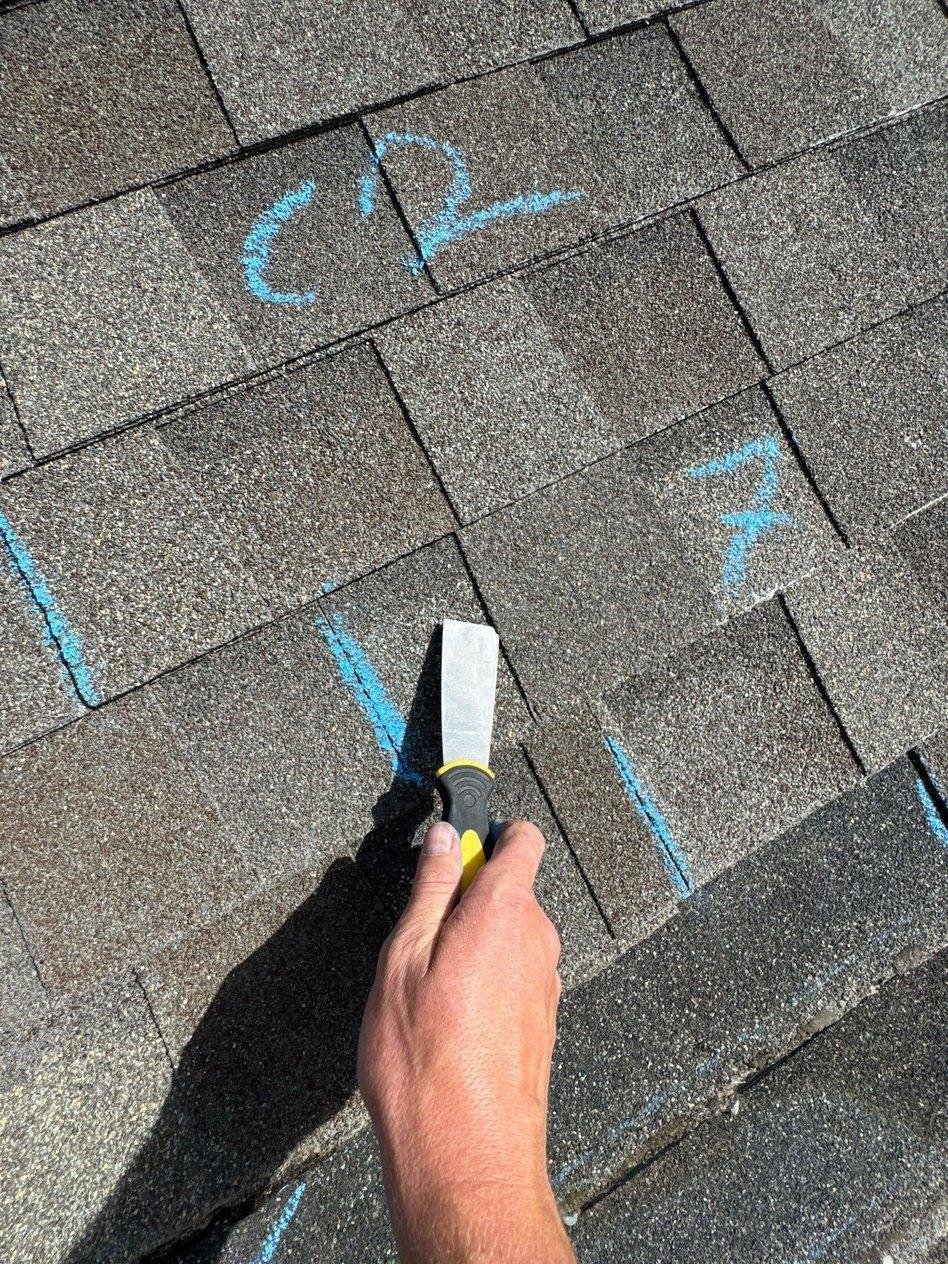
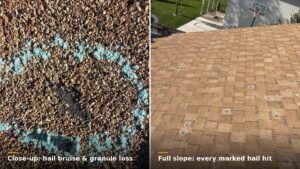
Caption: Damage points chalked on architectural shingles during a Rooval Roofing inspection. Lehi, Utah, October 2025.
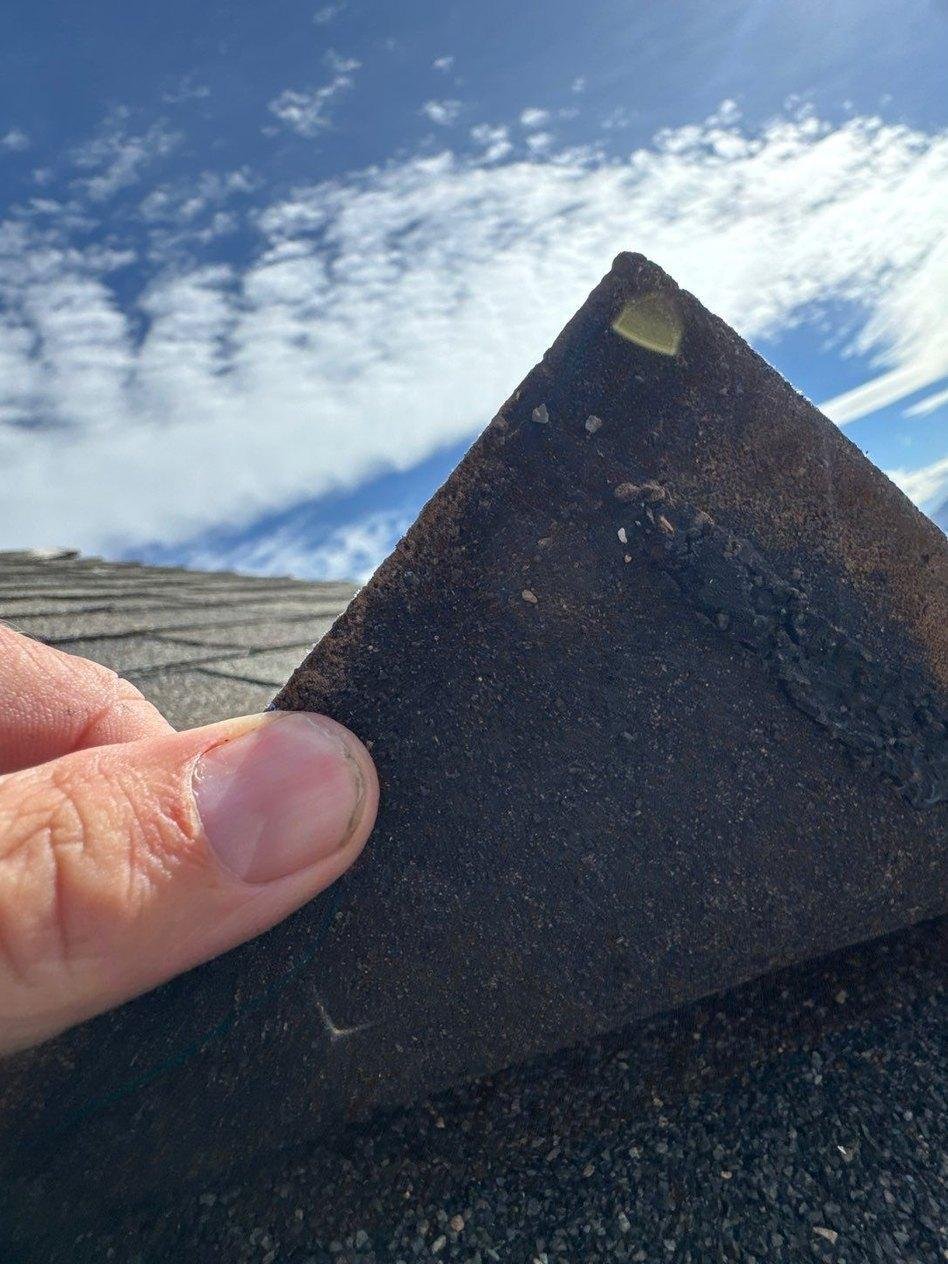
Caption: A shingle tab held up to check the back for cracks. Lehi, Utah, October 2025.
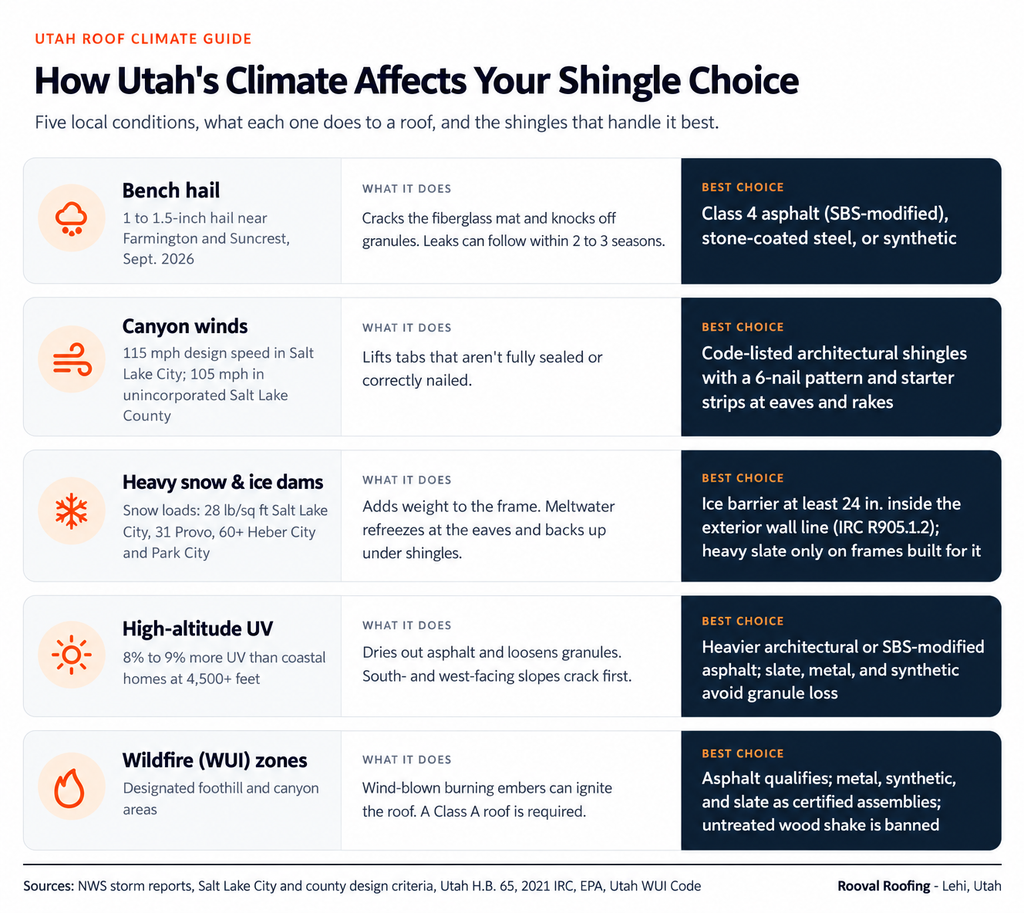
Caption: Five Utah climate conditions, what each does to a roof, and the shingle types that hold up best.
If your home faces more than one of these, such as hail on a bench lot inside a wildfire zone, choose a shingle that meets the toughest requirement first.
Sources: Sept. 18 hail report, Sept. 22 hail report, SLC wind criteria, SL County wind criteria, IRC R905.2.4.1, Utah snow loads (H.B. 65), IRC R905.1.2, EPA UV data, Utah Code 15A-2-103, H.B. 48 (2025), Utah WUI Code.
Shingle Ratings Explained: Impact, Wind, and Fire
The recommendations above lean on ratings like Class 4 and Class A, and so do most sales pitches: “Class 4 impact rated,” “130-mph wind certified,” “Class A fireproof.” Knowing what each lab test actually measures, and what it doesn’t, helps you avoid costly surprises.
| Rating Category | Testing Standard | Recognized Classes | Testing Procedure |
| Impact | UL 2218 | Class 1, 2, 3, 4 | Steel balls (1.25″ to 2.0″) dropped from heights up to 20 feet |
| Wind (Fan-Driven) | ASTM D3161 | Class A, D, F | Two hours of fan-driven wind at 60, 90, or 110 mph |
| Wind (Uplift Resistance) | ASTM D7158 | Class D, G, H | Calculated uplift resistance for wind speeds up to 116, 155, or 194 mph |
| Fire | ASTM E108 / UL 790 | Class A, B, C | Flame spread and burning embers (Class A = most severe exposure) |
Wind and fire ratings share letters, but they measure completely different things. A shingle can be Class A for fire and Class F for wind.
Impact (UL 2218): Why Class 4 Isn’t Hail-Proof
UL 2218 drops steel balls onto the shingle. A separate test, FM 4473, uses ice balls to simulate real hail.
Both are pass/fail: a shingle passes as long as the back shows no crack through it. Real hail is messier. It’s jagged, driven by wind, and strikes at an angle.
That’s why no shingle is truly hail-proof. When the Insurance Institute for Business & Home Safety (IBHS) tested 24 impact-resistant shingles, most earned a “Good” rating and none earned “Excellent.” Class 4 adds real protection, but it isn’t a guarantee.
Wind: Why a 130 MPH Shingle Can Fail at 60 MPH
Both wind tests assume the shingle’s factory adhesive strip has fully sealed to the shingle below. On a real roof, tabs can blow off well below their rated speed when:
- Shingles go on in late fall and aren’t sealed by hand
- Dust settles on the adhesive strip during the job
- The installer nails above the marked nail zone (“high-nailing”), which can cut uplift resistance by up to 50%
In other words, installation quality matters as much as the shingle’s rating.
Fire (ASTM E108): Why the Full Assembly Matters
Metal and slate don’t burn, but code only treats them as Class A without testing when installed over noncombustible decks (IRC R902.1). Most Utah homes have plywood or OSB roof decks, which do burn. On those homes, a Class A rating depends on the whole tested system, including fire-barrier underlayment and sealed eaves.
How to Tell What Shingles You Have (and Whether They’re Failing)
Before you compare new options, it helps to know what’s on your roof now. With binoculars, you can usually identify the shingle type from the ground by its shape, texture, and edges:
- 3-Tab Asphalt: flat, even rows of identical rectangular tabs.
- Architectural Asphalt: mixed-width tabs with dark shadow lines.
- Designer Asphalt: very thick tabs cut in scallops, diamonds, or slate shapes.
- Wood Shake or Shingle: weathered gray grain; shakes have thick, rough edges, shingles are smooth.
- Natural Slate: genuine stone with natural grain, crisp edges, and varied color.
- Synthetic Slate or Shake: looks like stone or wood, but up close the edges repeat and thickness is uniform.
- Metal or Stone-Coated Steel: stamped interlocking metal with visible edge flashing.
What you can’t see is the impact rating. Class 3 and Class 4 shingles look identical, so leftover bundles in the garage, the builder’s spec sheets, or your last reroof invoice are the only proof.
| Home in Northern Utah County? Many subdivision roofs from the 2000s are near the end of their design life. See what we check on Lehi roofs → |
Choosing the Right Shingle for Your Roof
There’s no single “best” shingle, only the best fit for your roof. Slope, framing strength, wind exposure, wildfire zoning, and budget will narrow the list quickly.
For many Wasatch Front homes, architectural asphalt shingles are a common choice because they balance cost, durability, and availability. On an exposed bench, an SBS-modified Class 4 shingle adds real protection. And if you want the character of slate or cedar, synthetic shingles or stone-coated steel deliver it on a standard frame, while natural slate belongs on homes built to carry it.
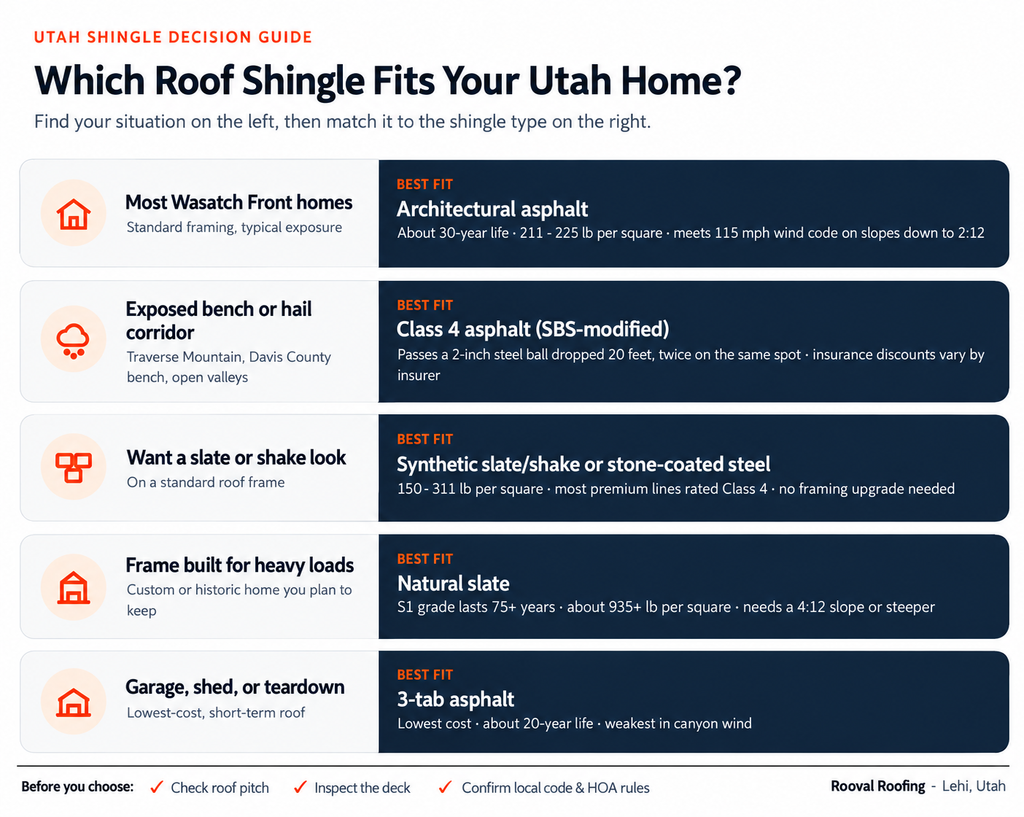
Caption: A quick guide to matching common Utah roof situations with the right shingle type.
Whatever you choose, confirm your roof pitch, deck condition, and local code first, and make sure your installer follows the sealing and nailing steps that every shingle rating depends on.
Get a Rooval Roofing Inspection Photo Report
Not sure where your roof stands today? An inspection gives you clear facts: your shingle type, how much life it has left, any hidden storm damage, and whether your frame can handle a heavier shingle.
We photograph every roof section, check attic airflow, and give you an itemized photo report, whether you hire us or not.
Book My Free Inspection · Call (385) 424-8810
Family-run and based in Lehi · Licensed and insured, Utah GC #13861046-5501 · Written workmanship warranty
Frequently Asked Questions About Roof Shingles
Not necessarily. “30-year” and “lifetime” are warranty terms, not promises about how long your roof will last.
- GAF’s “Lifetime” coverage, for example, applies only while the original homeowner owns the property.
- Most warranties, including Owens Corning’s Duration line, are prorated after the first 10 years and don’t cover labor.
How long a roof actually lasts depends on attic ventilation, which way it faces, and local storm exposure.
- Class 3 is dependable, cost-effective protection for sheltered valley homes where hail is rare.
- Class 4 may make financial sense if you live in a documented hail corridor, such as along the benches, or if your insurer offers an ongoing discount that offsets the higher cost.
Often, but it’s up to each insurance company, since Utah law doesn’t require a discount for impact-rated roofs. Before you buy, ask your agent whether they offer one, how much it is, and what paperwork they need.
Usually not.
- Algae staining (Gloeocapsa magma) is most common in warm, humid coastal regions, and Utah’s dry climate keeps it in check.
- Most major brands also add copper-coated granules to standard shingles to prevent staining, so you get that protection at no extra cost.
No independent testing shows one major brand outlasting the others; Owens Corning, GAF, and CertainTeed lines meet the same ASTM standards. The product tier, nailing, and ventilation matter far more than the logo. Rooval Roofing installs Owens Corning architectural shingles on most Utah homes because of their SureNail nailing strip and reliable local supply.