Key Takeaways
- Urgent vs. Scheduled Damage: Structural sagging, daylight in the attic, active leaks, and cracked rafters need immediate repair. Curling shingles, moss, and granule loss indicate normal aging and scheduled maintenance.
- Material Lifespans: Standard asphalt shingles last 15–20 years, architectural shingles 25–30, metal 40–70, and tile/slate 50–100+ years. Local climate heavily impacts longevity.
- FHA Loan Rule: FHA mortgages require a roof to have at least 2 years of remaining physical life for financing approval.
- Insurance Constraints: Roofs over 15–20 years old often get downgraded to Actual Cash Value (ACV) coverage, which subtracts depreciation from payouts. Insurance covers sudden storm damage, not age.
- Safety & Maintenance: Inspect your roof safely twice a year from the ground (using binoculars) and inside the attic—never climb onto the roof yourself.
Visible signs like curling shingles, loss of granules, moss, sagging, or daylight coming through the roof show that your roof is wearing out. However, looks alone don’t tell you how fast you need to fix it. How urgent the problem is actually depends on standard roof lifespans, safety rules, and strict requirements set by home insurance policies and federal housing standards.
This guide ranks visible roof damage by how quickly you need to act, explains how long common roofing materials really last, and covers the key insurance and government rules every homeowner should know.
Roof Damage Urgency: Immediate vs. Scheduled
Mistaking minor surface wear for structural damage causes unnecessary panic, while ignoring real structural issues leads to costly disasters. Here is how to tell the difference.
Urgent Signs You Need a Professional Roof Inspection
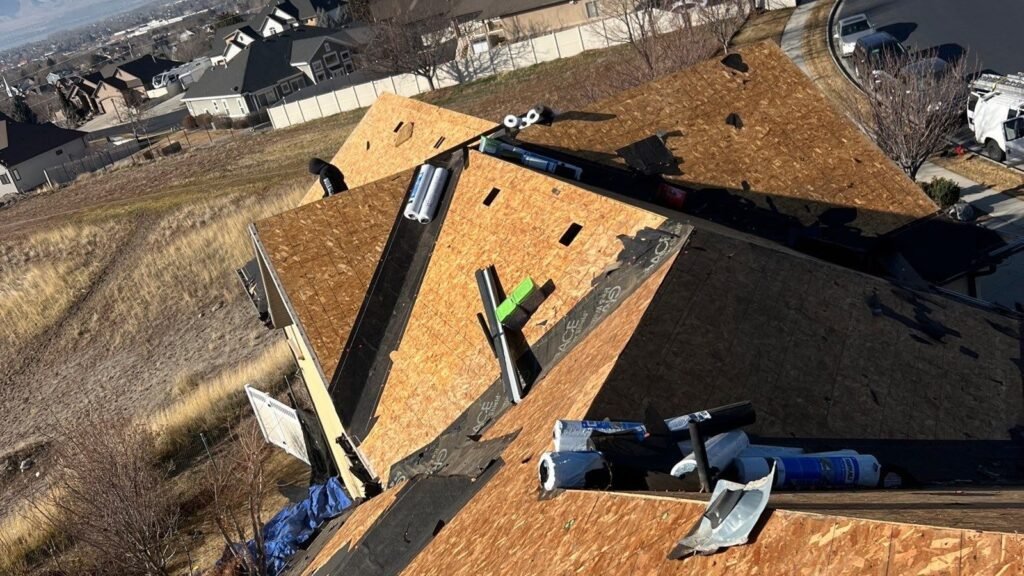
Sagging or Wavy Roofline
A healthy roof has straight lines along the ridge and slopes. If your roofline looks dipped, curved, or wavy, it means the wooden decking or structural boards underneath are bending under weight. This usually happens when long-term moisture rots the wood, making it a critical safety issue rather than just an ugly spot.
Daylight Showing Through the Attic Roof
If you turn off the lights in your attic during the day and see streams of light poking through the ceiling, you have holes in your roof deck. Where light gets in, water, cold air, and pests get in too. Small pinpricks of light mean missing shingles or torn underlayment, while larger gaps mean rotting wood.
Water Stains or Active Leaks on Ceilings
Water spots look like brown, yellow, or dark rings spreading across your ceiling or down your interior walls. By the time a stain appears inside your house, water has already soaked through your shingles, heavy felt layer, attic insulation, and drywall. An active drip means water is actively damaging your home’s inner frame.
Missing Shingles with Exposed Underlayment
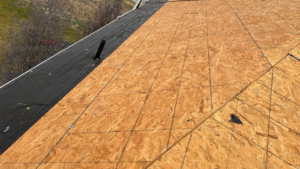
If a storm blows off a section of shingles, you will see patches of dark paper, bare wood, or gray matting exposed to the sky. Shingles act as the first line of defense against weather. Leaving the inner layers exposed means the next rainstorm can soak straight into your roof structure.
Cracked or Broken Attic Rafters
Rafters are the heavy wooden beams inside your attic that support the entire weight of your roof. A cracked rafter looks like a split, splintered, or sagging wooden beam. This indicates a major structural failure—often caused by excessive weight from snow, heavy winds, or severe wood rot—and requires immediate structural support
Scheduled Roof Maintenance: Signs of Normal Aging
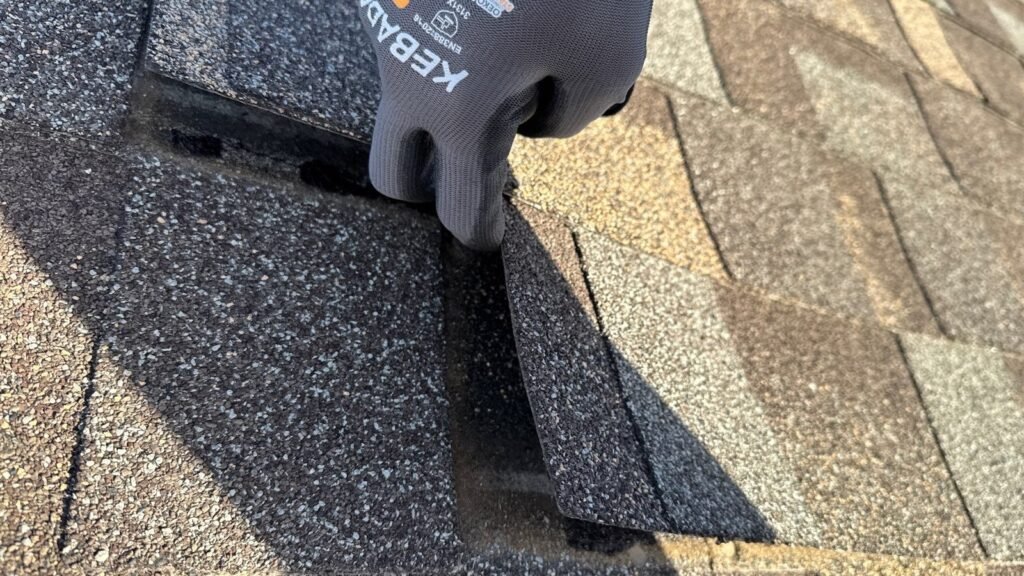
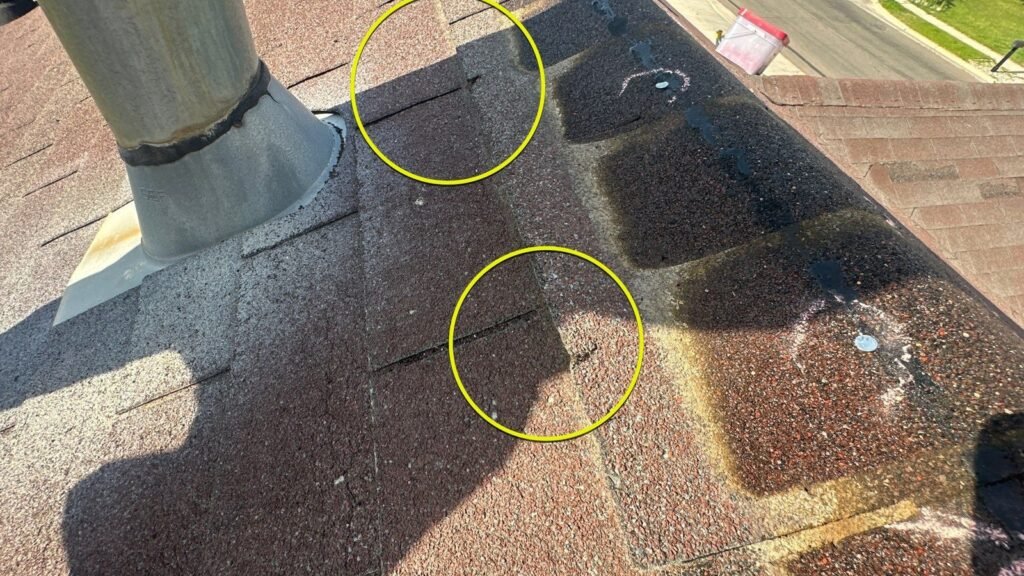
Curling or Cupping Shingle Edges
When shingle edges curl up or cup downward, the material is drying out and losing its natural flexibility. This typically starts on roof slopes that get the most direct sunlight. While it shows your shingles are nearing the end of their lifespan, it doesn’t mean your roof will leak tomorrow—it just means it’s time to start planning for a replacement.
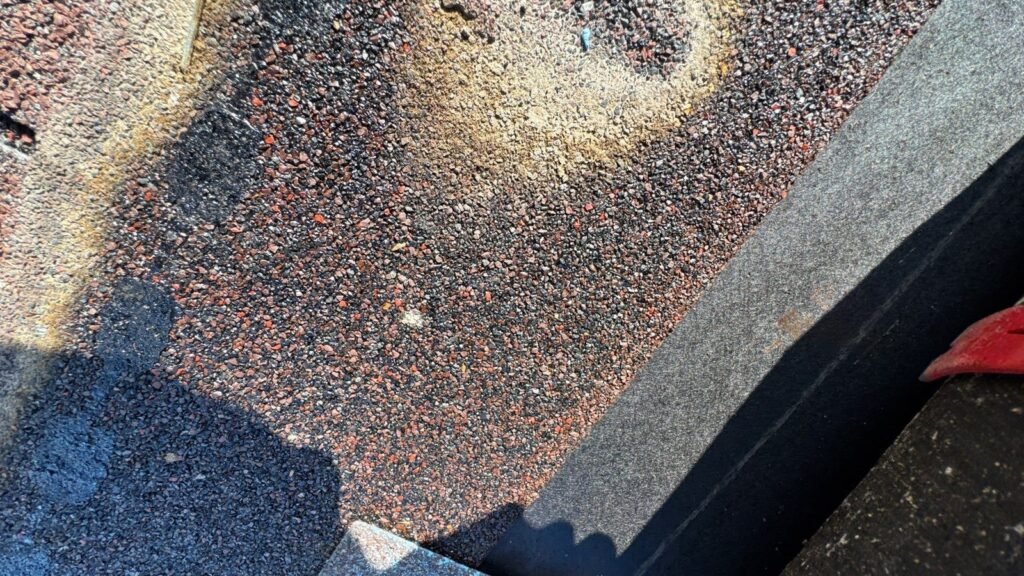
Heavy Granule Loss in Your Gutters
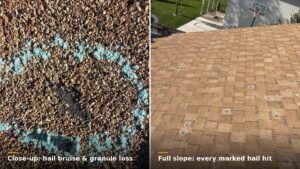
The dark sand-like grit in your gutters consists of protective granules designed to block harmful UV rays from breaking down the shingle’s asphalt layer. Finding a light coating after a storm is normal, but heavy accumulation means your shingles are aging faster. This isn’t an immediate structural emergency, but it signals that your roof’s weather defense is wearing down.
Moss Growth or Dark Algae Streaks
Dark streaks on your roof are usually algae, while green, fuzzy patches are moss. Algae is purely a cosmetic issue, but moss is slightly more concerning because its roots trap moisture against the shingles. Neither requires an immediate emergency replacement; instead, they can usually be treated with gentle roof cleaning and ongoing monitoring.
A Few Cracked or Missing Shingles
Losing one or two shingles after high winds or noticing a minor crack is standard maintenance, not a system-wide failure. As long as the underlayment underneath isn’t torn or exposed across entire sections of the roof, a quick local patch or shingle swap is all you need to keep the roof watertight.
Worn or Rusting Flashing
Flashing consists of the thin metal strips installed around chimneys, vents, skylights, and roof valleys to seal seams. Over time, metal can rust, peel back, or lose its sealant. Because flashing is usually localized, a professional can easily repair or seal these spots before water manages to seep beneath the shingles.
Roof Age Nearing Its Expected Lifespan
If your asphalt shingle roof is approaching 15 to 20 years old, it warrants a professional inspection rather than an automatic tear-off. Roofs often perform well past their warranty date depending on local climate and installation quality, making a routine checkup the smartest first step.
| Related: Roof Tune-Up Addressing minor maintenance early prevents localized wear from turning into major structural repairs. Schedule a roof tune-up to re-seal flashings, re-secure loose shingles, and receive a complete written condition report. |
How Long Roofing Materials Last: Official Testing Standards
Every major roofing material is tested against specific industry performance standards. The following breakdown shows how long each material is rated to last under official test conditions.
| Material | Typical lifespan | Governing standard / rating | Notes |
| 3-tab asphalt shingles | 15–20 years | Baseline product spec: ASTM D3462 | Lowest cost; least wind and impact resistance of the asphalt options |
| Architectural asphalt shingles | 25–30 years | ASTM D3462; commonly tested to ASTM D3161 up to 110 mph | The most common US residential choice |
| Class 4 impact-resistant asphalt | 25–30 years | UL 2218 Class 4 (survives a 2-inch steel ball dropped from 20 ft); often also wind-rated under ASTM D7158 (Class G/H, 150–190 mph) | Built for hail-prone regions; often qualifies for insurance discounts |
| Metal roofing | 40–70 years | Varies by profile; commonly tested to ASTM wind and UL fire standards | Excellent in snow-load and wildfire-prone areas |
| Clay or concrete tile | 50–100 years | Regional building code weight/structural requirements apply | Heavy — many homes need engineering review before installing |
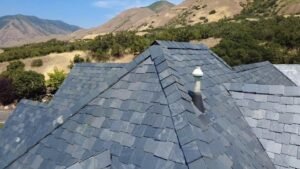
| Natural slate | 20–100+ years, by grade | ASTM C406 (Graded S1, S2, or S3) | S1 rated 75–100+ yrs, S2 40–75 yrs, S3 20–40 yrs; highest material cost and installation skill required. |
| Wood shakes | 25–30 years | Restricted or banned by local fire code in many wildfire-prone jurisdictions | Check your local code before choosing this material |
Regional climates directly affect how long your roof lasts.
In hail-prone areas like the central Plains, impact resistance is critical. Coastal regions along the Gulf and Atlantic focus primarily on high wind ratings to prevent uplift during severe storms.
Extreme heat and sun in desert climates speed up shingle brittleness and granule loss. Meanwhile, northern climates face constant freeze-thaw cycles that weaken materials through repeated ice expansion.
Because of these environmental factors, the exact same shingle can have a vastly different lifespan depending on where you live.
| Related: Utah Roof Replacement Cost Guide See what a full roof replacement costs in Utah in 2026—broken down by material, pitch, and tear-off layers—to get real dollar figures instead of national averages. |
How Insurance Policies and FHA Loans Impact Roof Replacement
Roof replacement decisions are often driven by external regulatory deadlines rather than visible leaks. Homeowners insurance carriers and federal mortgage programs enforce strict roof condition thresholds that dictate coverage eligibility and financing approval.
FHA Mortgage Requirements
Under HUD Handbook 4000.1, FHA guidelines mandate that a roof must have at least two years of remaining physical life to qualify for financing. If an appraiser determines a roof cannot meet this threshold, the home purchase or refinance stalls until the roof is repaired or replaced—regardless of whether active leaks exist.
Homeowners Insurance Rules
Insurance carriers routinely enforce roof age limits, often restricting coverage or shifting policies to Actual Cash Value (ACV) once a roof reaches 15 to 20 years old. The Utah Insurance Department defines actual cash value as replacement cost less depreciation, based on the age and condition of the property. Under ACV coverage, a payout subtracts that depreciation rather than covering the full cost of a new roof. Conversely, installing impact-resistant materials can qualify homeowners for policy discounts in high-risk regions.
Failing to address scheduled maintenance early can turn routine repairs into mandatory closing or coverage deadlines during real estate transactions and policy renewals.
IBHS FORTIFIED Roof Standard: Requirements & Insurance Discounts
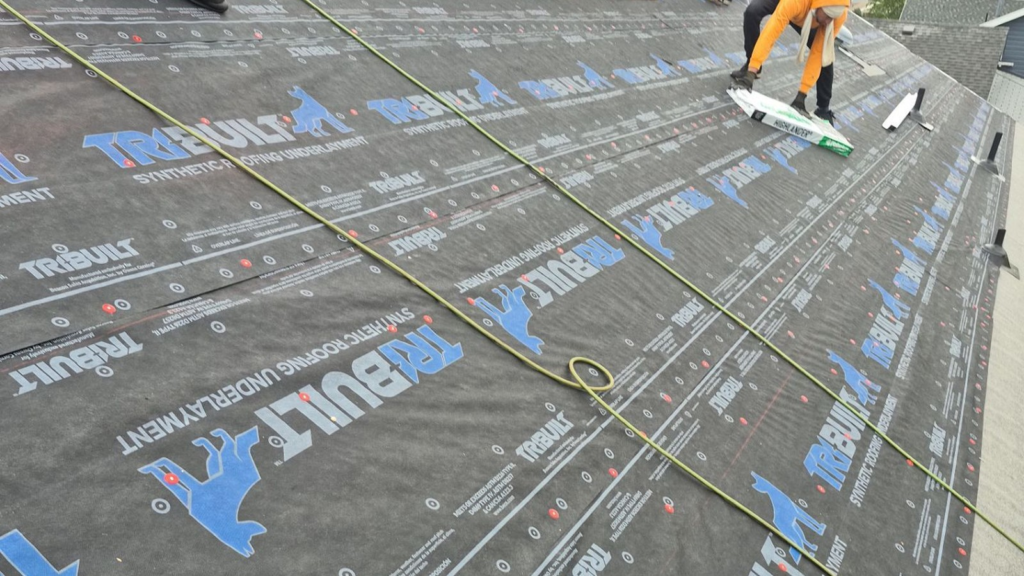
The Insurance Institute for Business & Home Safety (IBHS) created the FORTIFIED Roof standard to help homes withstand severe weather. Built on decades of storm research, this voluntary system goes beyond standard building codes to protect against high winds and hail.
Key requirements of a FORTIFIED installation include:
- Stronger Deck Attachment: Requires a tighter nailing pattern to keep the roof deck secured during high winds.
- Sealed Roof Deck: Blocks water from entering the home even if the outer shingles are blown off.
- Tested Vents: Uses roof vents built to resist wind-driven rain intrusion.
- Certified Installation: Must be installed by a certified FORTIFIED contractor and independently verified.
While not mandatory by law, homeowners in storm-prone regions often use this standard to increase roof durability, and many insurance carriers offer policy premium discounts for verified compliance.
Roof Inspection Checklist: How to Safely Inspect Your Roof From the Ground
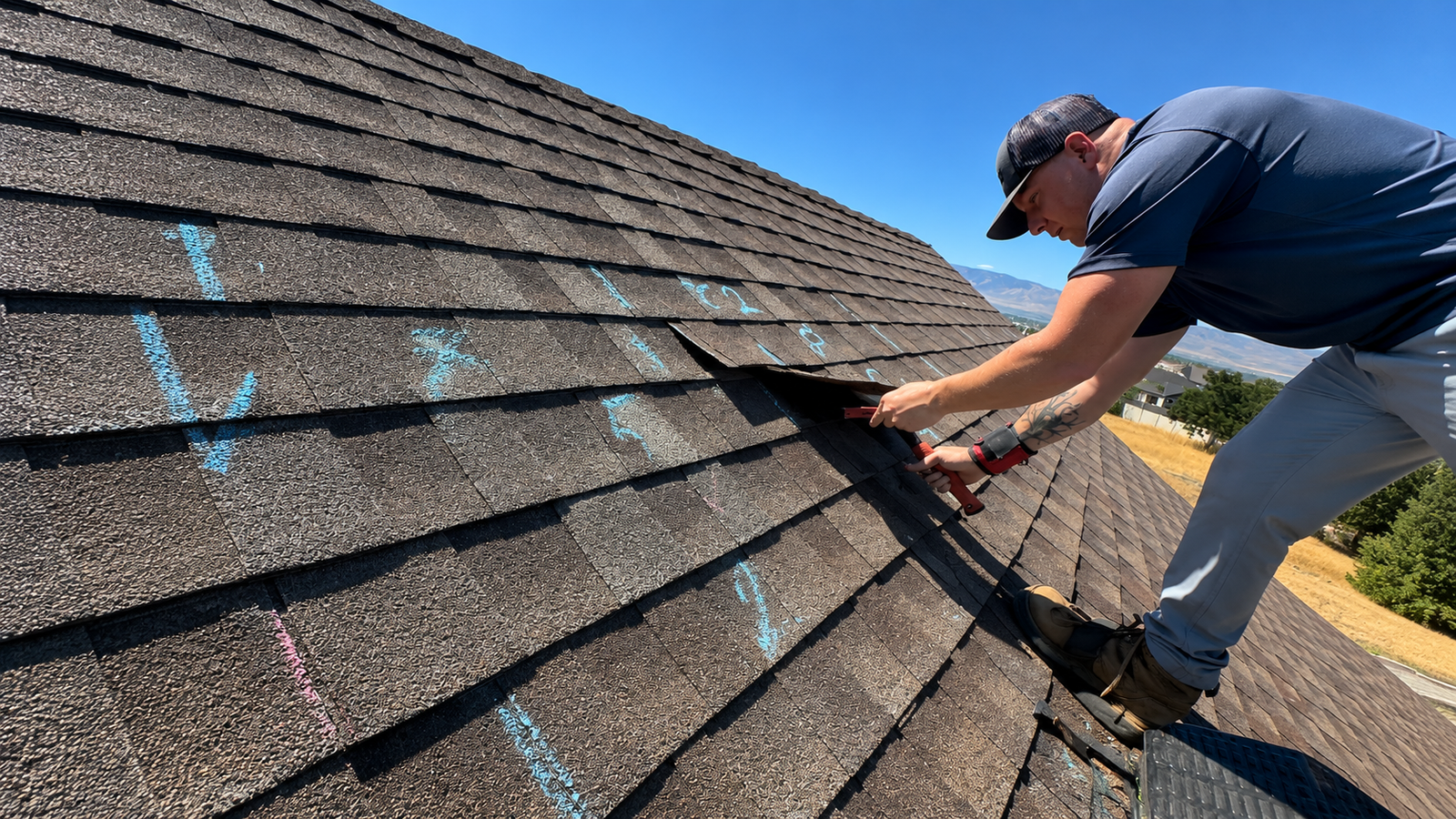
Never climb onto your roof to check it yourself; a fall isn’t worth it. Everything below can be checked safely from the ground or your attic.
- Check the Roofline: Step back to inspect the ridge and slopes from a distance for sagging, dips, or uneven lines.
- Scan Shingles: Use binoculars to walk the perimeter. Look for curling, missing, or discolored shingles, paying extra attention to south- and west-facing slopes exposed to maximum sun.
- Inspect Flashings: Examine metal flashing around chimneys, vents, and skylights for rust, gaps, or lifted edges.
- Check Gutters and Downspouts: Look inside downspouts and gutter runoffs for heavy granule accumulation—a sand-like residue signaling advanced shingle wear.
- Inspect the Attic: During daylight, check the underside of the roof deck for light showing through the boards, water stains, or damp insulation.
- Verify Age: Check home records for your roof’s installation date and compare it against standard material lifespans.
How Often to Have It Professionally Inspected
The National Roofing Contractors Association recommends professional roof inspections twice per year, in spring and fall, along with an additional inspection after any severe weather event.
A Quick Decision Checklist
- Urgent Signs Present: Schedule a professional inspection immediately, regardless of the roof’s age.
- Scheduled Signs on Roofs Under 15 Years: Document and monitor the issue, then plan for targeted repairs rather than full replacement.
- Multiple Scheduled Signs on Roofs Over 20 Years: Obtain a comprehensive professional inspection and formal replacement estimates.
- Upcoming Real Estate or Policy Transactions: Verify the roof’s age against FHA two-year rules and insurance policy thresholds prior to selling, refinancing, or renewing coverage.
Final Inspection & Compliance Summary
Knowing when to fix or replace your roof comes down to balancing visible damage with its age and local safety rules. Small problems like moss or minor granule loss can usually wait for routine maintenance, but sagging wood or daylight in the attic need immediate attention. Checking your roof twice a year and staying on top of small repairs will keep your home protected, help you pass insurance inspections, and prevent expensive surprises when it’s time to sell or renew your policy.
Schedule a Professional Roof Inspection Ensure your roof meets local building codes, insurance standards, and lender requirements. Rooval Roofing provides detailed, objective roof assessments and written estimates across our service area. Call (385) 424-8810 or book your free roof inspection online. |
FAQs
No. Homeowners insurance covers sudden, accidental damage from events like storms, hail, or falling trees. It does not cover natural wear, aging, or deferred maintenance.
While some local codes allow a second layer of shingles (a “lay-over”), most professional contractors recommend a complete tear-off. Adding a second layer hides rotting deck boards underneath, adds significant weight, and often voids manufacturer warranties.
An insurance adjuster inspects your roof solely to determine if damage is covered under your policy terms. A roofing contractor inspects the overall structural health, identifies all wear areas, and provides an estimate for repair or replacement options.
For a standard single-family home using asphalt shingles, a complete tear-off and installation typically takes 1 to 2 days, depending on roof size, pitch, weather, and crew size.