Roof leaking right now?
Emergency Roof Repair in Utah
Call Rooval Roofing at (385) 424-8810 for urgent leaks. We’re usually on your roof the same day or the next.
If your roof is leaking right now, keep clear of wet outlets and fixtures, catch the drip and stay off the roof. Then call (385) 424-8810 instead of filling out a form. We tarp or seal the roof as soon as it’s safe to be on it, then come back for the permanent repair once it’s dry.
Utah County · Salt Lake County · Davis County
⭐⭐⭐⭐⭐ 5.0
From Verified Utah Homeowners
Licensed & Insured
Utah GC Lic. #13861046-5501
350+ Roofs Completed
Delivered in the Last 4 Years
Free Roof Inspection
Includes Photo Documented Report
Talk to a roofer
(385) 424-8810
Tell us water is coming in so we can prioritize your call.
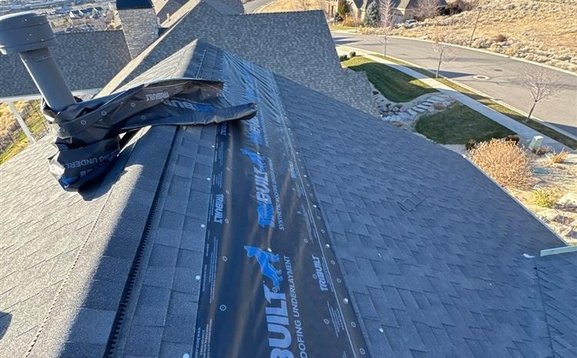
Real CompanyCam photo (Lehi project, 6 Jan 2026). Get the homeowner’s permission before publishing.
Not leaking? Book a free inspection →
Is It a Roofing Emergency? Signs of Emergency Roof Damage
Some roof problems can’t wait until morning, while others can usually wait a day or two without making things worse.
Call now if:
- Water is dripping through a ceiling, light fixture or wall.
- A ceiling is bulging or sagging with water.
- Wind has torn off shingles and left the roof deck or underlayment exposed.
- A tree or large branch has landed on the roof.
- A skylight is cracked or broken.
- Water is coming in near wiring, outlets or light fittings.
It can usually wait a day or two if:
- A few shingles are in the yard, but nothing is leaking inside.
- You found granules in the gutters after a storm.
- There’s an old, dry stain on the ceiling that hasn’t grown.
Even if the damage can wait, book an inspection soon. A roof that isn’t leaking yet may start leaking during the next storm or thaw. After a storm, these signs of hail damage can help you identify potential problems.
Roof Leaking? What to Do Right Now
01
Keep away from wet electrics
If water is near outlets, fixtures or the breaker panel, turn the power off to that area at the breaker, but only if it’s safe to reach.
02
Catch the water
Set buckets or pans under the drip, and move furniture, rugs and electronics out of the way so they stay dry while you wait.
03
Relieve a bulging ceiling
If water pools in the drywall, a small screwdriver puncture at the lowest point lets it drain into a bucket. Only do this away from light fixtures.
04
Take photos
Photograph the leak, the ceiling and anything damaged, with the date visible on your phone, so you have a clear record from the start.
05
Stay off the roof.
A wet, icy or storm-damaged roof is dangerous, and walking on damaged shingles can make the damage worse. Leave the roof to us.
06
Call Rooval Roofing
Call (385) 424-8810. Have your photos handy and tell us where the water is showing, so we know what to bring.
24–48 hrs
Speed matters inside the house, too. The EPA advises drying water-damaged areas and items within 24 to 48 hours to prevent mold growth.
Who to Call First: Roofer, Insurer or Restoration Company
First
A roofer, to stop the water
Every hour water keeps coming in adds to the damage inside, so getting the roof covered comes before anything else, including the insurance call and the drying out.
Next
Your insurer, if a storm caused it
Rooval Roofing photographs and documents what we find. If the damage is storm-related, that documentation can help you keep organized records for an insurance claim. Your insurer decides what’s covered.
A restoration company, for the inside
We repair the roof and any damaged decking underneath it. Drying rooms, replacing wet drywall and repainting ceilings are separate trades. Fix the roof first so the next storm doesn’t undo that work.
Was It Hail or Wind?
See what storm damage looks like up close, how we photograph and record it, and the photo report you keep for your records.
What Happens When You Call Rooval Roofing
1
A roofer answers
Call (385) 424-8810 for urgent leaks. A roofer asks what’s happening and tells you what to do until we arrive.
2
We come out, usually the same day or the next
Active leaks get priority over routine repair visits, which usually happen within a few days. We’ll tell you on the call when to expect us.
3
We stop the water and photograph the damage
As soon as it’s safe, we tarp or seal the damaged area, check the attic to see where the water is going and photograph the damage. You keep the photo record.
4
We plan the permanent repair
Once the roof is dry, we come back to trace the leak to its source and give you a written price before any repair work starts.
Emergency Roof Tarping and Temporary Roof Repairs
Which temporary fix we use depends on what failed. A large opening needs a tarp, while a small gap around a pipe or flashing can usually be sealed.
Emergency roof tarping: When wind, hail or a fallen branch leaves part of the roof open, we cover it with a heavy-duty tarp. We run the tarp past the damaged area, and over the ridge where the roof allows, so water runs off the top of it. Then we fasten it down so the wind can’t lift it. It’s there to keep the house dry until we make the permanent repair.
Temporary seals: Many leaks start at one weak spot, such as a cracked pipe boot, lifted flashing or a gap where the roof meets a wall or chimney. We seal that spot with a sealant or patch suited to your roofing material, which stops the water right where it gets in. It’s made to hold until the permanent repair, when we replace the failed part itself.
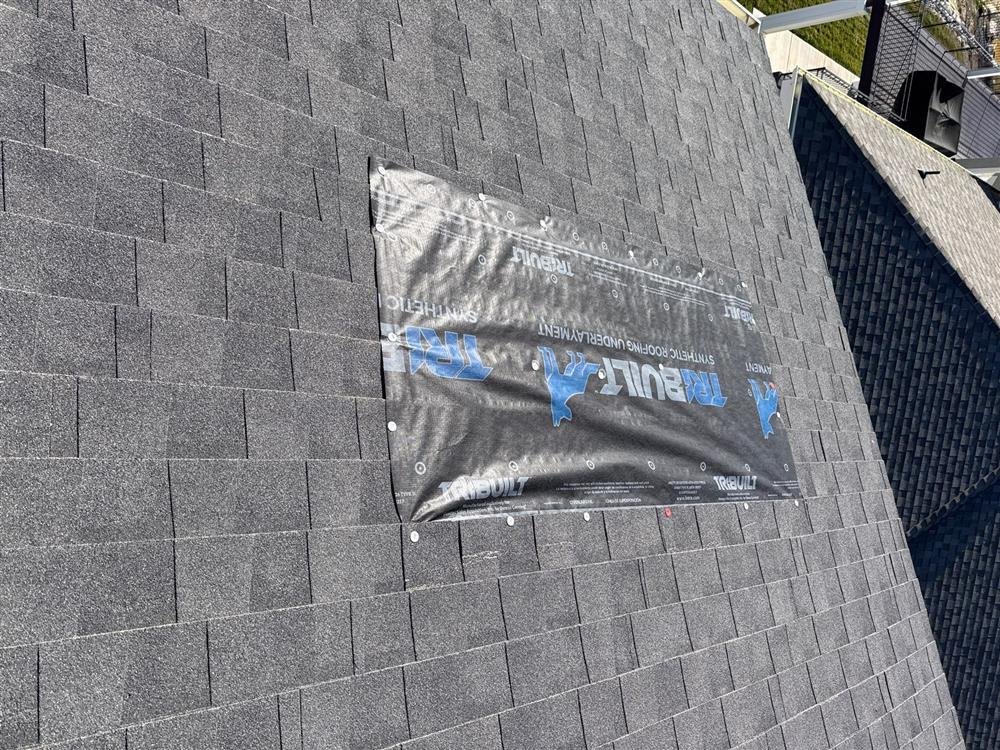
A temporary cover keeps water out
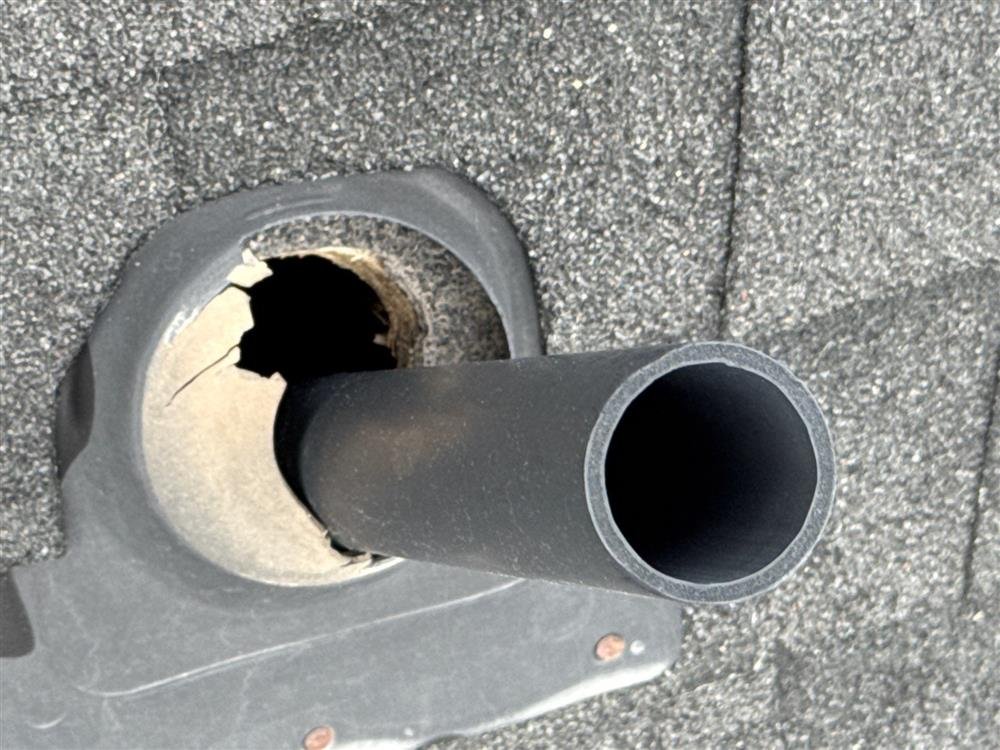
A cracked pipe boot can be sealed to stop the leak
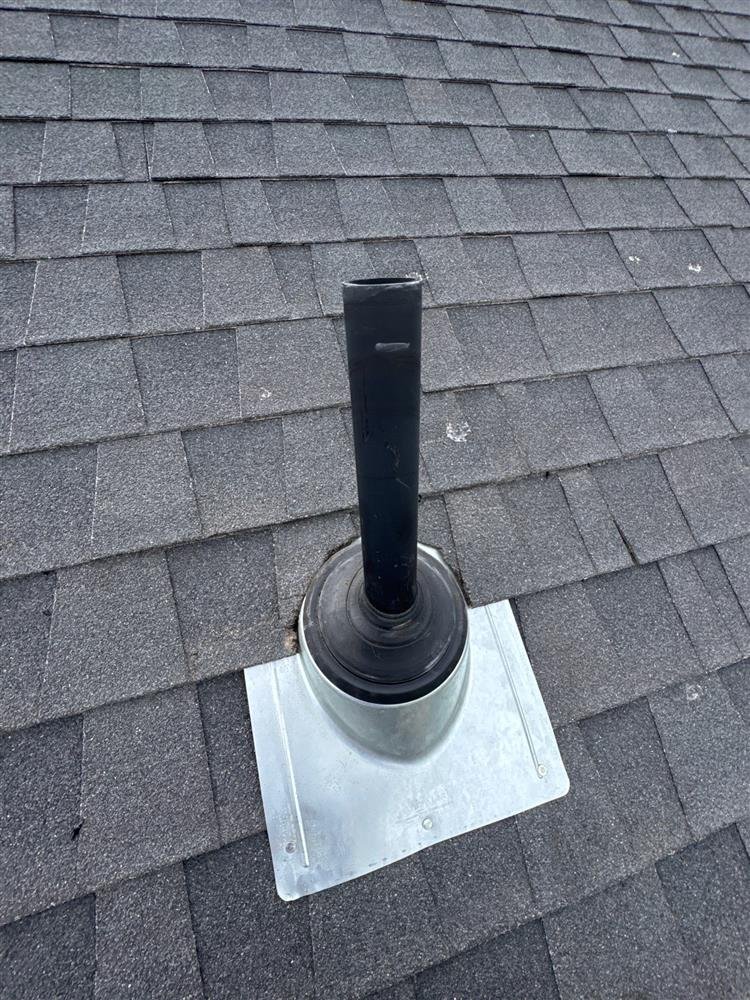
The permanent repair replaces the failed boot
Common Roof Emergencies We Handle
Active roof leaks
Water travels along rafters before it drips, so the wet spot is rarely under the entry point. We trace each leak to its source.
Shingles blown off by wind
Canyon wind and storm gusts can lift and tear shingles, leaving the roof deck exposed to the next rain or snow.
Hail damage
Hail can crack shingles, dent flashing and break skylights. See our storm damage roof repair service for what comes next.
Fallen trees and branches
When a tree or large branch lands on the roof, we secure and repair the roof while a tree service removes the tree.
Flat and low-slope roof leaks
Ponding water and failed seams can leak during heavy rain or snowmelt. See our flat and low-slope roofing service.
Pipe boots, flashing and skylights
Gaps around pipes, chimneys, walls and skylights are common places for leaks to start. We check each one when we trace a leak.
Not on this list? Call (385) 424-8810 and tell us what you’re seeing.
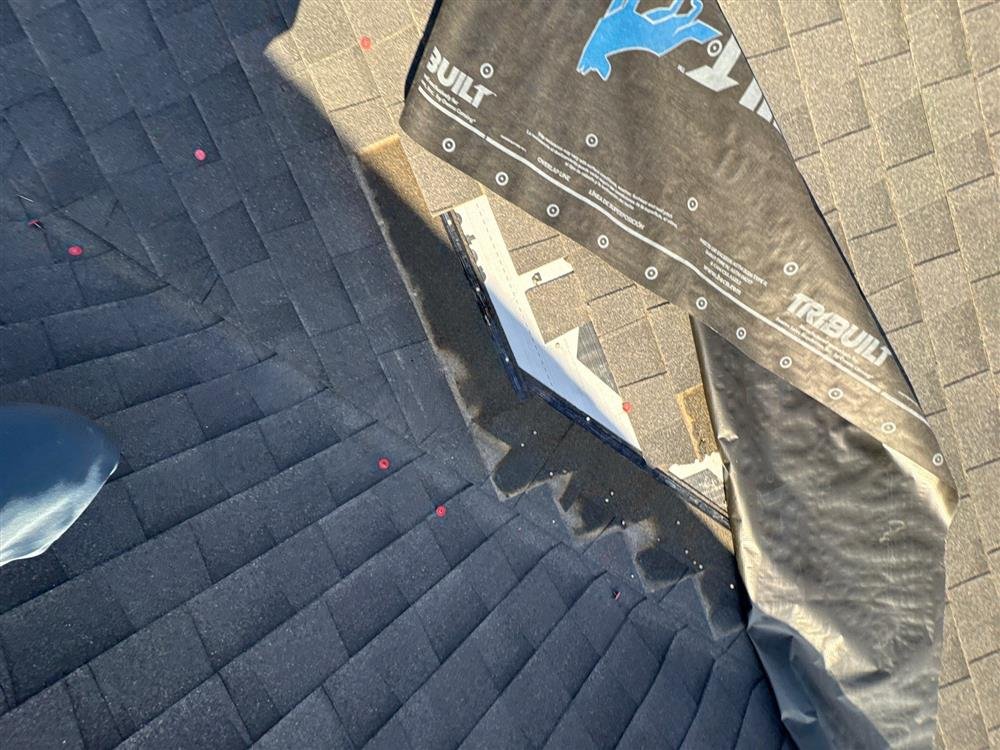
“Wind-torn shingles leave the roof deck exposed to the next storm”
Winter Roof Leaks in Utah: Ice Dams and Snowmelt
Many emergency roof calls in winter aren’t caused by storms. Heat escaping from the house melts snow on the upper roof, and the water refreezes at the colder eaves. That ridge of ice traps more water, which backs up under the shingles and can leave a stain high on a wall or around a window, often during a thaw.
We stop the water as soon as it’s safe to work on the roof, then address the cause once the weather allows. Our guide to attic ventilation and ice dams in Utah explains how to help prevent them from coming back.
What Homeowners Say
Rooval Roofing is owned and run by Matthew and Agustina Thompson in Lehi. Matthew handles inspections himself.
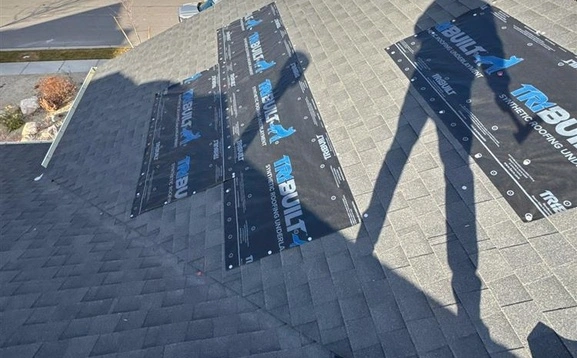
We secure the roof first, then plan the permanent repair


 Trustindex verifies that the original source of the review is Google.
 Trustindex verifies that the original source of the review is Google.
 Trustindex verifies that the original source of the review is Google.
 Trustindex verifies that the original source of the review is Google.
 Trustindex verifies that the original source of the review is Google.
 Trustindex verifies that the original source of the review is Google.
 Trustindex verifies that the original source of the review is Google.
 Trustindex verifies that the original source of the review is Google.
 Trustindex verifies that the original source of the review is Google.
 Trustindex verifies that the original source of the review is Google.
Emergency Roof Repair Cost and What Affects It
Every emergency is different, so we give you a written price after we’ve seen the roof. The cost depends on:
- How large the damaged or open area is.
- Your roof’s material and pitch.
- Whether the decking underneath is wet or damaged.
- Whether a temporary repair is needed before the permanent one.
Financing
If the emergency turns into a major repair or a replacement, financing can turn it into a monthly payment you can plan around.
12-Month Same-As-Cash
No interest if paid in full within 12 months, up to $150,000.
Low Monthly Payment Plan
No down payment, with 2–20 year terms, up to $150,000.
Home Equity Line of Credit
Terms from 5–30 years, up to $400,000.
All options are subject to credit approval. Financing is provided by third-party lending partners, and your rate and term are confirmed by the lender. There is no credit application on our website, and nothing on it affects your credit.
Emergency Roof Repair FAQs
How quickly can you help with an active roof leak?
Call (385) 424-8810 for urgent leaks. We’ll tell you how to limit the damage inside and when we can be on your roof, which is usually the same day or the next.
Can a roof be repaired the same day?
The temporary fix often can. For active leaks, a tarp or seal usually goes on the same day or the next, and the permanent repair follows once the roof is dry enough to trace the leak properly.
Can you tarp a roof in the rain or snow?
We tarp or seal the roof as soon as it’s safe to be on it. If ice, lightning or high winds make that unsafe, we’ll explain what to do inside to limit the damage and return when conditions allow.
Can I stop a roof leak from inside the house?
Not for good. From inside, you can catch the water, move belongings and relieve a bulging ceiling, but the opening itself has to be covered or sealed from the roof. That’s the first thing we do when we arrive.
Will a few missing shingles cause a leak?
Not always right away. The layer under the shingles can keep water out for a while, but it isn’t made to stay exposed, and open nail holes can let water in. Book an inspection before the next storm or thaw.
A neighbor's tree fell on my roof. Who pays for the repair?
That depends on the insurance policies involved, and only the insurers can decide. We secure and repair the roof while a tree service removes the tree, and we photograph the damage so you have an organized record for a claim.
Emergency Roof Repair Across Utah, Salt Lake and Davis Counties
Rooval Roofing is based in Lehi and takes emergency calls across Utah, Salt Lake and Davis counties.
Don’t see your city? Call (385) 424-8810 and ask.
Along I-15, north to south:
Roof Leaking Right Now?
Call (385) 424-8810 for urgent leaks. We stop the water, photograph the damage and plan the repair.
Licensed and insured · Utah GC #13861046-5501 · Family-run, based in Lehi