Key Takeaways: Attic Ventilation in Utah
- September storms brought 1- to 1.5-inch hail to parts of northern Utah, including Lehi and Davis County.
- Older or weathered shingles can be more vulnerable to hail impact and granule loss.
- Strong winds can lift, crease, or break shingle tabs even when damage isn’t obvious from the ground.
- Check gutters, siding, vents, shingles, and attic areas for signs of storm damage, but stay off the roof.
- A documented inspection can help identify damage and determine whether the roof needs repair or replacement.
Hail capable of damaging roofs was reported across parts of northern Utah on September 17, 18, and 22, 2026, including Heber Valley, Davis County, and northern Utah County, including Lehi.
Whether your roof was actually damaged comes down to three things: how big the hail was on your street, how old your roof is, and whether wind came with it.
This guide explains what each of those conditions means for a roof, so you can tell whether yours needs a closer look before winter.
Did It Hail On My Street? The September Storms By City
| Date | Cities | Largest hail | What it can mean for a shingle roof |
| Sept 17 | Midway, Heber Valley | 1.5 inches, measured in Midway | Large enough to bruise standard shingles and dent gutters and vents |
| Sept 17 | Springville | About 1 inch on radar | Granule loss, most likely on older roofs |
| Sept 18 | Layton, Kaysville, Farmington | 1.25 to 1.5 inches measured or photographed; radar estimates indicated larger hail in parts of the area. | Bruised and cracked shingles where hail was heaviest, plus possible wind damage |
| Sept 18 | Clearfield, Syracuse | About 1.5 inches on radar | Bruising possible on standard shingles |
| Sept 18 | Bountiful, Centerville, Woods Cross, North Salt Lake, Clinton, West Point | About 1 inch on radar, with a 78 mph gust in West Bountiful | Lifted or creased shingle tabs as well as hail marks |
| Sept 18 | Ogden, Roy, South Ogden, West Haven, Eagle Mountain | About 1 inch on radar | Granule loss and dented metal, most likely on roofs over 15 years old |
| Sept 18 | West Jordan, Taylorsville | About 1 inch reported | Granule loss and dented metal |
| Sept 22 | Lehi, American Fork, Highland, Alpine, Cedar Hills, Pleasant Grove, Lindon, Saratoga Springs, Draper | About 1 inch on radar, 1 inch reported near Suncrest | Granule loss and bruising, most likely on original builder-grade roofs |
| Sept 22 | Salt Lake City, West Valley City, Ogden, South Ogden | About 1 inch on radar | Granule loss and dented metal |
Radar numbers cover whole neighborhoods but can run about a quarter inch off, and measured reports describe a single spot. Hail also falls in narrow bands, so one street can take a direct hit while the next gets only rain. Use the table to decide whether your roof is worth checking. The roof itself will tell you the rest.
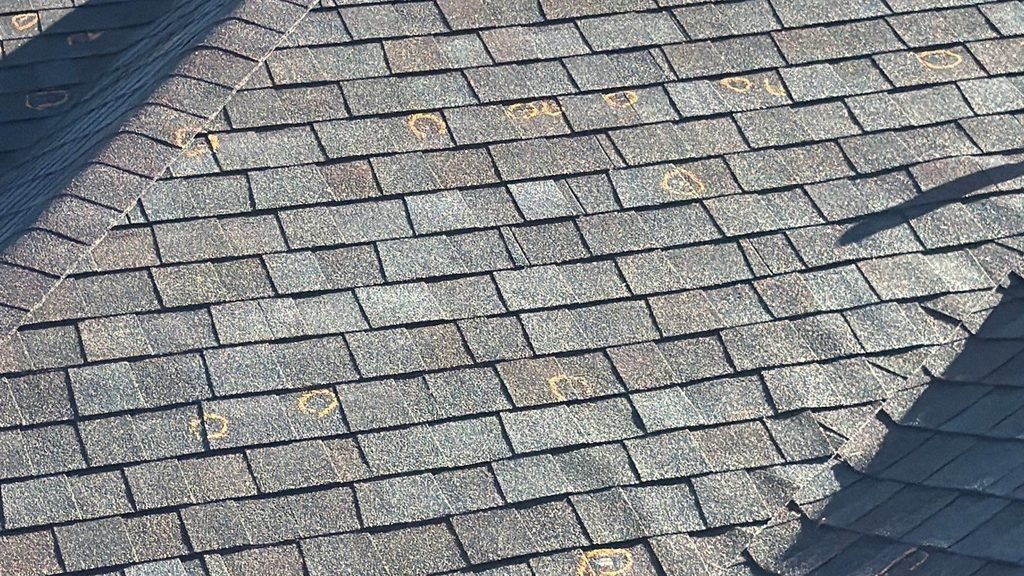
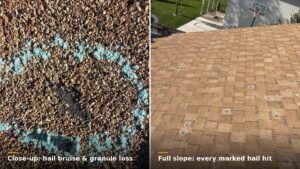
Chalk circles identify subtle hail strike bruises across a Kaysville roof slope—damage that is rarely visible from street level.
What 1.5-Inch Hail Does To A Roof
This is the largest hail reported in these storms. It fell in Midway on September 17, and on September 18, a trained spotter measured 1.5 inches in Farmington while a stone the same size was photographed just west of I-15 in Kaysville.
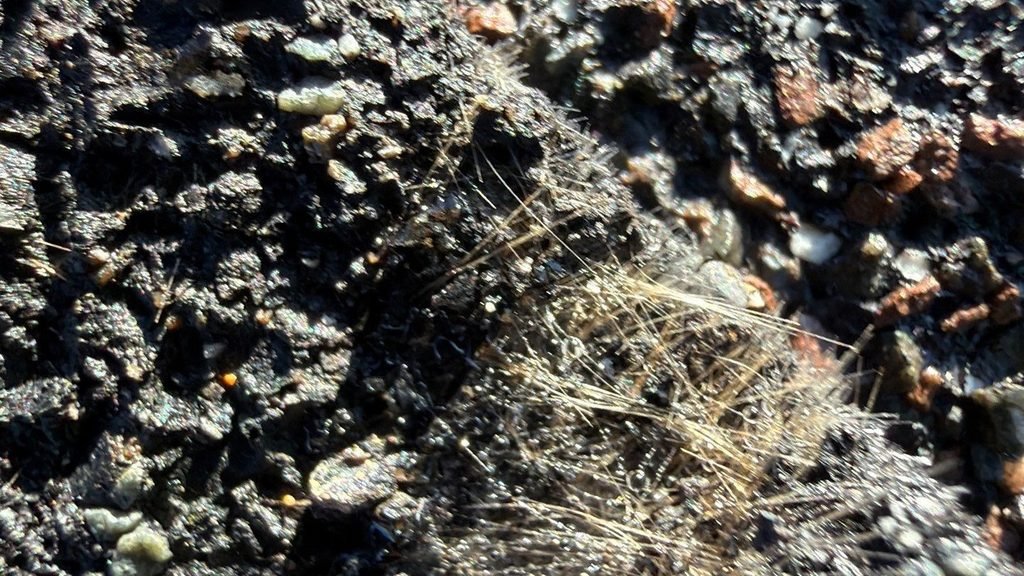
Up-close view of a 1.5-inch hailstone impact: the surface granules have been knocked away, exposing and fracturing the structural fiberglass mat beneath.
Hail this size can do real damage to a standard asphalt shingle. A hard hit can crush the fiberglass mat inside the shingle without breaking the surface, leaving a bruise that looks like a dark spot from above and feels soft when you press it. Harder hits can crack the shingle outright. Bruises rarely leak right away, which is why they get missed, but the damaged spot keeps breaking down with each season of sun and snow.
For a sense of scale, UL 2218 classifies roofing materials based on steel-ball impact tests designed to reproduce the impact energy of hail. Class 2 corresponds to a 1.5-inch steel ball struck twice at the test location. The rating measures resistance to physical breach; it does not mean a shingle will show no granule loss or cosmetic damage in real hail
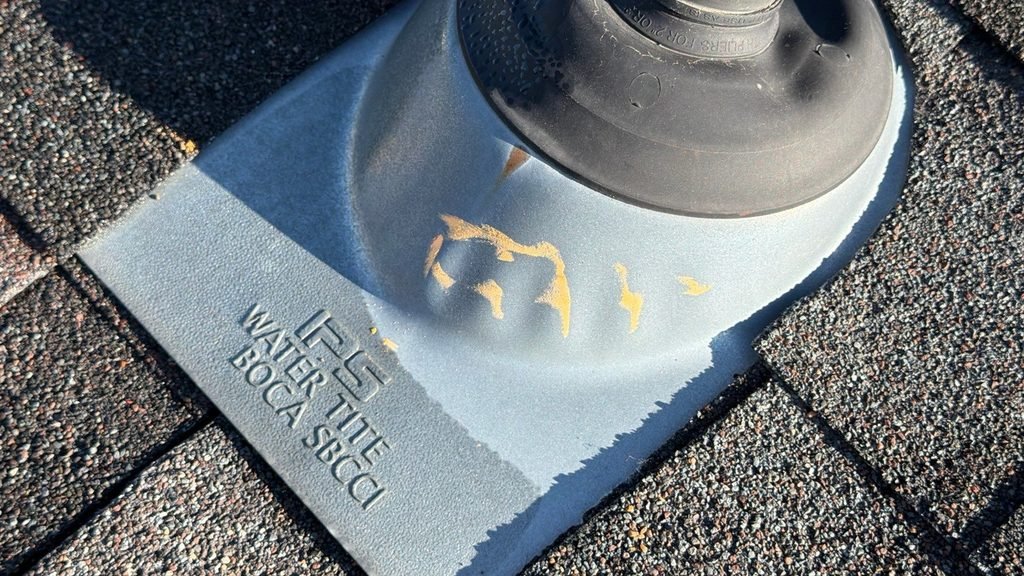
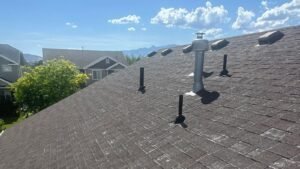
Soft aluminum plumbing boots and metal flashing easily dent during hail strikes, providing clear initial evidence for storm damage assessments.
What Quarter-Size Hail Means For An Older Roof
Quarter-size hail, about 1 inch across, fell over much of Davis and Weber counties on September 18. Four days later, a storm formed over Lehi and moved north across American Fork, Highland, Alpine, Cedar Hills, Pleasant Grove and Draper, with 1-inch hail reported near Suncrest.
On a newer roof, 1-inch hail may cause less damage than the same hail striking an older, weathered shingle, but the result depends on the roofing material and the individual impacts. Its main effect is knocking granules loose. Those ceramic granules shield the asphalt from sunlight, and once a patch is gone, the bare spot dries out and cracks years ahead of the rest of the roof under Utah’s high-elevation UV.
Age is what changes the answer. Older roofs in that warning area may warrant closer attention because weathered shingles can be more vulnerable to impact; a stone that barely marks a newer roof is more likely to bruise one of them.
Roofing in Lehi:
Was your Lehi roof affected by the September 22 storm? Learn how Rooval Roofing inspects and documents hail damage, from individual shingles to entire roof slopes.
What Hail Plus 78 Mph Wind Does To A Roof
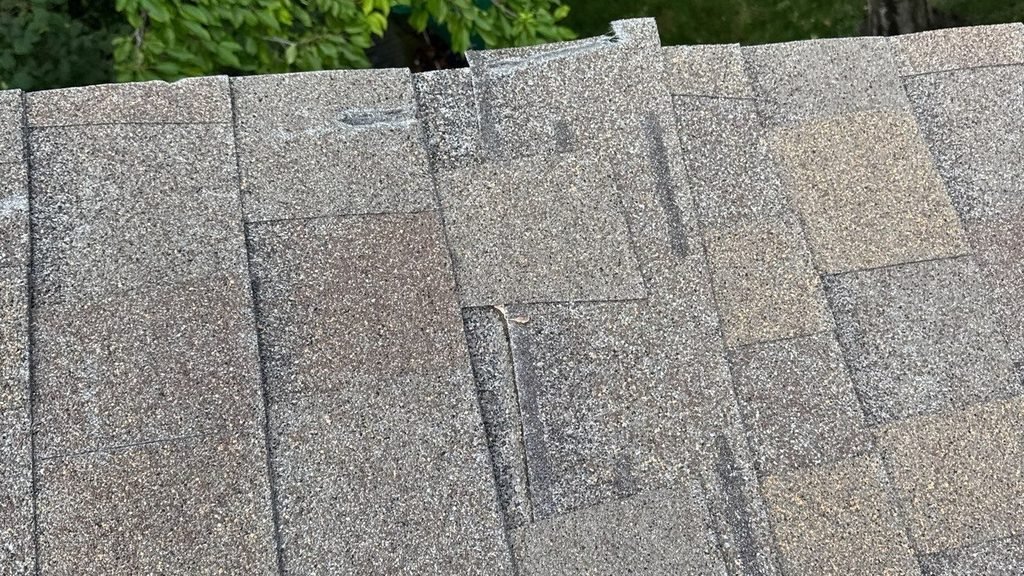
High thunderstorm winds lift shingle tabs and break the underlying seal strip, leaving shingles vulnerable to tearing and winter water penetration.
This one applies to Davis County. On September 18, the NWS warned of 60 mph gusts and half-dollar hail and told residents to expect wind damage to roofs, siding, and trees. Gusts ran 50 to 65 mph north of Salt Lake County and peaked at 78 mph near Legacy Highway in West Bountiful.
Wind changes hail damage in two ways. First, it drives the stones in at an angle, so the slopes and siding facing the storm take far more hits than the sheltered side. Because hail can be driven at an angle by strong winds, the slopes facing the incoming storm may receive more direct impacts than sheltered slopes.
Second, wind does damage of its own. Each shingle is held by nails and a strip of sealant bonding it to the row below. A strong gust can get under an edge, lift the tab and break that seal, and the shingle often settles back down looking normal. It isn’t. Once the seal is broken, that tab lifts again in every storm that follows. The signs are creased tabs near the nail line, tabs that lift by hand and cracked ridge caps, mostly along ridges, rakes and corners.
The confirmed tornado touched down in the mountains east of Fruit Heights and stayed away from homes, so for your roof it is the valley wind that counts.
Why Late-September Hail Needs Attention Before Winter
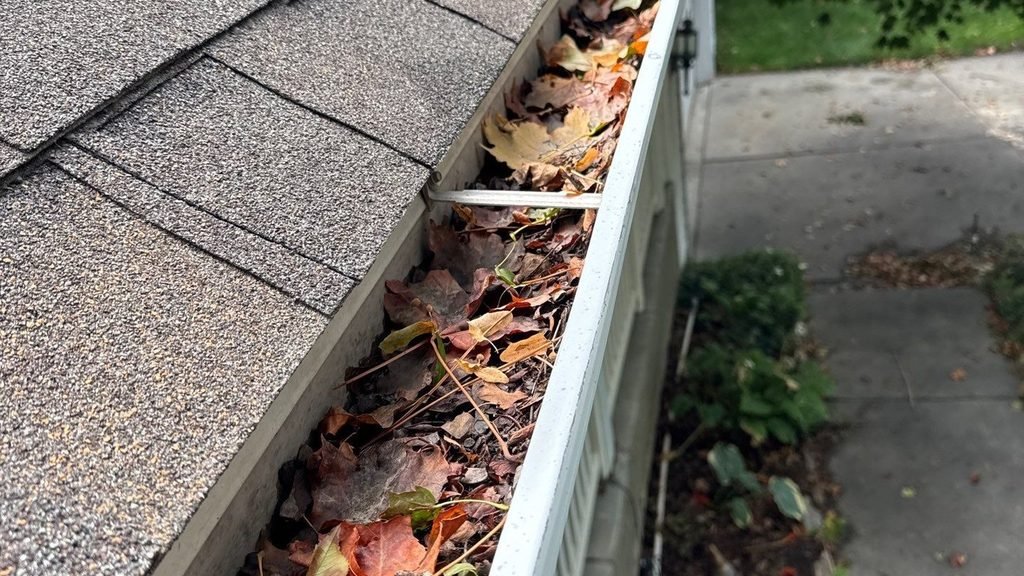
Checking gutters for excessive ceramic granule accumulation is one of the easiest ways to spot hail impact from the safety of the ground.
Most Utah hail comes with the summer monsoon in July and August, which leaves a few months to spot and fix damage. These storms arrive with only weeks to go before freezing nights. If water reaches a damaged area, freezing and thawing can worsen cracks or openings over time, increasing the risk of leakage. Every rain also washes more loose granules away, and some of the evidence of the storm goes with them.
What To Check From The Ground This Week
Stay off the roof. It can be slippery after hail, and walking on bruised shingles only adds to the damage. You can still learn a lot from the ground and the attic:
- Look for granules collected in gutters and at the bottom of downspouts.
- Check gutters, downspouts, window screens and AC fins for fresh dents.
- Look for shingle pieces or torn tabs in the yard.
- Check siding and painted trim on the side that faced the storm for chips or spatter marks.
- In the attic, look for daylight through the roof boards and for new water stains.
- Photograph anything you find and keep the original files so the photo metadata is preserved.
Then note the storm date for your city from the table above. It is the first thing an insurer will ask for.
Storm Damage Roof Repair
Found dents, loose granules, or lifted shingles? See how we repair storm-damaged roofs across Utah, from a few replaced shingles to full slopes.
Why A Dated Photo Record Of Your Roof Matters
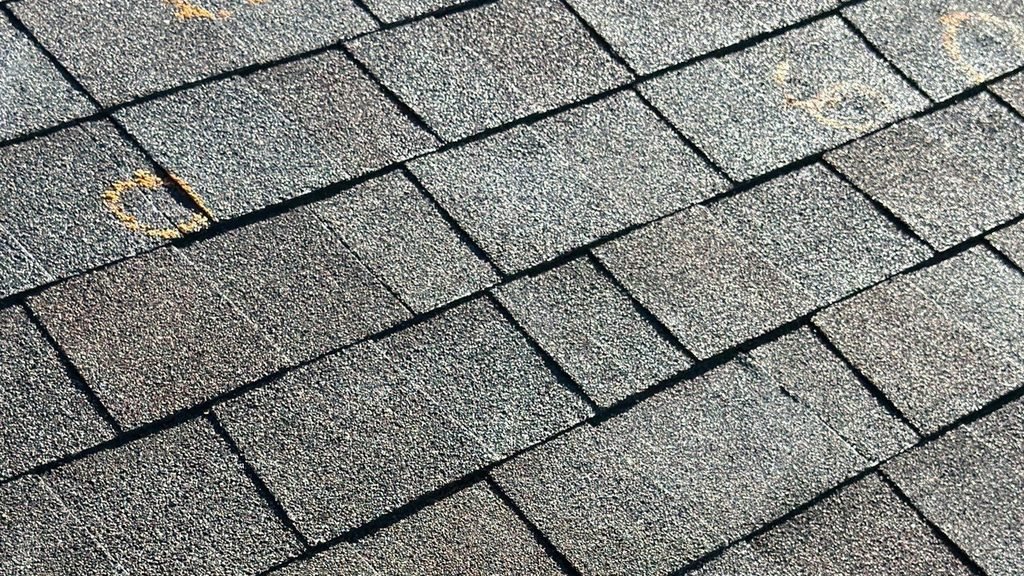
Close-up chalk markings provide concrete, dated photographic evidence of hail strikes required by insurance adjusters during a claim inspection.
A hail map can show that hail fell near your home. It can’t show what happened on your roof. An insurer may use public weather records to verify that a storm occurred near your property, then compare the reported storm date with the damage documented on the roof.
Rooval Roofing documents storm damage. We don’t file, negotiate or promise an outcome on your claim. You decide whether to involve your insurer, and the insurer decides what is covered.
Storm Damage Documentation
Every slope photographed, every impact chalked, and a written record you keep whether you hire us or not. See what the photo set and write-up contain.
Door Knockers After A Utah Hailstorm: What The Law Says
Following a major storm, traveling “storm chasers” frequently go door-to-door looking for quick jobs. Fortunately, Utah law offers two simple tools to help you identify reliable contractors:
First, steer clear of anyone offering to “cover your insurance deductible.” Utah law strictly prohibits contractors from rebating or waiving deductibles—meaning any such offer is an immediate red flag.
Second, always confirm credentials through the Utah Division of Professional Licensing. As a local company committed to full transparency, Rooval Roofing invites you to verify our Utah General Contractor license (#13861046-5501) directly through the state’s verification portal.
Repair Or Replace After Hail
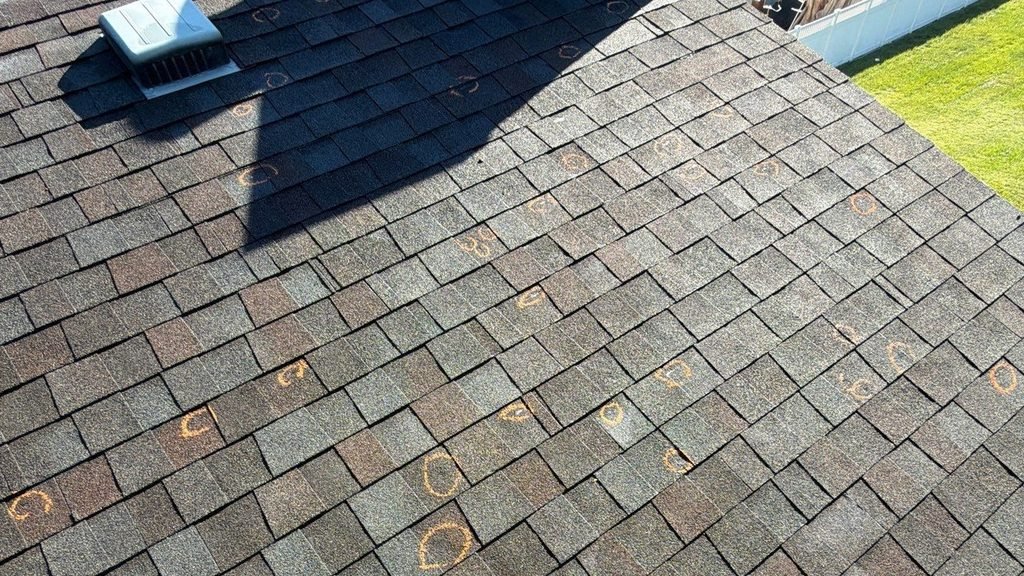
Documenting the total concentration of hits across a full slope helps determine whether hail damage warrants localized repairs or a full roof replacement.
A roof that took hail doesn’t automatically need replacing. The answer depends on how many impacts are on each slope, whether the mat is fractured, how old the roof is and whether the boards underneath stayed dry. Plenty of roofs need only targeted repairs. Some need nothing.
Every Rooval Roofing inspection follows the same four steps. We check the property, document the roof slope by slope, check the attic, and flex-test a shingle before we recommend anything.
Repair or Replace?
How Utah homeowners can weigh a repair against a full replacement, and what changes the answer.
Roof Repair vs. Roof Replacement: How Utah Homeowners Can Decide →
Get Your Roof Checked After The September Storms
Hail damage isn’t always obvious from the ground. If your home was in the path of the September 17, 18, or 22 storms, a roof inspection can identify bruised shingles, loose granules, lifted tabs, and other signs of storm damage before winter.
Rooval Roofing photographs each roof slope and provides a written record of what we find, whether the roof needs a repair or no work at all.
Frequently Asked Questions
If your area had 1-inch hail, a newer roof probably came through fine, and checking your gutters and vents for dents is a sensible first step. If you had 1.5-inch hail, or found fresh dents on soft metal, an inspection is worth it regardless of age. Stones that size can bruise any standard shingle.
Class 4 shingles have the highest UL 2218 impact-resistance classification and are tested with a 2-inch steel ball. That can provide greater impact resistance than lower-rated products, but Class 4 shingles are not hail-proof and cost more than standard shingles. Some insurers give a premium discount for them. Ask yours before you decide, and look at standing-seam metal too, since it is worth comparing.
Check your policy. The section on your duties after a loss sets the notice requirements, and your agent can explain it if the wording is unclear. Either way, waiting costs you something: rain washes granules off, marks weather in, and every later storm makes it harder to tie the damage to one date.
Yes. Along with Utah County and the Salt Lake Valley, we inspect roofs in Layton, Kaysville, Farmington, and the rest of Davis County, plus Heber City and Herriman. Call (385) 424-8810 to set up a free inspection. You get a written photo record whether your roof needs work or not.