
Gutter guards can be worth it in Utah if trees regularly fill your gutters with leaves, cottonwood seeds, or pine needles, or if cleaning your gutters requires difficult ladder work. They’re usually less worthwhile for homes with little tree debris and gutters that drain properly.
Before buying, consider the type of debris your home collects, the condition of your gutters, winter weather, installation costs, and ongoing maintenance.
This guide explains what gutter guards do, when they are worth the cost, how they handle Utah snow and ice, which type suits which debris, what they cost, and what to check on your gutters before you buy them.
Key Takeaways
- Gutter guards reduce how often you clean your gutters, but they still need checking once or twice a year.
- They make the most sense on homes with a lot of trees, homes with tall or steep roofs, and homes nobody checks often.
- Gutter guards don’t prevent ice dams.
- A guard can’t fix a gutter that is too small, sagging or set too low. Those problems need repair first.
- A 2026 national survey found a median cost of $5,000 for a professionally installed gutter guard project.
Do Gutter Guards Work? What They Can and Can’t Do
A gutter guard is a cover, screen or insert that fits over or inside the gutter. It lets water in and keeps most leaves and larger debris out.
Gutter guards can:
- Keep many leaves, seed pods and twigs out of the gutters and downspouts.
- Reduce how often someone has to climb a ladder to clean the gutters.
- Lower the chance of a clog that slows the water during a storm.
Gutter guards can’t:
- Stop debris from building up on top of the guard.
- Keep out fine material, such as shingle granules and dust, with every type of guard.
- Make a gutter that is too small or sloped the wrong way carry more water.
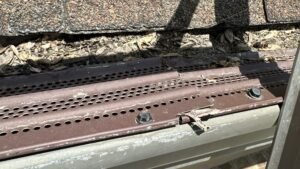
On a July 2025 inspection in Cottonwood Heights, Rooval Roofing found leaves and pine needles piled along the top of a perforated gutter guard, where the shingles meet the gutter. The guard kept that debris out of the gutter, but a buildup like this can block water from getting in and make overflow more likely during rain, depending on the guard’s design and how much debris collects.
When Gutter Guards Are Worth It in Utah
Gutter guards are most likely to be worth the cost if one or more of these apply to your home:
- A lot of trees nearby: Cottonwoods release their white, fluffy seeds from late spring into early summer. Maples, oaks and other shade trees drop leaves in fall. Pines also shed their older needles, although the timing varies by species. If you clean your gutters more than twice a year, guards can save you time.
- A tall or steep roof: Cleaning gutters on a tall or steep roof means harder ladder work and a greater risk of falls.
- A home nobody checks often: Rentals, second homes and cabins can go months without anyone looking at the gutters. A guard lowers the chance of a full clog in that time.
- Gutters that clog again soon after cleaning: If a downspout keeps filling with leaves, a guard can help keep it clear.
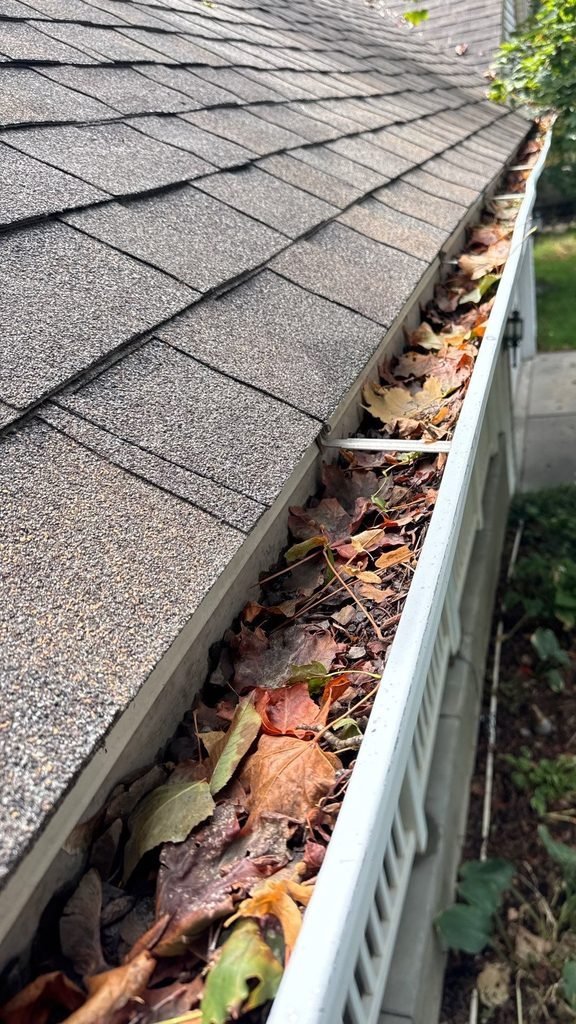
A gutter packed with old leaves on a home in Provo, Utah, found during a roof inspection in August 2026.
On an August 2026 inspection in Provo, Rooval Roofing found the gutters packed with old, decaying leaves from the trees beside the house. Part of the wood along the roof edge had also rotted. Clogged gutters can overflow when it rains and send water onto the fascia, the board the gutter is attached to, although finding the cause of rot takes a closer inspection.
A home with this much leaf fall is the kind where guards can save regular cleaning, once the gutters and roof edge are repaired.
When Gutter Guards Aren’t Worth the Money
Gutter guards are often not worth the cost if:
- There are few trees near the house. If one cleaning a year keeps your gutters clear, guards may cost more than the cleaning they replace.
- The gutters need repair. Gutters that are too small, sagging or pulling away from the house need to be fixed or replaced first. The checklist later in this guide covers what to look for.
- Most of what lands in the gutters is shingle granules. Granules look like coarse sand and come off asphalt shingles over time, and some guards let them through. Some granule loss is normal, especially on a new roof, but a large or sudden amount can mean the shingles are wearing out or damaged.
Our post on hidden signs of roof damage explains what else to look for.
Gutter Guards, Ice Dams and Utah Winters
Gutter guards don’t prevent ice dams, and they are not usually what causes them. An ice dam forms when heat from the house warms the upper part of a snow-covered roof. The snow melts, runs down, and freezes again at the colder roof edge. The ice holds back more meltwater, which can leak under the shingles.
To reduce ice dams, limit the heat that reaches the roof through the attic. Seal gaps where warm air escapes into the attic, and add insulation where it is needed. Good attic ventilation can also help keep the roof temperature more even. Our guide to attic ventilation in Utah covers this in detail, and our guide to roof flashing and ice dams explains how flashing and ice barriers help keep water out at the roof edge.
Utah winters bring a second problem. Temperatures often rise above freezing during the day and drop below freezing at night, so water in gutters and downspouts can freeze. Here is how guards affect that:
- Clean gutters drain more freely: Guards can reduce leaf buildup, but they don’t stop water from freezing.
- Debris on top can freeze: Wet leaves and needles can collect on top of a guard and slow the water. In freezing weather, that moisture can freeze on the guard and make drainage harder.
- Ice under a guard is harder to remove: Ice can form inside the gutter, under the guard, where it is harder to reach.
Which Type of Gutter Guard Fits Utah Debris?
| Guard type | Works well for | Drawbacks |
| Screen (perforated metal or plastic) | Larger leaves and twigs | Fine needles, seeds or grit can get through or collect on top |
| Micro-mesh (very fine metal mesh) | Fine debris, including seeds and needles | Debris can collect on the surface, so it needs a rinse or brush-off now and then; wet debris on top can freeze |
| Reverse curve (a solid cover with a rounded front edge) | Larger leaves, where the design suits the roof | Some designs can overflow during heavy rain |
| Foam or brush inserts | Light debris, at a low price | Hold water and debris; need to be taken out and cleaned regularly |
Look at what you pull out of your gutters at your next cleaning, such as big leaves, needles, fluff or grit. That tells you which type to consider. Results also depend on the size of the openings, the roof slope, the material and how hard it rains.
What Gutter Guards Cost
In This Old House’s 2026 survey of 1,000 homeowners nationwide, the median cost of a professionally installed gutter guard project was $5,000. The middle half of homeowners paid $4,138 – $6,000. Your cost depends on how many feet of gutter you have, the type of guard, the height and shape of your roof, and local labor rates. The survey’s average works out to about $39.71 per foot of gutter.
To decide whether that cost makes sense, ask yourself:
- How many times a year do your gutters need cleaning?
- Do you pay someone to clean them, and how much does each visit cost?
- Can you clean them safely yourself, or is the roof too high?
- How long will the guard last, and what upkeep does it need?
To estimate how long guards take to pay for themselves, divide the installed price by what you would save on cleaning each year. If you pay for several cleanings a year, guards can lower that expense over time, although it may take several years to recover the upfront cost. Needing fewer trips up a ladder can matter too, even when the savings are small.
Check Your Gutters Before You Add Guards
Guards can usually go on existing gutters, as long as the gutters are in good shape. Check these points, or ask a roofer to check them:
- Size: A gutter that overflows in normal rain may be too small, clogged or sloped wrong, or it may need another downspout.
- Slope: Gutters should slope slightly toward the downspouts. Water that sits in a gutter for days can mean the slope is wrong, a section is sagging or something is blocking it.
- Hangers: Loose or missing hangers, the brackets that hold the gutter up, let it sag and pull away from the house, especially under snow.
- Drip edge and gutter apron: A drip edge is a metal strip along the edges of the roof, and Utah’s residential code requires one along the lower edges (eaves) and sloped side edges (rakes) of shingle roofs. A gutter apron is a separate metal strip that helps direct water into the gutter so it doesn’t run down behind it.
- Downspouts: Each downspout should be clear and should empty onto a splash block or into an extension that carries water away from the foundation. A downspout that empties onto a lower roof puts all that water on one small area of shingles.

Water standing in a gutter that wasn’t draining, found during a roof inspection on a newer home in Lehi, Utah, in September 2026.
On a September 2026 inspection of a newer home in Lehi, Rooval Roofing found the drip edge and gutters installed too low, gutters twisted and missing fasteners, and a front gutter holding water. Guards on gutters like these would cover the problems but would not fix them.
Should You Add Gutter Guards During a Roof Replacement?
During a roof replacement, the old shingles come off and the roof edge is open, so it is a good time to check the fascia, drip edge and gutters. Rotted wood can be repaired before the new shingles go on, and old gutters can be replaced at the same time.
If you plan to add guards, this is a convenient time to choose them so they fit the gutters and the new roof edge.
Get Your Gutters and Roof Edge Checked
Rooval Roofing is a family-owned roofer in Lehi serving Utah, Salt Lake and Davis counties. Our free roof inspection includes a photo record of what we find, and you can ask us to look at your gutters and roof edge during the same visit.
We’ll tell you whether your gutters drain properly, whether the drip edge and fascia are in good condition, and whether gutter guards make sense for your home.
Frequently Asked Questions
Check them once or twice a year, usually in late spring after the cottonwood seeds fall and in late fall after the leaves drop. Brush off anything on top of the guards and make sure the downspouts are clear.
Many do, but it depends on the roof slope, how hard it rains, how much debris has built up, the gutter size and the guard’s design. In This Old House’s hands-on testing, reverse-curve guards overflowed more easily than micro-mesh guards in heavy rain.
It depends on the material. Foam inserts are the least durable and may need frequent replacement. Brush inserts last longer but may still need replacing every few years. Metal screens, micro-mesh and reverse-curve guards are more durable. Ask the manufacturer about the expected life of the product and what its warranty covers.
They can. Some guards are installed by lifting the first row of shingles and fastening the guard underneath. Depending on the shingle manufacturer’s terms, this can affect your roof warranty, so check the warranty terms and the manufacturer’s installation instructions before you install a guard that attaches under the shingles.
Not always. Heat cable is an electric wire installed along gutters or downspouts to help keep ice from blocking the water. It uses electricity and doesn’t fix the heat loss that causes ice dams, so have the attic and roof edge checked first.