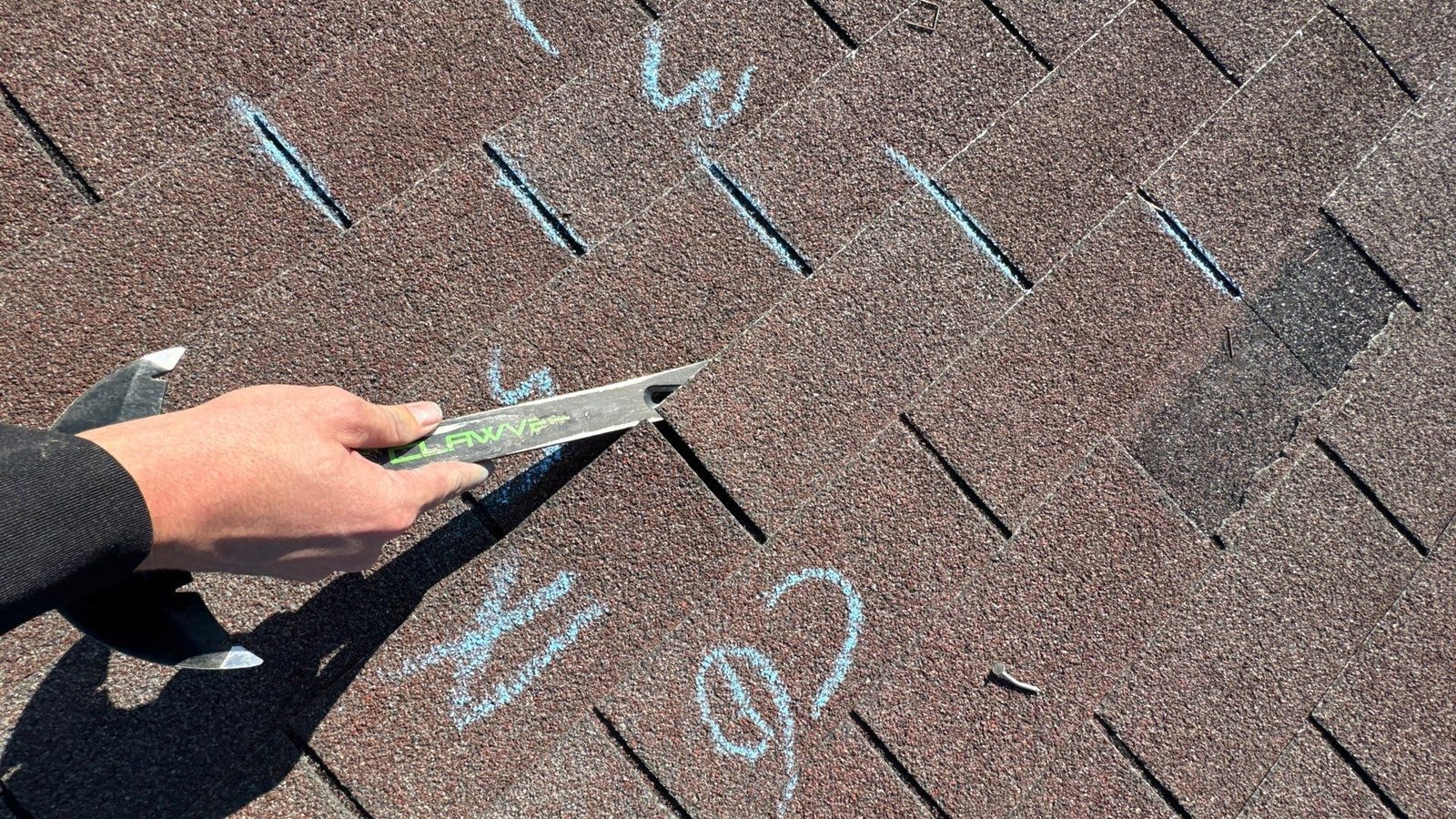
Key Takeaways
- Compare price only after every quote covers the same work. Ask each roofer to price anything their quote leaves out.
- Check the small items like flashing, pipe boots, drip edge, ventilation, and decking line by line.
- Compare the inspection behind each quote. A roofer who checked the attic and photographed every slope is quoting your roof.
- Compare how each roofer will run the job and what you will have in hand when it is finished.
- Divide each price by the expected life of the roof to compare cost per year.
Two Utah roofing contractors can inspect the same home and provide quotes thousands of dollars apart. That doesn’t automatically mean one contractor is overpriced or the other is offering a bargain. The difference may be in the materials, warranties, or work excluded from the estimate.
To compare roofing contractors fairly, start by checking whether their quotes cover the same work. Then look at how thoroughly each contractor inspected your roof. Consider the proposed materials, work process, payment terms, and warranty coverage before making your decision.
The seven steps below will help you compare your options and choose the right contractor.
Before You Compare: Rule Out Any Roofer Who Fails the Basics
Some roofers should not reach the comparison stage. Remove a roofer from your list if they can’t show you:
- An active Utah contractor license with a classification that covers roofing work. Check the number, status, and classification on the Utah DOPL license search.
- Proof of liability insurance and workers’ compensation coverage, if applicable. If the contractor is legally exempt from workers’ compensation requirements, ask for documentation of that exemption.
- Whether the contractor is authorized to perform the work or able to provide local references and follow-up service.
Our guide to the 15 questions to ask a roofer before hiring them explains each check and what a good answer sounds like.
Step 1: Put Every Quote on the Same Scope
Lay your quotes next to each other and go through them one line at a time. Use the sheet below. Write what each quote says for each line. Where a quote says nothing, write “not listed.”
| Line item | What to look for | Roofer A | Roofer B | Roofer C |
| Roof size | Roof area in squares (1 square = 100 sq ft), pitch, and number of existing layers | |||
| Tear-off | How many layers come off, down to the decking | |||
| Decking | Price per sheet, and how many sheets are included | |||
| Underlayment | Type (synthetic or felt) and where it goes | |||
| Ice and water shield | Where it goes (eaves, valleys) and how far up the roof | |||
| Drip edge | New metal at the eaves and the rakes | |||
| Starter strip | Starter shingles at the eaves and rakes | |||
| Flashing | New or reused, at walls, chimneys, and skylights | |||
| Pipe boots and vents | New boots on every pipe; number of roof vents | |||
| Ventilation | Intake (soffit) and exhaust (ridge or box vents), with counts | |||
| Shingles | Exact product name, color, and impact rating | |||
| Ridge and hip caps | Cap shingles made for the shingle line | |||
| Permit | Who pulls it, if your city needs one | |||
| Disposal and cleanup | Dumpster, magnet sweep for nails, gutter cleanout | |||
| Schedule | Start date and number of working days | |||
| Payment | Deposit, when the balance is due, how to pay | |||
| Warranties | Manufacturer warranty name; workmanship terms in writing | |||
| Exclusions | What is excluded from the quote | |||
| Total price | As mentioned in the quote |
Click or tap any shaded cell to type. You can also rename the Roofer headings. Your entries stay on your device. When you finish, download the sheet or save it as a PDF.
The Federal Trade Commission recommends getting several estimates that each describe the work, the materials, the completion date, and the price, and asking for an explanation when estimates differ a lot (FTC). This sheet is how you find where they differ.
How To Turn Every “Not Listed” Into a Written Answer
A blank line on a quote doesn’t always mean the roofer will skip that work. It means you don’t know yet. Send each roofer the lines their quote leaves out and ask two things:
- Is this included? If so, please add it to the quote.
- If not, what would it cost to add?
Keep their answers in writing. Clear written answers also show you how the roofer is likely to communicate during the job.
Check the Allowances, Unit Prices and Exclusions
Some costs can’t be known until the old roof is off, so quotes handle them in different ways. Look for these terms on each quote:
- Included: Work covered by the quoted price.
- Excluded: Work the quote leaves out on purpose.
- Allowance: An amount set aside for work whose final cost isn’t known yet, such as “up to 5 sheets of decking”.
- Unit price: A set charge per item, such as a price per sheet of decking.
- Change order: A written agreement to change the scope or price after signing.
Tip: Before you sign, ask how extra work will be found, photographed, priced, and approved. A quote with a low total and no unit prices leaves you without a way to check later charges.
How To Compare Roof Repair Quotes
Repair quotes need a shorter sheet. For each roofer, write down:
| Repair quote item | Roofer A | Roofer B | Roofer C |
| The problem they found and where it is | |||
| How they plan to fix it | |||
| Parts being replaced (boots, flashing, shingles) | |||
| Whether damage around the area is included | |||
| What happens if more damage is found, and the price | |||
| Photos before and after the repair | |||
| Any guarantee on the repair, in writing |
Click or tap any shaded cell to type. You can also rename the Roofer headings. When you finish, download the sheet or save it as a PDF.
If two roofers describe different causes for the same leak, ask each one to show you photos of what they found.
Note: Decking is the line that most often changes a final bill. Our post on roof decking in Utah explains what we find on tear-off day and how it is priced.
Step 2: Check the Small Details First
A roof keeps water out at its joints and openings. This includes where a pipe comes through, where the roof meets a wall, and along the edges and ridges.
a) Pipe Boots and Roof Vents
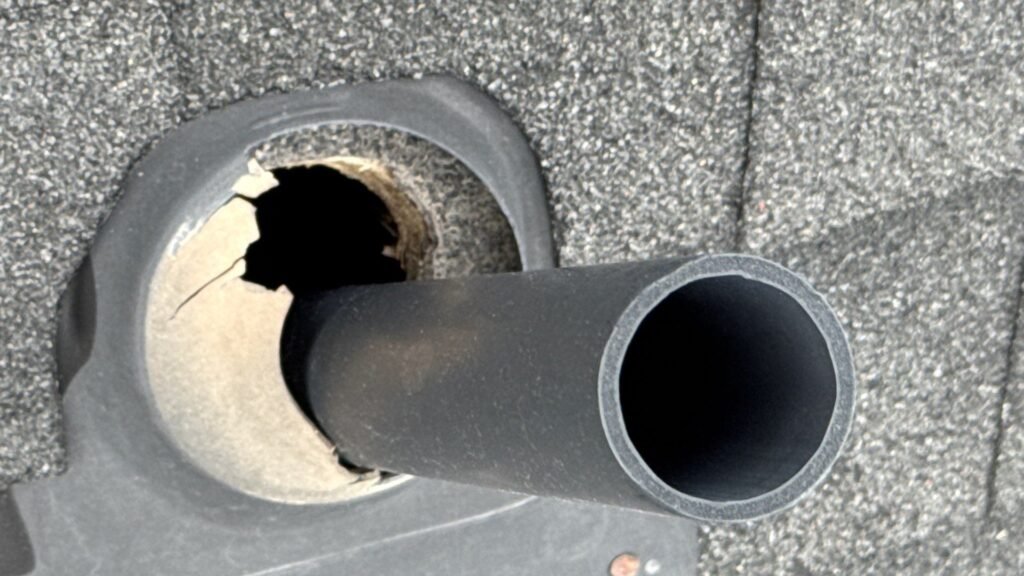
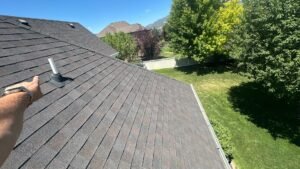
A pipe boot is the collar that seals around a plumbing vent pipe. The rubber on a pipe boot can dry out and crack before the shingles around it wear out. During a full replacement, ask whether every pipe boot will be replaced. If a roofer plans to reuse any, ask them to explain why. Also ask how many pipe boots and vents the quote includes.
b) Flashing at Walls and Chimneys

Where a roof meets a wall or chimney, metal flashing turns the water back onto the shingles. Some roofers reuse the old flashing to save time. Reused flashing can be fine when it is in good condition, but you should know which choice each quote makes. Ask whether the step flashing, counter-flashing, and chimney flashing will be new or reused. Our guide to roof flashing in Utah homes explains each type.
c) Drip Edge, Ice Barrier and Starter Shingles
The 2021 Utah residential code requires drip edge at the eaves and rake edges of shingle roofs (R905.2.8.5).
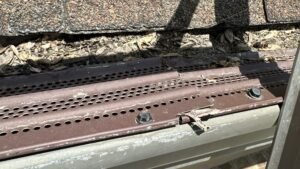
In areas where ice has a history of forming along the eaves and backing water up, it also requires an ice barrier that runs from the edge to at least 24 inches inside the exterior wall line (R905.1.2) (Utah Residential Code 2021, Chapter 9).
Starter shingles along the edges help hold the first row down in the wind. Check that each quote lists all three, and ask where the ice barrier will go and how far up the roof it will run.
d) The Parts a Manufacturer’s Warranty Depends on

The longer shingle warranties usually require more than the shingles. GAF’s System Plus warranty, for example, requires at least three qualifying GAF accessories, such as starter strips and ridge caps, and installation by a GAF-certified contractor.
Its higher wind coverage has its own installation rules. Some GAF shingles require six nails for the specified higher wind coverage, while eligible LayerLock-labeled shingles may qualify with four nails when other installation conditions are met. Requirements vary by product and warranty. Ask the contractor to identify the exact manufacturer instructions and warranty requirements for the proposed roof system.
If two quotes name different warranties, ask each roofer which accessories and nailing pattern their quote includes, and whether the roof will qualify for the warranty they named. Ask whether the warranty needs to be registered, who will register it, and whether you will receive the paperwork.
e) Ventilation
Attic ventilation helps control heat and moisture in the attic. Along with insulation and air sealing, it can reduce the conditions that lead to ice dams. The code sets a minimum amount of vent area for the attic. A quote should list your current intake and exhaust vents, say whether they need to change, and give the type and number of new vents. Our guide to attic ventilation in Utah explains how intake and exhaust vents work together.
What Homeowners on Reddit Ask When They Compare Roofers
A homeowner on Reddit’s r/HomeImprovement forum asked how to tell a solid roofing contractor from one who will do a rushed job, because “they all sound the same on the phone.
The best reply: https://www.reddit.com/r/HomeImprovement/comments/1ssix1y/
Step 3: Compare the Inspection Behind Each Quote
A quote can only be as accurate as the inspection behind it. A look from the driveway can miss the flashing, the condition of the shingles, and the decking underneath. When you compare roofers, write down what each one did during their visit and how they recorded what they found.
| What the roofer did | Roofer A | Roofer B | Roofer C |
| Examined accessible roof slopes and important roof components using safe inspection methods. | |||
| Documented visible damage with photographs. | |||
| Checked accessible attic conditions when relevant. | |||
| Evaluated shingle condition using methods appropriate for the roof’s age and condition. | |||
| Explained the findings and why particular work was recommended. | |||
| Shared the inspection documentation. |
Click or tap any shaded cell to type (for example Yes, No, or a short note). You can also rename the Roofer headings. When you finish, download the sheet or save it as a PDF.
An inspection should be thorough enough to support the proposed work without creating unnecessary damage.
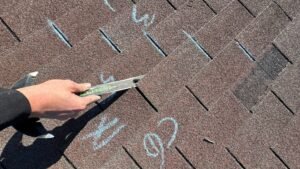
At Rooval Roofing, our team photographs the house from all four sides, then inspects and photographs every slope and marks each damaged spot in chalk. They check the attic and lift and flex-test a shingle before recommending anything. You keep the photo record whether you hire Rooval Roofing or not.
If one roofer’s inspection found something the others missed, such as soft decking near a valley or a stained rafter in the attic, send those photos to the other roofers and ask them to price it. That keeps your comparison on the same scope.
Step 4: Compare How Each Roofer Will Run the Job
Ask each roofer the same questions about the work days, and write their answers on your sheet.
- Who will be on site? Ask for the name of the crew lead, and whether the person who sold you the job will check the work.
- What happens if the weather moves in during tear-off? Ask how the open roof will be covered overnight or during a storm.
- How will you tell me about decking? Ask whether they will photograph damaged decking and tell you the sheet count before they replace it.
- How are changes handled? Any extra work should be priced in writing before it starts. The FTC advises getting every verbal promise added to the contract.
- Who pulls the permit? Some cities require a permit depending on the scope of work. The FTC lists a contractor who asks you to get the permits yourself as a warning sign.
- What does cleanup include? Ask how the crew will protect plants and the driveway, and whether cleanup includes a magnetic nail sweep and clearing debris from the gutters.
- What is the start date, and how many working days will it take?
Step 5: Compare What You Get After the Job
Before you sign, ask each roofer what you will receive when the work is finished. A good list looks like this:
- A final walk-through, with photos of the finished roof
- The final invoice, with any changes listed and priced
- Proof that suppliers and subcontractors have been paid, with lien waivers or releases
- The manufacturer warranty paperwork, with registration details if the warranty needs registering
- The workmanship terms in writing: what is covered, for how long, and whether it transfers if you sell
- A name and phone number to call if something goes wrong
Also ask what happens after a leak call. How fast does someone come out, and is a return visit charged? The value of a warranty depends on what it covers, who handles claims, and what happens if the roofer or manufacturer is no longer in business.
Step 6: Compare the Payment Terms and the Contract
Read each contract before you compare prices. The FTC advises that a home improvement contract should include:
- The contractor’s name, address, phone number, and license number
- Estimated start and finish dates
- Every promise the roofer made in person, written down
- No blank spaces
- For a sale made in your home, a written notice of your right to cancel within three business days
Can You Cancel a Roofing Contract After Signing?
Under the FTC’s Cooling-Off Rule, you generally have until midnight of the third business day to cancel a sale of $25 or more made at your home (FTC Cooling-Off Rule). The rule has exceptions, including some repair visits that you asked for yourself, so it doesn’t cover every roofing contract.
Utah adds a separate right for insurance-funded repairs. If your insurer denies all or part of the claim for the work, you can cancel the repair contract within five business days of receiving the insurer’s written notice (Utah Code 13-50-202). The five-day window is triggered by receipt of the insurer’s written denial, not automatically by the date the homeowner signs the roofing contract. The right has conditions, so read the cancellation notice in your contract.
When you compare payment terms, look for a deposit and schedule written into the contract, payments that match the work, and a final payment due only after the job is complete, and you have checked it. The FTC warns against paying the full amount up front and against paying in cash or other ways that are hard to trace.
Step 7: Compare the Price, Expected Lifespan, and Long-Term Value
Once the quotes cover the same work, you can compare prices. If the quotes use different materials, you can also divide each price by the number of years the roof is expected to last. This is a rough way to weigh the upfront price against how long each roof may serve you.
InterNACHI, a home inspectors’ association, puts the expected life of 3-tab asphalt shingles at about 20 years and architectural shingles at about 30 years (InterNACHI life expectancy chart). These are national estimates. Actual life depends on the weather, the materials, the installation, and upkeep.
| Quote 1 | Quote 2 | |
| Shingle | 3-tab | Architectural |
| Price (example) | $16,000 | $19,500 |
| Expected life | About 20 years | About 30 years |
| Cost per year | About $800 | About $650 |
The example numbers and headings are editable. Replace them with your own quote prices and expected roof life. The cost per year updates automatically.
On these numbers, the architectural roof costs less per year. But that only holds if both roofs last as long as estimated. Here is how the result changes if they don’t:
| Scenario | Quote 1 (3-tab, $16,000) | Quote 2 (architectural, $19,500) |
| Both last as estimated (20 and 30 years) | About $800 a year | About $650 a year |
| Architectural lasts 25 years | About $800 a year | About $780 a year |
| Architectural lasts 20 years | About $800 a year | About $975 a year |
| 3-tab lasts 15 years, architectural 25 | About $1,067 a year | About $780 a year |
With these example prices, the architectural roof has to last about 24 years to match the 3-tab roof at 20. Below that, the cheaper roof costs less per year. Our roof replacement cost guide for Utah shows how roof size, material, and the condition of the decking move that number.
Get a Quote You Can Compare From Rooval Roofing
Rooval Roofing is a family-owned roofer based in Lehi, serving Utah, Salt Lake, and Davis counties. We help Utah homeowners understand their roof’s condition, the work being recommended, and the materials included in a proposed project. Our free roof inspection comes with a photo record of everything we find. Our quotes list the work line by line, so you can put them on the sheet above and compare if you want.
Request a free roof inspection and ask for a written estimate now!
FAQs About Comparing Roofing Contractors
If you want to compare, two or three is usually enough. It shows you a fair range of prices and lets you compare how each roofer inspects, quotes, and communicates. If one quote is much lower than the others, use the line-item sheet to find what it leaves out before you decide.
Often the lower quote covers less work. Common gaps are reused flashing and pipe boots, decking left off the quote, less ice and water shield, no ventilation work, and a basic shingle or warranty. Ask the roofer to price the missing items in writing, then compare again.
Compare what each warranty covers and who stands behind it. A basic shingle warranty covers defects in the shingles, and the coverage is often prorated, so it pays less as the roof ages. Some upgraded manufacturer warranties also cover parts of the installation. A workmanship warranty from the roofer covers the installation. Ask for every warranty in writing, check how long the full (non-prorated) coverage lasts, and ask how a claim works.
It depends on where and how you signed. For many sales of $25 or more made in your home, the FTC’s Cooling-Off Rule gives you until midnight of the third business day to cancel, with some exceptions. In Utah, if an insurance-funded repair claim is denied in whole or in part, you can cancel the repair contract within five business days of the insurer’s written notice. Check your contract for a notice of cancellation before you sign.