You know roughly when your roof went on, but not whether it has five good years left or only one more winter. Replace it too early, and you pay for years the roof still had. Wait too long, and a leak can show up in January, when snow and ice make roof work slow and hard to schedule.
The number printed on the shingle bundle won’t settle it. That number is the warranty term, and the national lifespan figures assume normal conditions. Utah roofs deal with strong high-elevation sun, frequent freeze-thaw cycles, hail, and canyon winds.
This guide covers how long each roofing material is expected to last, what wears roofs out faster in Utah, and how to tell how much life your own roof has left.
Key Takeaways
- How Long Roofs Last: InterNACHI puts 3-tab asphalt shingles at about 20 years, architectural shingles at about 30, metal at 40 to 80, and clay or concrete tile at more than 100 under normal conditions. Utah roofs often land at the lower end.
- Tile Outlasts Its Underlayment: Clay and concrete tiles can last more than 100 years, but the underlayment beneath them typically needs replacing after about 25 years, or 15 to 20 in desert heat.
- Utah’s Climate Is Unforgiving: High-elevation UV, frequent freeze-thaw cycles, hail and canyon winds all shorten roof life.
- Warranties Cover Defects: A “30-year” or “lifetime” manufacturer warranty protects against product defects. It does not set how long the roof will keep water out.
- Inspect at the 20-Year Mark: A 20-year-old roof may still have healthy years ahead or be at the end of its life; its physical condition tells the real story.
Lifespan of Different Roofing Materials
Here is how long each material is expected to last under normal conditions, and what affects that most:
| Material | Expected Lifespan | What Affects Its Lifespan |
| 3-tab asphalt shingles | About 20 years | Wind lifting the tabs and loosening the seal strips; sun wearing down the single thin layer. |
| Architectural asphalt shingles | About 30 years | Hail bruising, attic ventilation and installation quality. |
| Metal (standing seam, exposed-fastener or stone-coated steel) | 40 to 80 years | Panel type and coating; exposed-fastener screws need replacing as their washers age. |
| Clay or concrete tile | 100+ years | The underlayment beneath, which wears out long before the tiles. |
| Natural slate | 20 to 75+ years, by grade | The ASTM C406 grade (S1 lasts 75+ years; S2 lasts 40 to 75; S3 lasts 20 to 40). |
| TPO flat roof | 7 to 20 years | Seam quality, ponding water and UV exposure. |
These benchmarks are drawn from leading industry standards and field data:
- Asphalt, Metal, Tile, and TPO: Based on national baselines from the InterNACHI life-expectancy chart.
- Tile Underlayment: Guided by Association Reserves data, which accounts for desert and intense heat wear.
- Natural Slate: Measured using strict ASTM C406 quality grades rather than generalized ranges.
- TPO Performance: Backed by a 2020 IIBEC Interface field study on real-world membrane durability.
National guidelines assume normal weather. However, InterNACHI explicitly notes that severe weather and hot climates shorten shingle life, which helps explain why Utah’s high-elevation UV levels, freeze-thaw cycles, and hail push local roofs toward the lower end of these ranges.
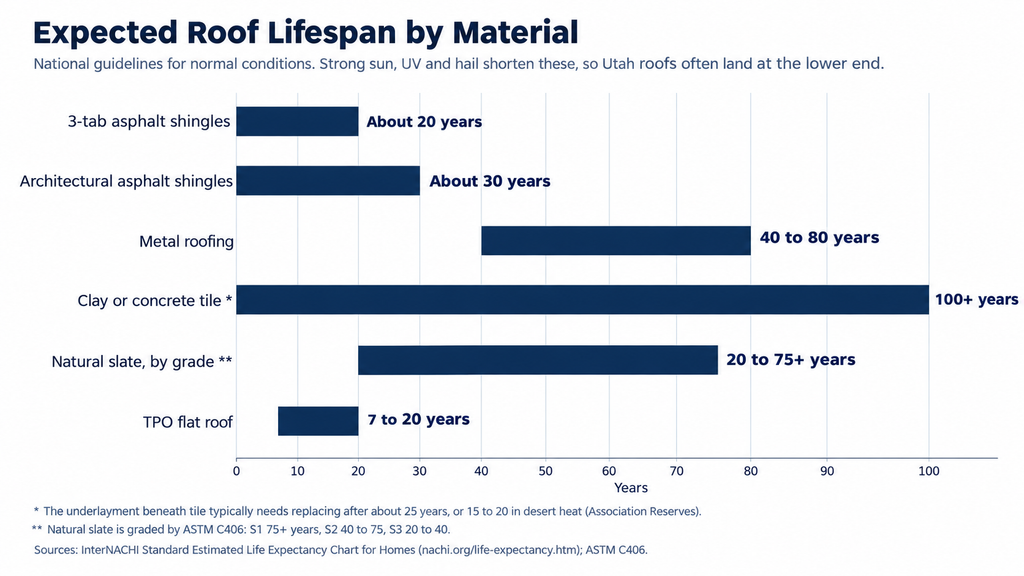
How long each roofing material is expected to last under normal conditions, from the InterNACHI chart and the ASTM C406 slate grades.
3-Tab Asphalt Shingles: About 20 Years
A flat, single-layer strip shingle with three tabs cut along its lower edge. The Asphalt Roofing Manufacturers Association (ARMA) calls it the most common type of strip shingle.
- Why it lasts about 20 years: Every asphalt shingle is a fiberglass mat coated in asphalt and topped with mineral granules. A 3-tab has only one layer of that, so there is less material to wear through.
- What wears out first: The granules. They shield the asphalt from the sun, and as they wash away, more of the asphalt underneath is left exposed.
- How to check it safely: ARMA advises looking from the ground with binoculars instead of climbing up, and checking for cracked, curled, or missing shingles and heavy granule loss.
Architectural Shingles: About 30 Years
A laminated shingle with more than one layer of tabs bonded together. ARMA notes the extra layer adds thickness, which also gives the roof its textured, three-dimensional look.
- Why it lasts about 30 years: The extra layer means more asphalt and more granules to wear through, so an architectural shingle outlasts a single-layer 3-tab made from the same materials.
- What the “30-year” label means: It is the length of the manufacturer’s warranty, which is a separate number from how long the roof lasts. The FAQ on 30-year shingles explains the difference.
- Why most new roofs use it: ARMA says laminated shingles continue to be a favorite among builders, roofing contractors and homebuyers.
Metal Roofs: 40 to 80 Years
Steel or aluminum panels or shingles, finished with paint or a stone (granular) coating. Most residential metal roofs are steel.
- Why it lasts so long: Metal doesn’t rot or shed granules. Its life depends on its finish: the Metal Roofing Alliance says paint protects the metal from rust, corrosion and UV, and its FAQ notes that metal roofs can often be repainted instead of replaced.
- What to watch for: Mostly the way the panels are fastened.
- Standing seam panels hide their fasteners under raised seams, so there are no exposed screws to reseal.
- Exposed-fastener panels are screwed through the face. Each screw seals with a rubber washer, and Metal Construction News reports that UV and heat can harden, shrink, or crack these washers, so the screws need checking and replacing over the roof’s life.
- If you want the look of shingles: Stone-coated metal shingles use the same type of granules as asphalt shingles, so they can look just like an asphalt roof, according to the Metal Roofing Alliance’s guide to metal roof styles.
Clay and Concrete Tile: 100+ Years
Clay or concrete tiles laid over a waterproof underlayment, with metal flashings at the edges and walls.
- Why it lasts 100+ years: Association Reserves notes that clay and concrete are highly durable, and the tiles themselves can last 100 years or more.
- What wears out first: The underlayment and flashings underneath, which do the real waterproofing. Standard underlayment lasts about 25 years, or 15 to 20 in desert heat.
- What the fix looks like: Usually a re-set: the tiles come off, new underlayment and flashings go down, and the original tiles go back on.
- When to have it checked: Association Reserves recommends having any tile roof over 25 years old checked by a roofing professional.
Natural Slate: 20 to 75+ Years, by Grade
Natural stone split into thin slates and hung on the roof one piece at a time.
- Why the range is so wide: Not all slate is the same quality. ASTM C406 sorts it into three grades using three lab tests:
- How much water it absorbs
- How well it resists weathering
- How much load it takes before it breaks
- How to know which you have: Ask your installer or supplier which ASTM C406 grade the slate meets. The grade, more than the word “slate”, tells you which part of the range applies.
- Why it has a long track record: North Country Slate notes that slate has been used as a roof covering for well over a thousand years, and some slate roofs are hundreds of years old and still in service.
TPO Flat Roofs: 7 to 20 Years
A single-ply membrane, often white, used on flat and low-slope roofs. The sheets are joined with seams welded together by hot air.
- Why the range is so wide: TPO has changed a lot since it came out. According to the IIBEC study:
- The ASTM standard for TPO was first published in 2003. Its UV resistance requirement was doubled in 2006, and its heat-aging requirement was raised in 2011.
- Heat, more than UV, was behind many early failures in some manufacturers’ membranes.
- What the field study found: Membranes from 20 U.S. roofs in service for 12 to 18 years were still performing as designed, so a well-installed TPO roof can reach the upper end of its range.
- Repairs on older roofs: New membrane welded onto the aged TPO bonded well, so an older TPO roof can still be repaired. The few weak welds the study found came down to workmanship, which is why weld checks during installation matter.
Why Do Roofs Wear Out Faster in Utah?
Five Utah conditions do most of the damage:
- High-Elevation UV Rays: According to EPA guidelines, UV strength increases by about 2 percent for every 1,000 feet of elevation. NOAA’s weather stations at the Salt Lake City airport and in Provo sit at roughly 4,200 and 4,600 feet, so roofs here take noticeably more UV than they would at sea level. This UV dries out asphalt and strips away protective granules.
- Aggressive Freeze-Thaw Cycling: In NOAA’s 1991 to 2020 climate normals, Salt Lake City drops to 32°F or below on about 112 days a year and stays at or below 32°F all day on about 21 of them, leaving about 91 days that freeze at night and thaw by day. Provo drops to 32°F or below on about 111 days and stays there all day on about 12 to 13, leaving roughly 98 to 99. Moisture that seeps into small cracks and nail holes freezes, expands, and widens those gaps over time.
- Snow and Ice Dams: On a sound roof, the bigger snow risk is ice dams: rising attic heat melts accumulated snow, which refreezes at the colder eaves, forcing meltwater to back up underneath your shingles.
- Severe Hail: NOAA’s Storm Events Database lists 21 reports of hail 1 inch or larger in Salt Lake and Utah counties from 2016 through 2025, plus four more in Salt Lake County on June 25, 2026, with hail up to 1.75 inches in Taylorsville and Holladay. Hail can bruise shingles and knock away protective granules without causing an immediate leak, silently shortening the roof’s lifespan.
- High Winds: From 2016 through 2025, the same NOAA database lists 227 thunderstorm wind reports of 58 mph or stronger in those two counties, plus 66 separate high-wind events, such as canyon winds, in the forecast zones covering the Salt Lake and Utah valleys. IBHS research presented to the NAIC, based on damage from Hurricane Laura and the 2020 Iowa derecho, found that shingle age is a significant indicator of wind damage for roofs as young as 10 years old.
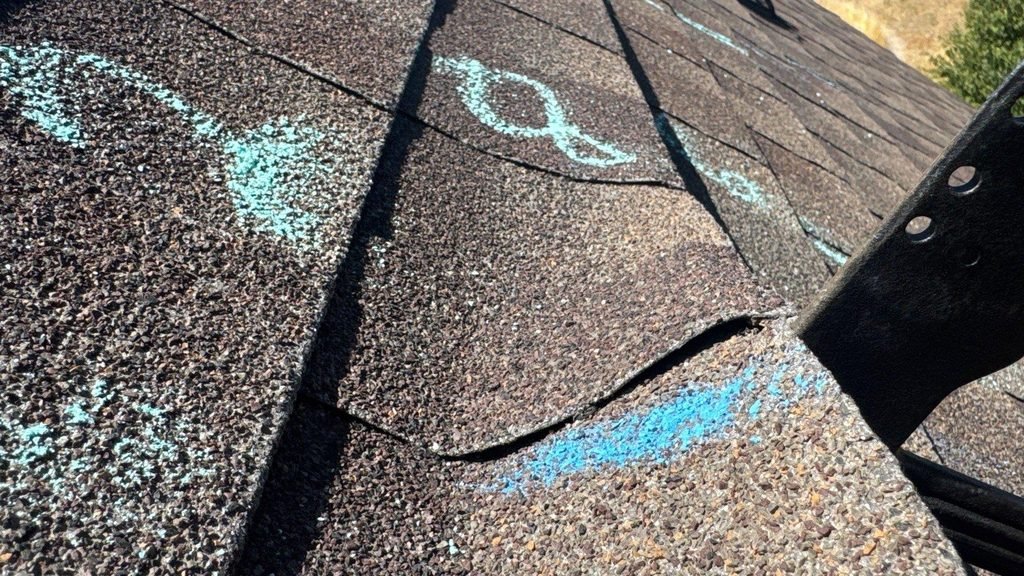
Wind can lift a shingle tab and bend it, leaving a crease like this one. A creased tab no longer lies flat against the roof.
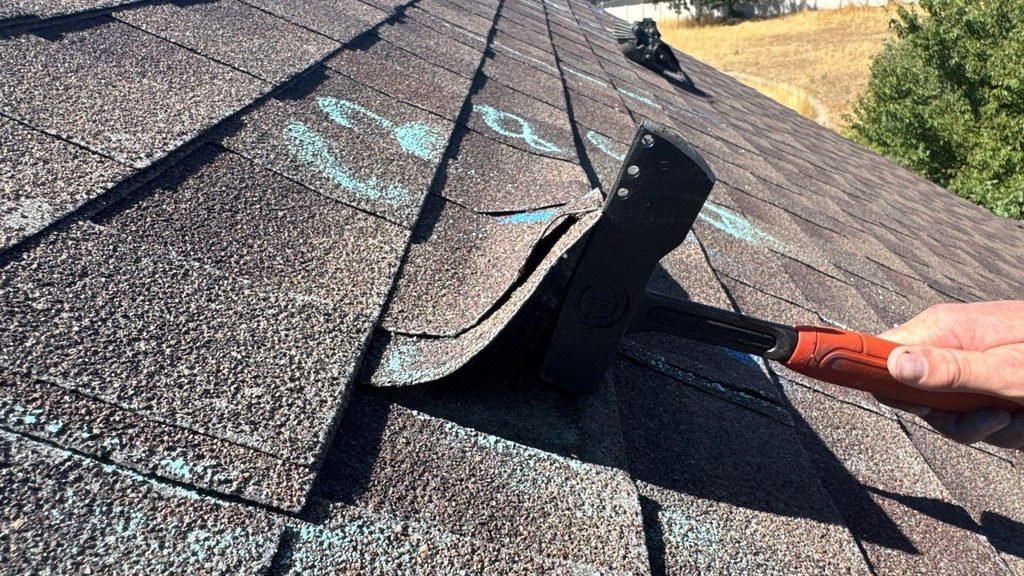
Lifting a tab shows whether its seal strip still holds. Older shingles are more likely to be damaged by Utah’s canyon and storm winds.
| Related Guide: Hail Damage on Utah Roofs Hail is one of the reasons Utah roofs fall short of their expected lifespan, and a bruised shingle often doesn’t leak right away. Learn the signs that mean your roof needs an inspection after a storm: See the 10 Signs of Hail Damage → |
What Decides Whether Your Roof Reaches the High or Low End of Its Lifespan?
Two neighboring roofs installed at the same time using the same material can age at completely different rates. These factors explain the difference:
- Attic Ventilation: A properly balanced attic keeps the roof deck cool in the summer and mitigates ice dams in the winter. Blocked soffit vents trap destructive heat and moisture right under the roof deck.
- Installation Quality: Correct nail placement, quality underlayment, proper starter strips, and tight flashing around walls and chimneys dictate how long shingles stay sealed against the elements.
- Slope Direction: South- and west-facing slopes take the brunt of the afternoon sun and UV exposure, so they often wear out before the north- and east-facing slopes on the same roof.
- Existing Layers: A second layer of shingles over an old one can trap heat and hide the wooden decking underneath. Under International Residential Code section R908.3.1.1, a new layer is not allowed over a roof that already has two or more.
- Storm History and Upkeep: Unaddressed hail bruising, wind damage, and clogged gutters shave years off a roof’s expectancy.
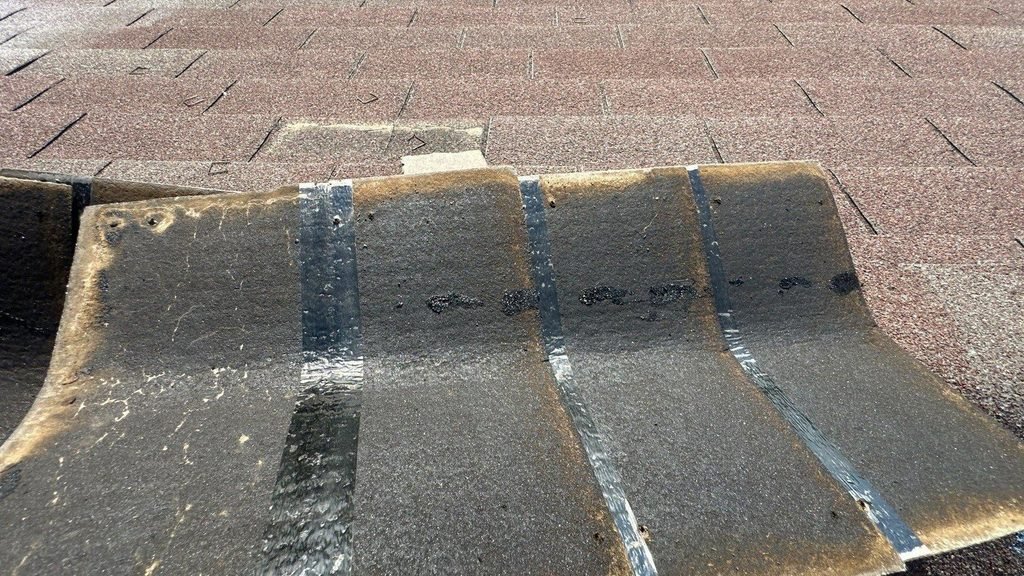
The underside of a removed shingle shows its seal strips. Attic heat, UV and age weaken these bonds, which is why ventilation and installation quality matter.
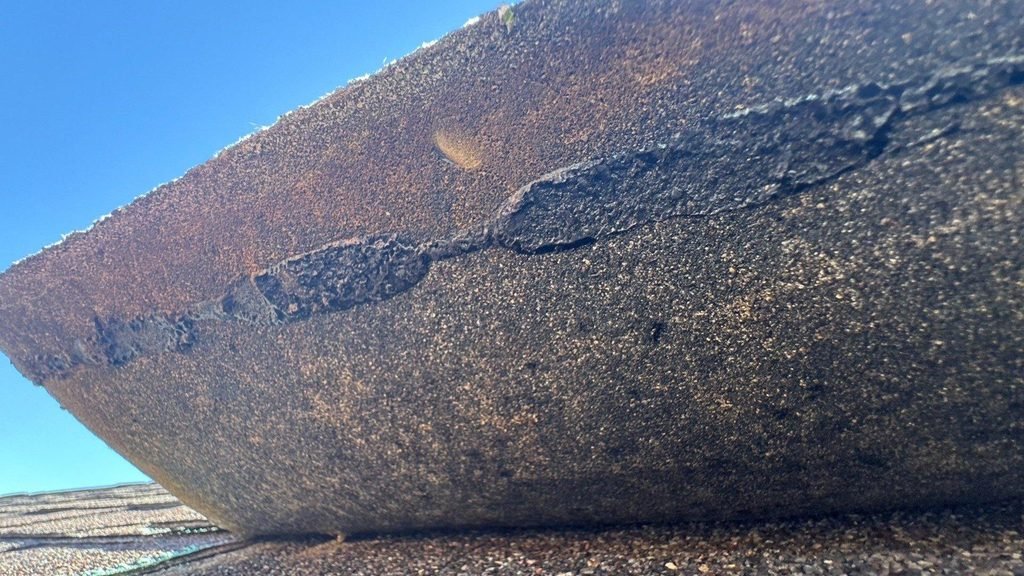
A shingle that has lost its flexibility cracks instead of bending when lifted, a sign the roof is heading for the low end of its range.
| Related Guide: Attic Ventilation & Ice Dam Prevention in Utah Ventilation is one of the biggest reasons two similar roofs age at different rates. A balanced attic keeps the roof deck cooler in summer and helps prevent ice dams in winter. See how ridge and soffit vents work together: Explore Attic Ventilation in Utah → |
How Can You Tell How Old Your Roof Is?
If you recently moved in or don’t have the records, these clues usually narrow down your roof’s age:
- Purchase Paperwork: Check your original home inspection report; it often notes the roof’s age or condition.
- City Permit Records: Some cities keep records of re-roofing permits. Your city’s building department can tell you if a past permit is on file.
- Shingle Style: Single-layer, flat 3-tab shingles are generally a strong indicator of an older installation.
- Neighborhood Build Year: In subdivisions built during the same few years, many original roofs are the same age.
| Not Sure If You Have 3-Tab or Architectural Shingles? Your shingle type decides which lifespan applies: about 20 years for 3-tab and about 30 for architectural. Our shingle guide shows how to tell them apart: Explore Types of Roof Shingles for Utah Homes → |
Example: Many homes in Eagle Mountain’s The Ranches still have their original 3-tab shingles, which are now 15 to 24 years old. With InterNACHI’s guideline for 3-tab shingles at about 20 years, many of those roofs are near or past their expected life.
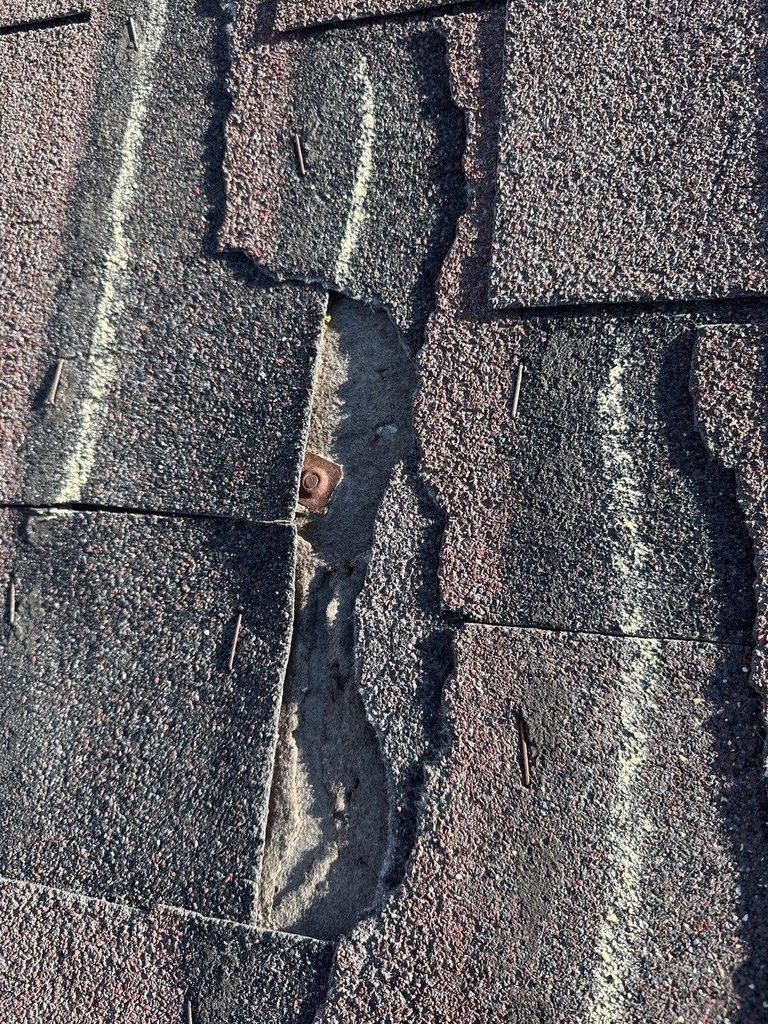
Cracked and broken tabs on an older 3-tab roof. InterNACHI puts 3-tab shingles at about 20 years, so damage like this often points to a roof near that age.
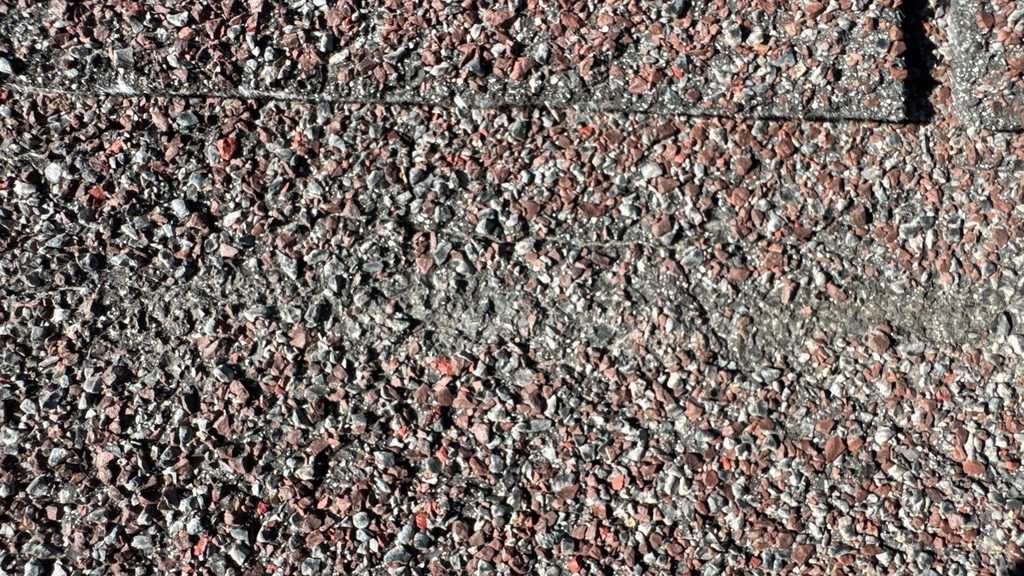
Thinning granules leave the asphalt beneath exposed to UV. Heavy granule loss is one of the clearest signs a shingle roof is near the end of its life.
| Roofing in Eagle Mountain: Aging 3-Tab Roofs Many original 3-tab roofs in The Ranches are now near or past their expected life. See the warning signs Rooval Roofing looks for on Eagle Mountain roofs before recommending a repair or a replacement: See Our Eagle Mountain Roofing Page → |
How Often Should You Replace Your Roof?
There is no fixed schedule. InterNACHI’s guidelines put 3-tab shingles at about 20 years, and architectural shingles at about 30, and Utah roofs often need replacing sooner. ARMA treats a residential roof over 20 years old as a prime candidate for reroofing, which makes 20 years the point to look closely. The roof’s condition decides the rest.
Replacing too early costs money on years the roof still had. Waiting too long risks a leak in the middle of winter.
- A 20-year-old 3-tab roof has reached InterNACHI’s guideline for its type. If it shows cracked or missing tabs, heavy granule loss, or leaks, replacement usually beats paying for recurring repairs.
- A 20-year-old architectural roof may still have plenty of life left if the shingles remain flat, retain their granules and hold a tight seal.
- Any roof displaying widespread granule loss, curling edges, cracking or recurring leaks is near failure, regardless of its age.
| Related Guide: Signs You Need a New Roof Age tells you when to look closely, and condition tells you whether it’s time. Check your roof for granule loss, curling, and cracking from the ground with our full list of signs: See the Signs You Need a New Roof → |
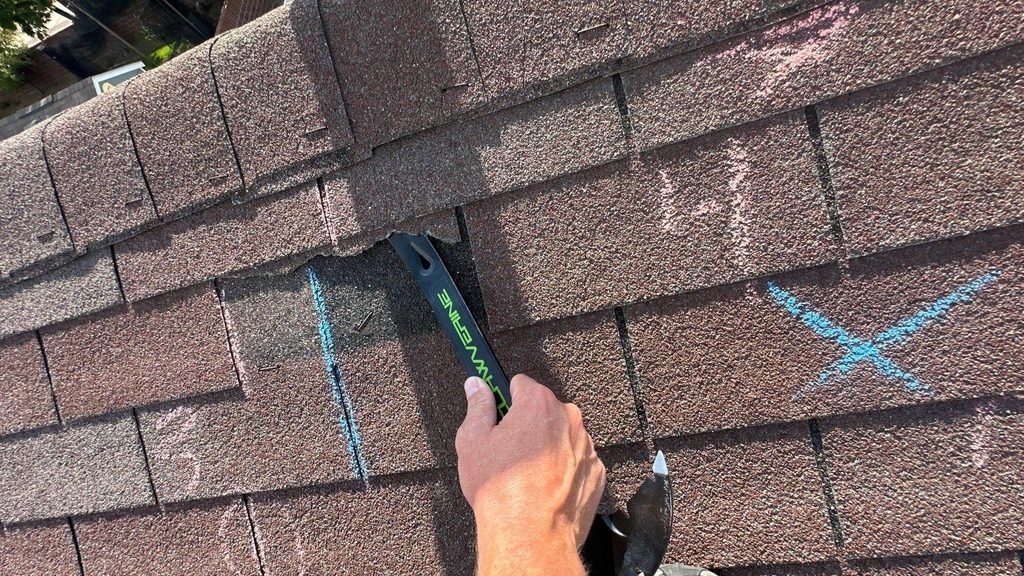
Before: worn 3-tab shingles found during an inspection, the kind of condition where replacement beats repeated repairs.
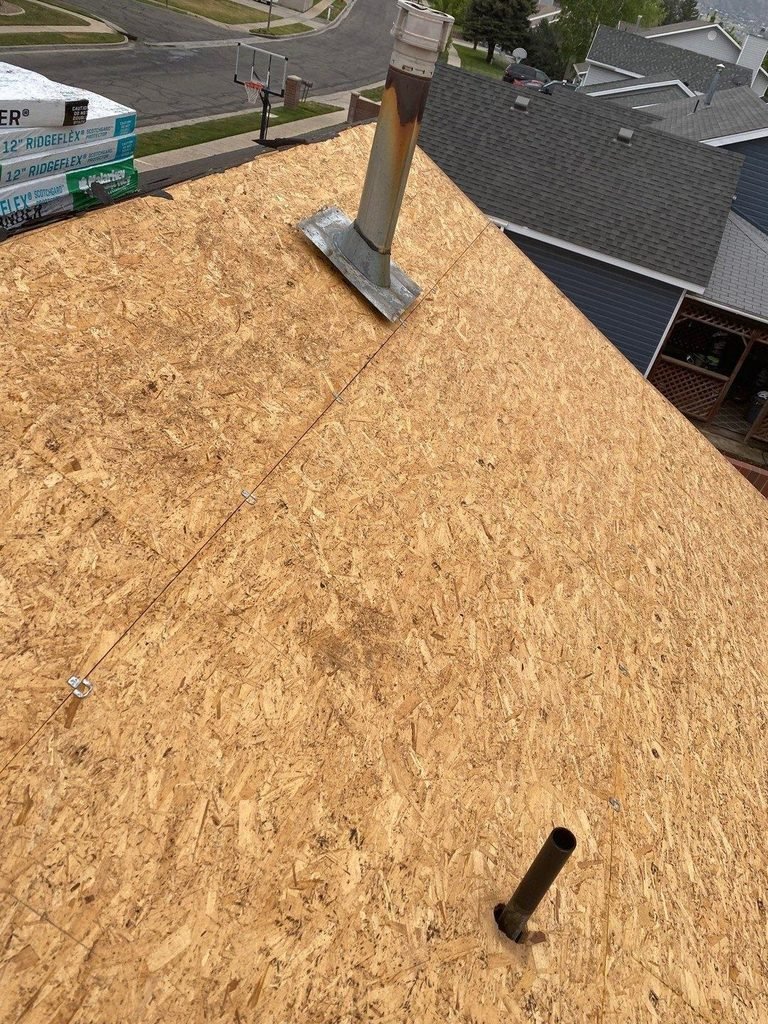
During: a full tear-off lets the decking be checked and replaced before the new roof goes on.
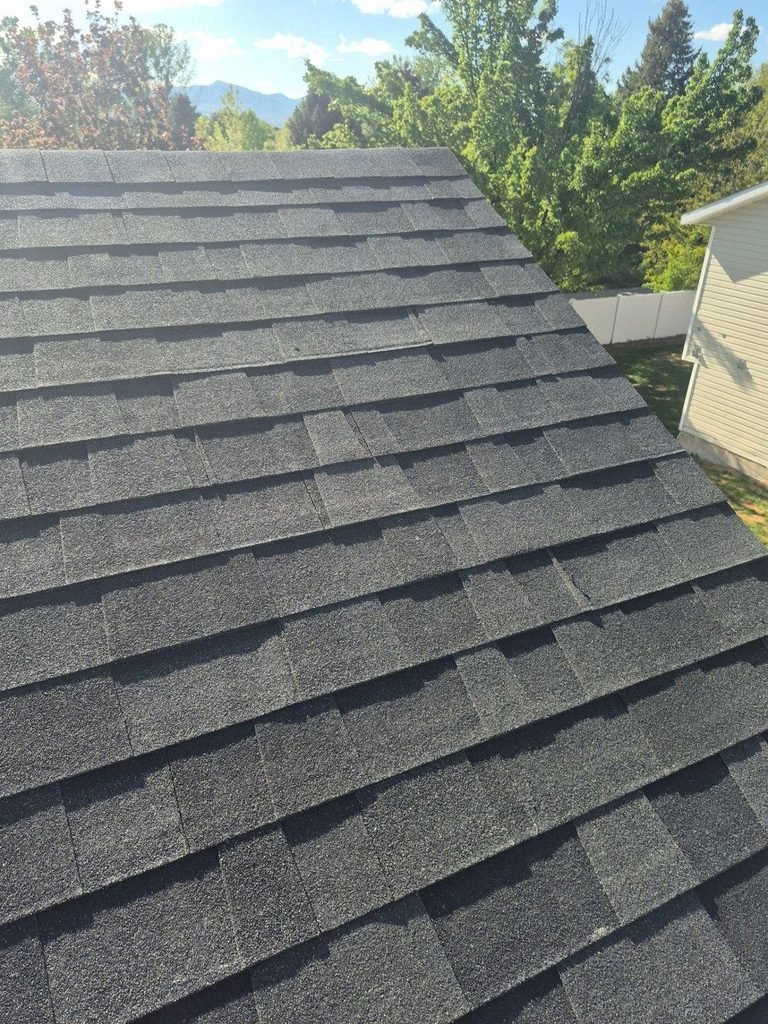
After: the same house with new architectural shingles, which InterNACHI puts at about 30 years under normal conditions.
| Related Guide: Roof Repair vs. Roof Replacement When a roof is near the end of its expected life and the same problems keep coming back, a repair may only buy a little time. Learn how Utah homeowners decide between the two: Explore Repair vs. Replacement → |
How Can You Make a Utah Roof Last Longer?
These proactive habits add years to a Utah roof:
- Maintain Attic Ventilation: Clear out blocked soffit vents and ensure intake and exhaust airflow remain balanced.
- Clean Your Gutters: Clear debris out after spring snowmelt and again after autumn leaves drop to keep water moving freely away from your foundation and roof edges.
- Inspect Annually and After Major Storms: A routine yearly check, plus a quick scan after major hail or wind events, catches small issues before they turn into leaks.
- Fix Minor Problems Fast: A lifted shingle, a cracked pipe boot, or loose flashing is a cheap fix today and an expensive interior leak next winter.
- Consider a Mid-Life Tune-Up: On a roof partway through its life, a professional tune-up that reseals penetrations, replaces damaged shingles and reinforces flashing can extend its life for a fraction of the cost of a full replacement.
| Related Guides: Roof Inspections and Tune-Ups in Utah A yearly inspection catches the wear that shortens a roof’s life, and a tune-up fixes small problems like worn flashing sealant and open penetrations before they become leaks. See how often to inspect, and what a Rooval Roofing tune-up covers: See How Often to Inspect Your Roof → Explore Our Roof Tune-Up Service → |
Not Sure How Much Life Your Roof Has Left?
If you are seeing granules in your gutters, notice curling edges, or simply aren’t sure how old your roof is, Rooval Roofing can take a look.
Our free roof inspection covers every slope and your attic space, complete with a detailed photo report outlining the exact condition of your shingles, flashing, and vents. You’ll get honest answers on whether your roof needs a simple repair, a full replacement, or nothing at all.
Book a Free Roof Inspection · Or call (385) 424-8810
| ABOUT ROOVAL ROOFING Roofing Without the Guesswork Rooval Roofing is a family-run roofer in Lehi, Utah, serving homeowners across Utah County and the Salt Lake Valley. We judge every roof on its actual condition—inspecting the roof and attic, documenting what we find, and telling you plainly whether it needs a repair, a replacement, or nothing at all. Clear answers, practical advice, and workmanship that holds up. Licensed and insured · Utah GC Lic. #13861046-5501 · Lehi, Utah · (385) 424-8810 |
Frequently Asked Questions
Sometimes. The “30” is the length of the manufacturer’s warranty, which covers defects in the shingle and usually pays out less as the roof ages. “Lifetime” means as long as the original owner owns the home, in both GAF’s and Owens Corning’s warranties. How long the roof lasts is a separate number: about 30 years under normal conditions, per InterNACHI, and often less in Utah.
Not for most materials. A 10-year-old architectural shingle roof is about a third of the way through InterNACHI’s 30-year guideline, and metal and tile roofs are just getting started. A 10-year-old 3-tab roof is halfway through its 20-year guideline, and a 10-year-old TPO roof is already well into InterNACHI’s 7 to 20 year range. IBHS research found that shingle age starts to matter for wind damage from about 10 years, so post-storm inspections are a smart precaution.
A good repair lasts about as long as the roof around it; it doesn’t add years to the rest of the roof. On an older roof near the end of its life, a repair stops an active leak while the surrounding shingles keep wearing out. That is why the age and condition of the whole roof matter when deciding whether to repair.
Only if the roof has a single existing layer, and even then it is rarely the best choice. Utah builds to the International Residential Code, which does not allow a new layer over two or more existing ones. A second layer also hides the decking, so rot and soft spots go unnoticed. A complete tear-off lets the decking be checked and replaced where needed before the new roof goes on.
For many homeowners, yes. InterNACHI puts metal roofs at 40 to 80 years, so a homeowner who installs one will likely never need to replace it again. The upkeep it needs along the way depends on the panel type, with exposed-fastener panels needing the most attention.