Key Takeaways
- Most roofs don’t fail overnight. Damage usually shows up first inside your home, in the attic, or along the gutters.
- Where and when a stain appears tells you more than how big it is.
- Water near a light fixture or electrical wiring requires immediate professional attention
- Never climb onto your roof to check. Look from inside or from the ground, take photos, and book an inspection.
According to the 2025 Nationwide Homeowner Survey, roof repairs and replacements are the most common (41%) and costliest home repairs. But can these costly repairs be avoided?
Yes. Roof damage often shows warning signs before it becomes a major problem. However, worried about cost, many homeowners put off routine maintenance (35%) and major repairs (25%) in the past year.
Small signs, like a brown ring on the ceiling, a damp attic smell, or wet insulation, seem too minor to call a roofer. Yet they often lead to surprise bills.
In Utah, freeze-thaw cycles and storms can wear down roofing faster than roofers guarantee. As your trusted Utah roofing contractor, we’ll help you spot early damage and protect your roof longer.
Interior Signs of Roof Damage
1. Ceiling Stains
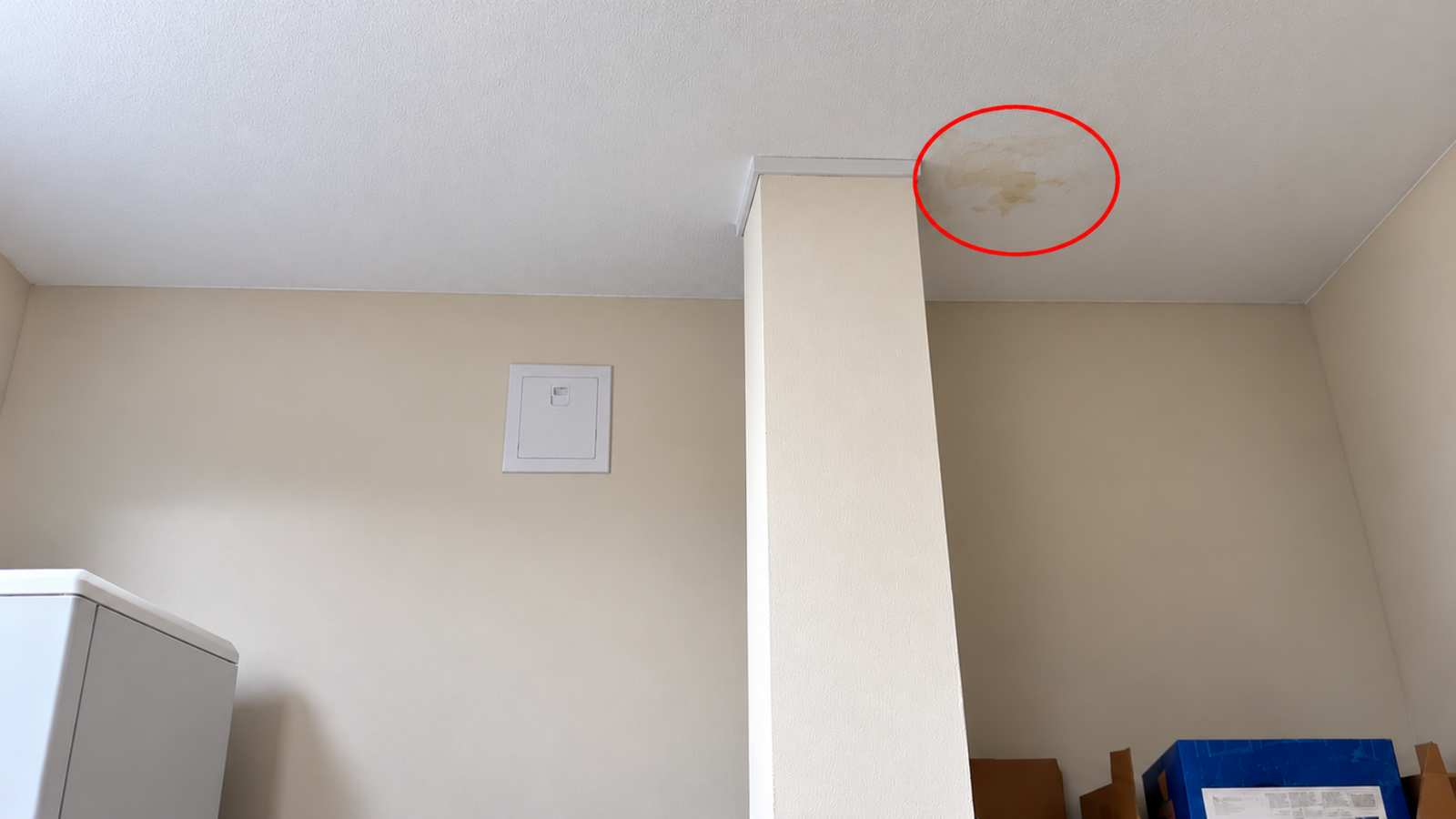
Water stains on ceiling, identified during an inspection
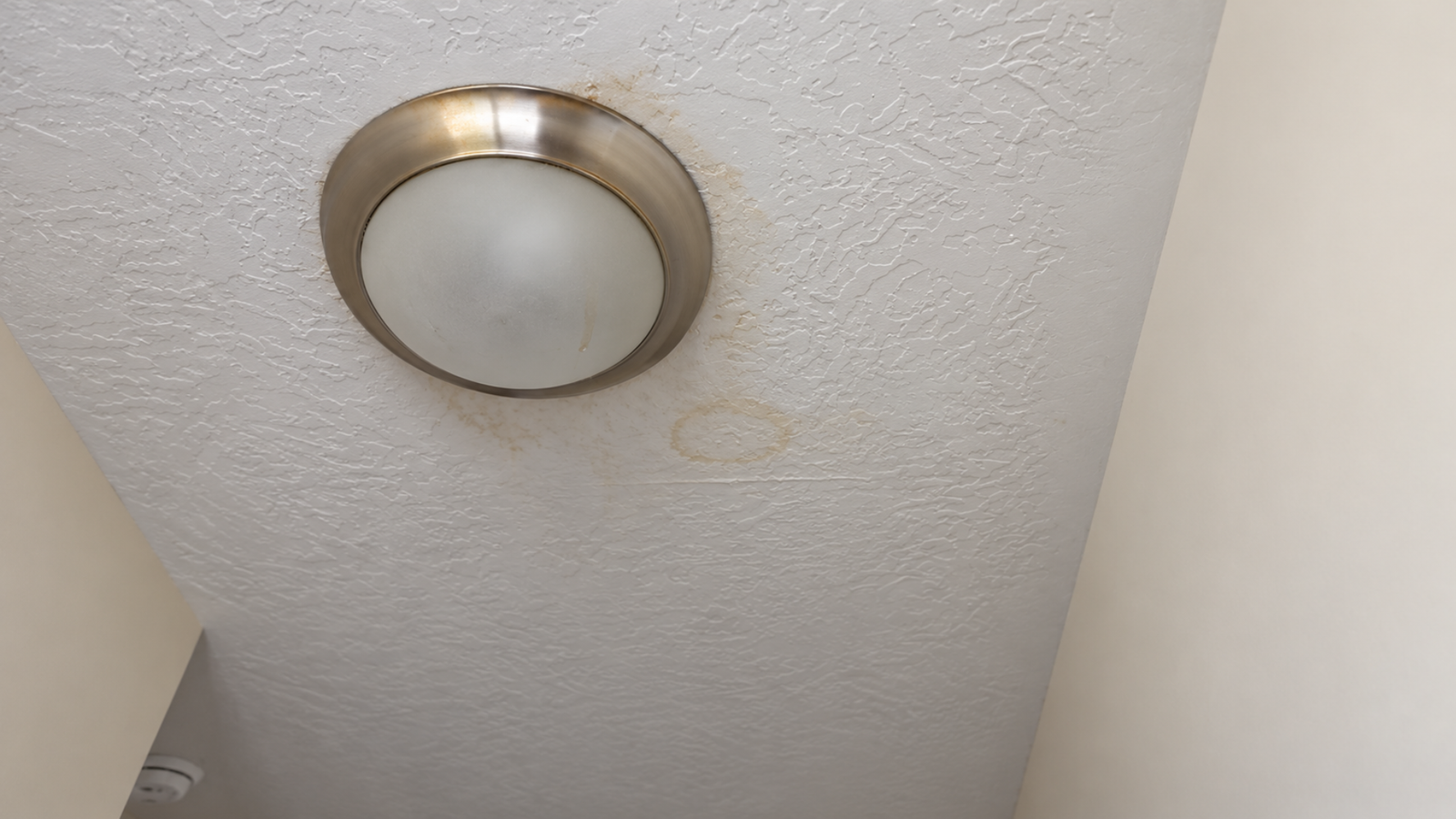
Water discoloration around a ceiling light that may indicate a roof leak or moisture above the ceiling.
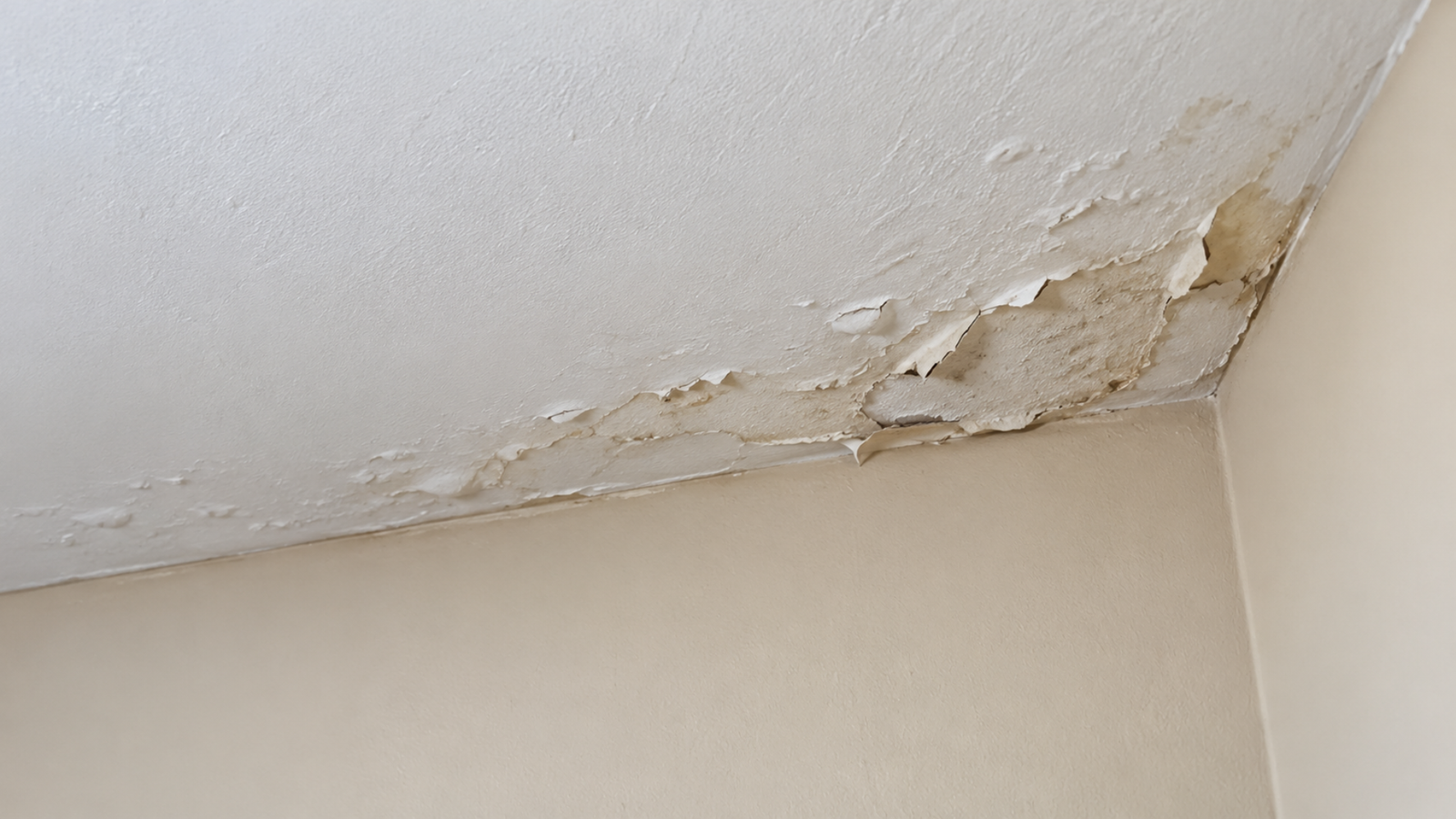
Peeling ceiling paint and surface damage near a wall caused by possible moisture buildup.
A yellow or brown stain on your ceiling is easy to paint over and forget. But if it appears a few days after snow melts or following a heavy storm, it could indicate a roof leak.
The location of the stain can offer clues about its source:
- Near an exterior wall or ceiling corner: Water may be entering near the roof edge, particularly if melting snow or rainwater is getting beneath the shingles.
- Around a ceiling light: Moisture around a light fixture may indicate a leak from above. Condensation can also cause moisture on a cold fixture, but a brown stain should not automatically be blamed on condensation.
- In the middle of a room: The leak could be coming from damaged shingles, an unsealed roof opening, or a loose or exposed roofing nail.
Commonly seen on: All roof types, most often asphalt shingle roofs.
What it can turn into: Soaked insulation, sagging drywall, mold above the ceiling, and rotted roof boards.
How to check: Trace the outer edge of the stain with a pencil and write the date beside it. Check it again after the next storm or snowmelt. If the stain spreads beyond the line, water may still be entering.
If you notice rust-colored marks or moisture around a ceiling light, pay attention to when they appear. A connection with rain or snowmelt may point to a roof leak, but the timing alone cannot confirm the cause. Water near electrical fixtures needs prompt professional attention.
An inspection can help identify the source of the leak. Water sometimes travels along rafters or roof boards before dripping onto the ceiling, which means the damaged area may be some distance from the visible stain.
2. A Stain or Drip Around the Bathroom Fan
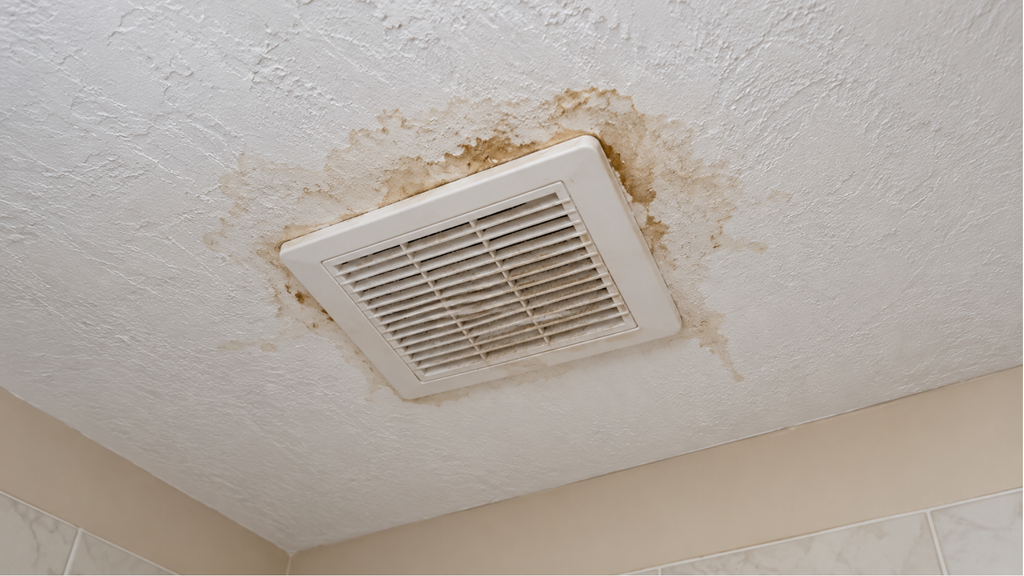
A square white ceiling exhaust vent surrounded by noticeable brown water stains and water damage on a textured ceiling.
A drip from the bathroom fan can mean two very different things:
- Condensation: Steamy air from your shower travels up the fan duct. If the duct runs through a cold, uninsulated attic, moisture can condense inside it and drain back toward the fan.
- A roof leak: The roof vent cap may be cracked or improperly sealed.
Commonly seen on: Any roof where the bathroom fan vents through the roof. This problem is more common during Utah winters.
What it can turn into: Mold in the attic, wet insulation, and rot around the vent cap.
How to be sure: Watch when it drips. Drips after showers on cold days point to condensation. Drips during rain or snowmelt, even when nobody has used the fan, point to the roof.
Signs of Roof Damage in Your Attic
3. Damp Insulation or Daylight Through the Boards
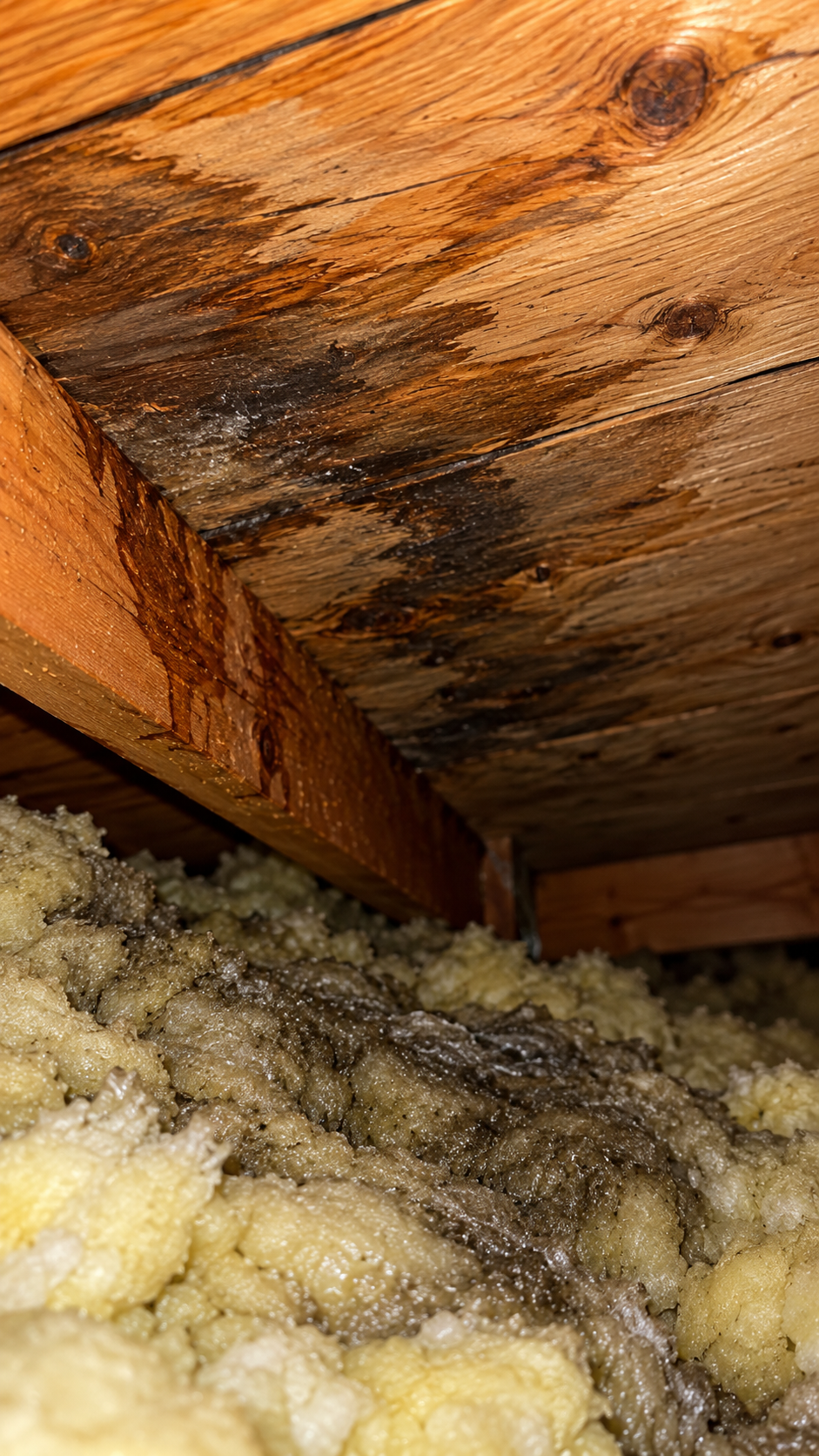
Severe water staining and mold growth visible on the underside of wooden roof plywood in an attic, showing signs of an active leak near the insulation.
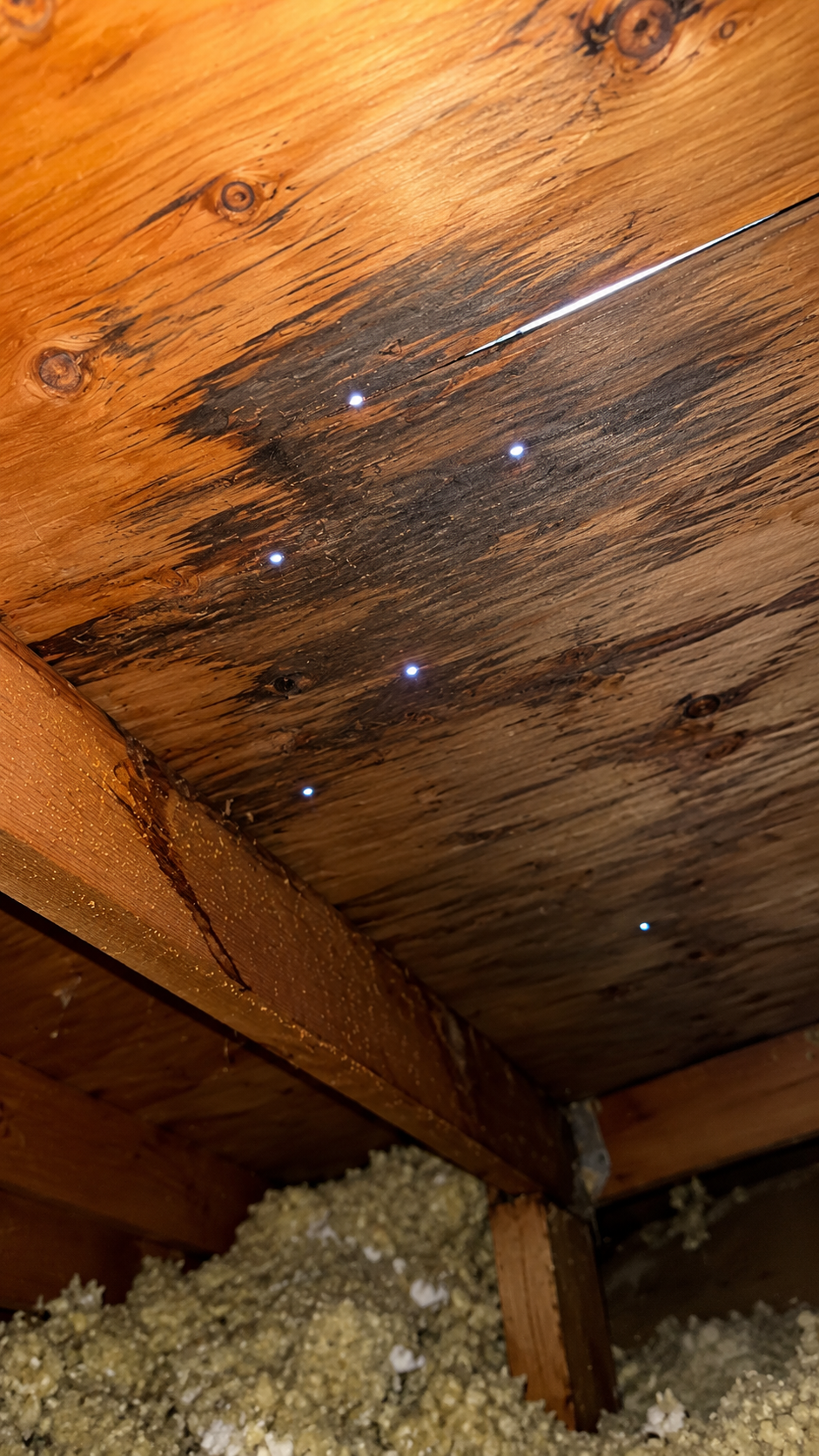
Dark moisture stains on attic roof plywood with small pinpoints of daylight leaking through holes in the roof structure.
Not all roof leaks reach the ceiling. A leak may remain hidden in your attic. If you can get up there safely, look for:
- Damp, flattened, or stained insulation
- Dark stains or patches on the roof boards
- A musty smell
- Tiny pinpoints of daylight shining through the roof boards
Commonly seen on: Pitched roofs with attics, including shingle, metal, and tile roofs. Flat roofs don’t have this kind of attic.
What it can turn into: Mold on the underside of the roof and rotted roof boards.
How to be sure: Check on a cold morning and again after a storm. If the insulation is wetter or the stains are bigger than last time, water is still getting in. Don’t walk across the insulation, because you can’t see the joints under it and could step through the ceiling. If you cannot inspect the area safely from the attic access point, leave it to a professional.
4. Frosty Nails
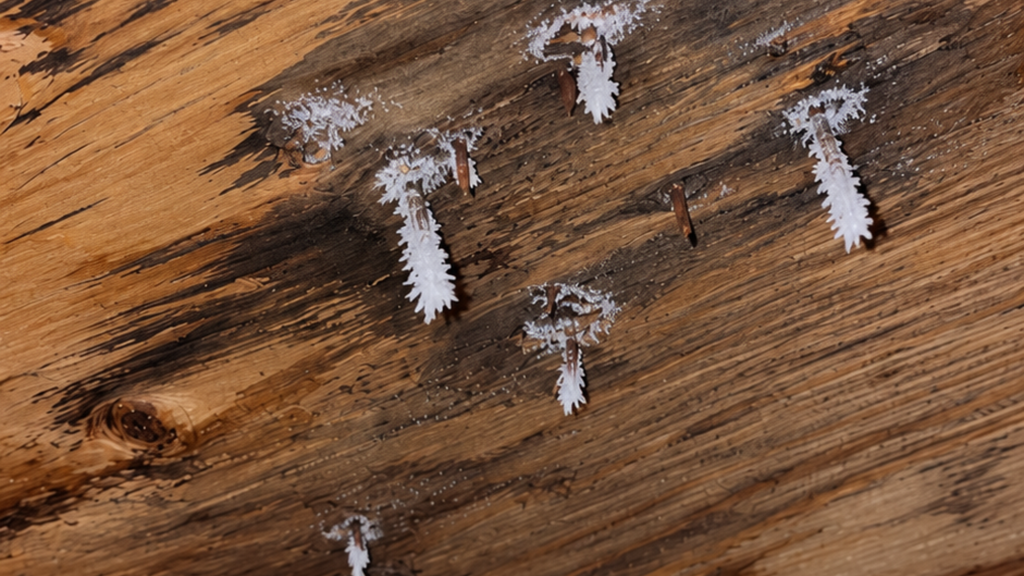
Frost and icy condensation coating exposed roof nails on dark, moisture-stained wooden roof boards inside an attic.
Not every winter drip is a roof leak. Sometimes it’s frost on the nails holding your roof together. Look at the nail tips poking through the roof boards in your attic. On cold nights, they can be covered in white frost. When the weather warms up, the frost melts and drips onto your insulation and ceiling.
These nails are called “shiners.” This can happen when a roofing nail misses the rafter or roof framing and protrudes through the roof decking. Warm, moist air from your house reaches the cold nail tip and turns to frost.
Commonly seen on: Asphalt shingles and other nailed roofs over wood boards, especially in attics with poor airflow.
What it can turn into: Rusted nails, rot around each nail hole, and mold on the underside of your roof.
How to be sure: Look at the pattern and the timing. Drips from shiners may leave several small ceiling spots, often in a line, after cold nights rather than after rainfall. If you can safely look into your attic on a cold morning, you may see frost or rust on the nail tips.
Also Read: Attic Ventilation in Utah: How Ridge and Soffit Vents Prevent Ice Dams
Signs on Your Gutters and Outside Walls
5. Rust Spots or Drips at Gutter Seams
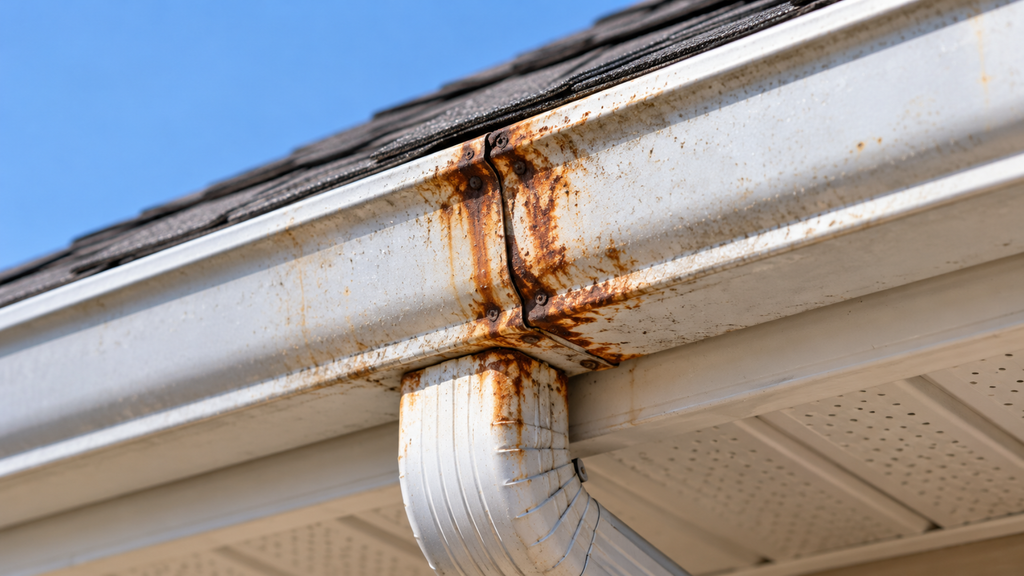
Severe rust damage and orange staining along the seam connection above a downspout on an exterior roof gutter.
Older and inherited homes often have sectional gutters, which are shorter pieces joined together. Every joint is a weak spot.
Look for orange rust streaks, water dripping from the joints during rain, or ice building up at the seams in winter.
Commonly seen on: Sectional steel gutters. Seamless aluminum gutters show this less.
What it can lead to: Water pooling near the foundation, rotting fascia boards, and increased ice buildup along the roof edge.
How to be sure: Look for a line of wet soil or washed-out mulch under each seam. Next time it rains, watch the gutter from the ground and see where the water escapes.
6. Water Running Behind the Gutter Instead of Into It
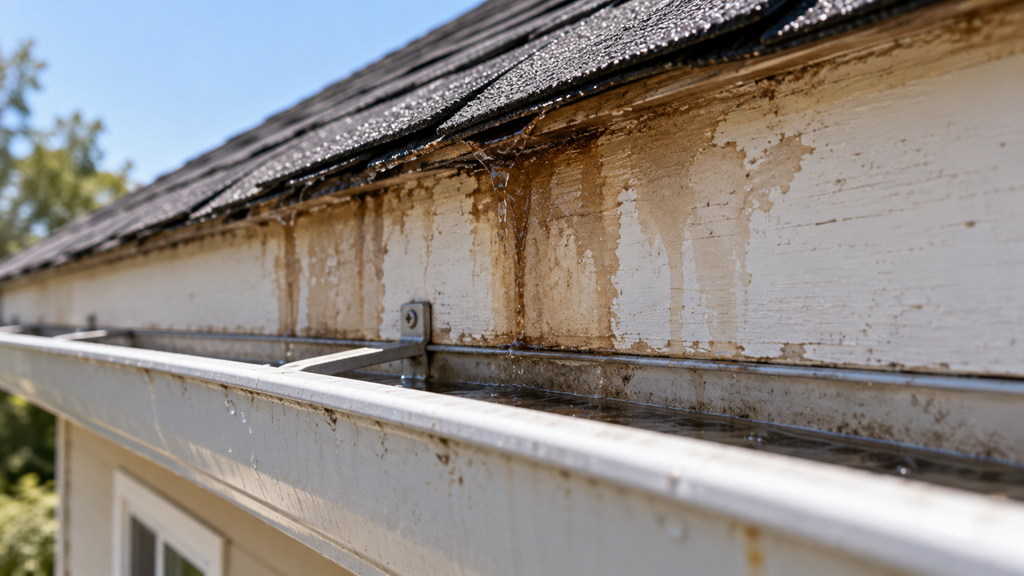
Water stains running down a wooden fascia board caused by roof runoff overflowing behind the gutter line.
Sometimes the gutter looks fine, but the water never makes it in. It slips behind the gutter and runs down the fascia board instead.
This usually happens when the roof edge is missing a drip edge or gutter apron. This metal strip directs water from the roof into the gutter and helps prevent it from reaching the fascia.
Commonly seen on: Asphalt shingle roofs, especially older ones. The International Residential Code didn’t require drip edges on shingle roofs until its 2012 edition, so many older roofs were built without them.
What it can turn into: Rotted fascia boards, a rotted roof-deck edge, and peeling soffit paint.
How to be sure: From the ground, look at the back of the gutter. Look for metal flashing beneath the shingles that extends toward the gutter. Dark streaks or peeling paint on the board behind the gutter mean water is getting behind it.
7. Granule Loss in Gutters or Downspouts
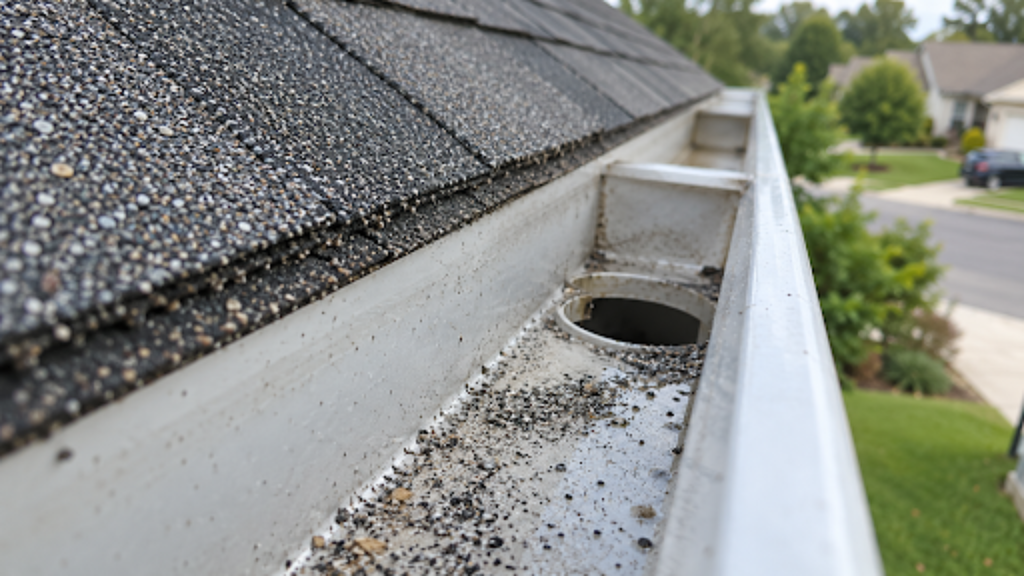
Granules washed off asphalt shingles accumulating along the bottom of a clean rain gutter near the drain outle
Asphalt shingles are covered in tiny gritty granules that shield them from the sun. As asphalt shingles age or sustain hail damage, granules can loosen and collect in the gutters. Look for what looks like dark sand or coffee grounds in the gutter, at the bottom of the downspout, or on the ground below it.
Commonly seen on: Asphalt shingle roofs, especially older ones or those hit by hail.
What it can turn into: Faster shingle aging, sun damage to the shingle underneath, and leaks.
How to be sure: Scoop a handful of debris from the gutter or check the downspout outlet. Some granule loss is normal, especially on a new roof, but excessive buildup may indicate shingle deterioration. From the ground, use binoculars to look for bald or lighter patches on the roof.
Also Read: Utah Hail Storm Roof Damage: 10 Signs Your Roof Needs an Inspection
Signs You Can Spot From the Ground
8. Cracked or Faded Roof Vents
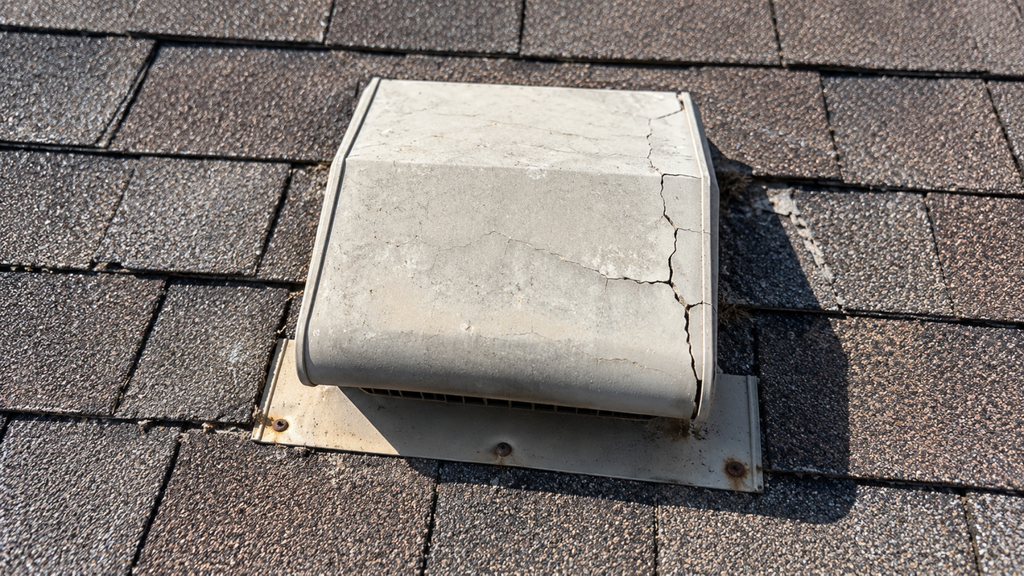
A damaged plastic roof vent showing visible cracks along the side casing due to weather exposure and age.
Utah’s intense sun exposure can cause plastic roofing components to deteriorate over time. Many roof vents, including small box-shaped vents near the roof’s peak, are made of plastic. Years of UV turn them chalky and brittle until they crack.
The sun also dries out the sealant around vents. During inspection, roofers often find cracked vent sealant on homes as the main culprit of water intrusion.
Commonly seen on: Plastic box vents on shingle roofs and vents on tile roofs.
What it can turn into: Wind-driven rain and snow getting into the attic, then stains on the ceiling below.
How to be sure: Use binoculars or your phone’s zoom from the yard. Compare each vent with the others. Look for cracks, faded color, missing pieces, or a vent sitting crooked.
9. Holes or Old Mounts From Satellite Dishes and Lights
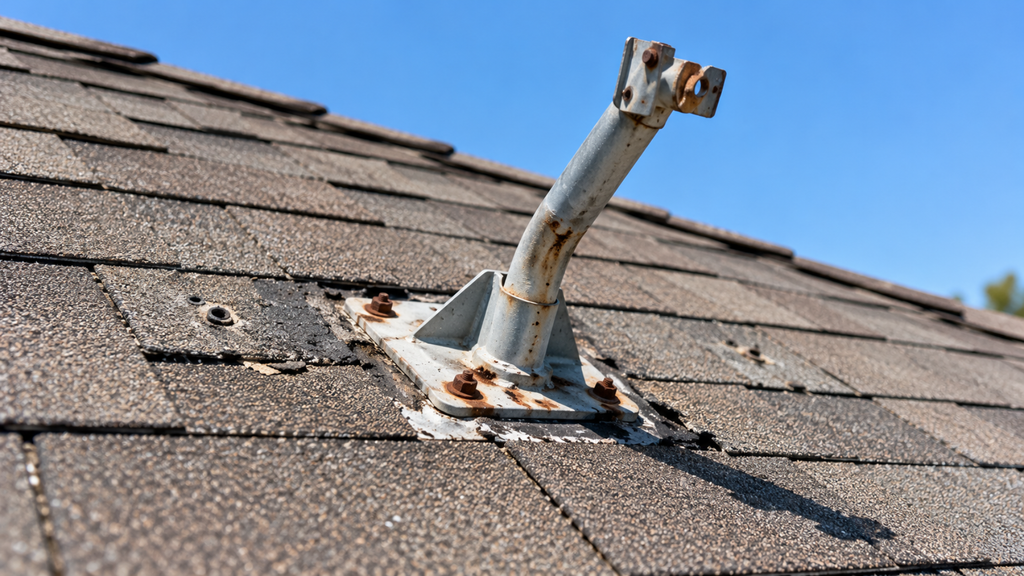
An abandoned, rusted metal antenna or satellite dish mount attached directly to roof shingles with exposed, corroded bolts.
Every hole in a roof can become a potential entry point for water. Homeowners may overlook holes left by:
- An old satellite dish mount that was never sealed after the dish came down
- Nails or staples left from hanging holiday lights
- Light clips forced beneath shingles or fasteners left behind when holiday lights are removed.
Commonly seen on: Shingle roofs (nail and staple holes), tile roofs (tiles cracked by walking on them), and metal roofs (screw holes).
What it can turn into: Slow leaks that stay hidden for months, often showing up as a stain right below where the mount or lights were.
How to be sure: From the ground, look for old brackets or mounts. After removing holiday lights, check for nails, staples, or other fasteners that may have damaged the roofing. Next year, use plastic clips that hug the shingle or gutter instead of piercing it.
10. Cracked or Curling Shingles
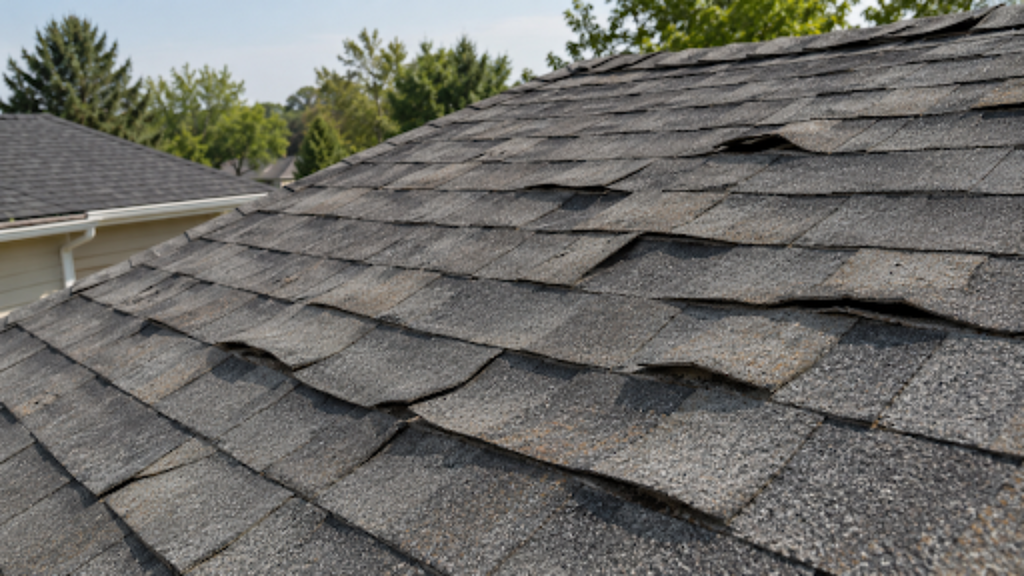
Worn asphalt shingles displaying distinct upward curling and buckling due to age and weather exposure.
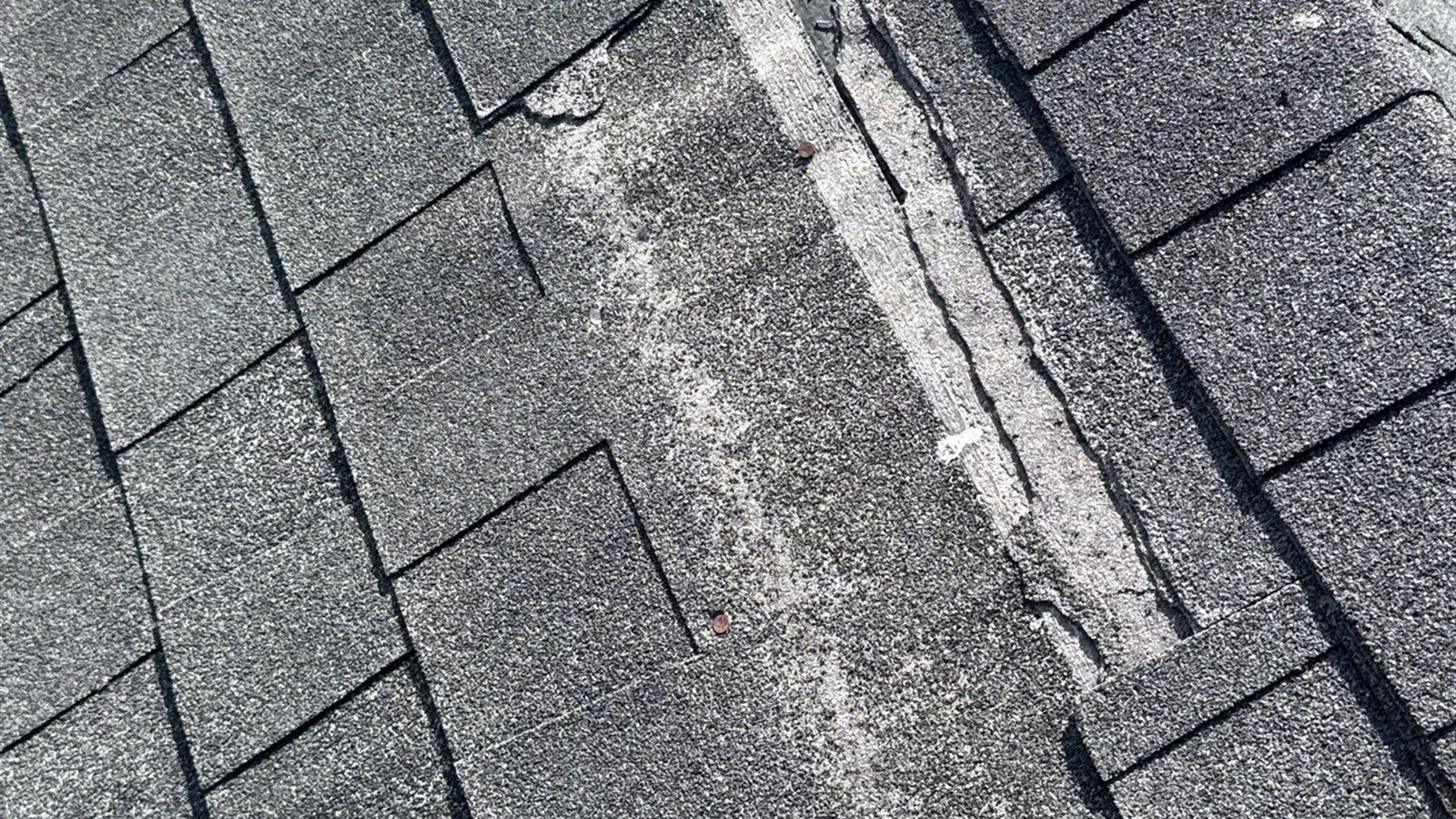
Shingles don’t last forever. Sun, wind, and Utah’s freeze-thaw cycles make them dry out, crack, and curl at the edges. Curled or cracked shingles may not shed water effectively, and strong winds can lift or tear them off.
Commonly seen on: Older asphalt shingle roofs, especially on slopes that get the most sun.
What it can turn into: Leaks, blown-off shingles, and rotted roof boards underneath.
How to be sure: Stand in the yard and use binoculars or your phone’s zoom. Look for edges that lift or curl, cracks, or missing pieces. Also check your lawn after a windy day for shingle pieces.
Also Read: How Long Does a Roof Last in Utah? Lifespans by Material and What Shortens Them
11. Damaged Flashing
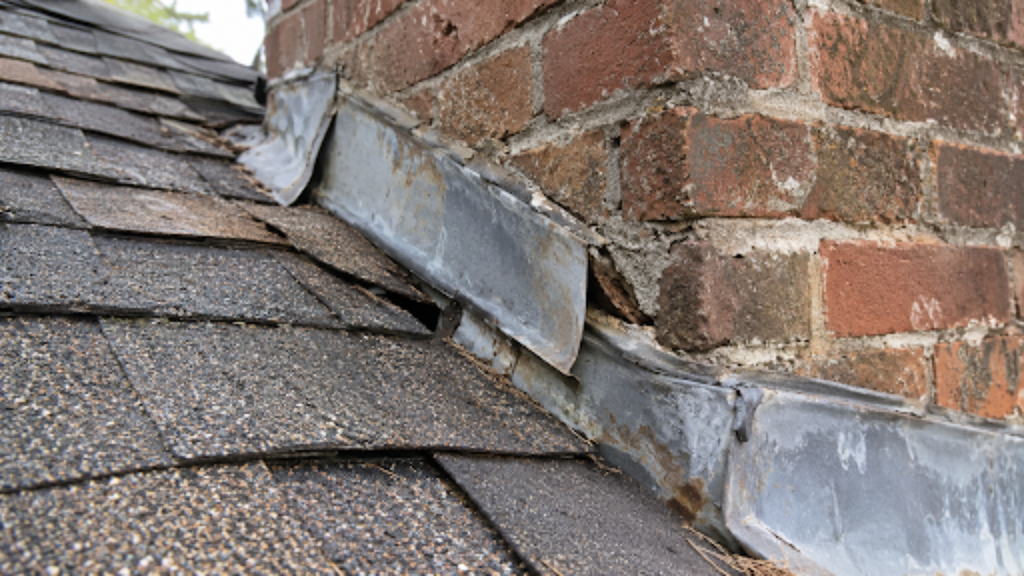
Damaged and detached metal chimney flashing creating a gap where water can enter along the brick wall.
Flashing is the thin metal strip that seals the joints on your roof, such as around chimneys, skylights, vents, and where the roof meets a wall. Over time, it can rust, bend, or pull loose, and the sealant around it can dry out and crack. Water can then enter through the gap.
Commonly seen on: Roofs with chimneys, skylights, dormers, and other roof joints that require flashing.
What it can turn into: Leaks at the joint, stains near the chimney or skylight, and rotted roof boards.
How to be sure: From the ground, look for rust, gaps, lifted metal, or peeling sealant. Inside, check for stains on the ceiling or wall near a chimney or skylight.
Also Read: Understanding Roof Flashing
12. Dark Streaks, Moss, or Algae
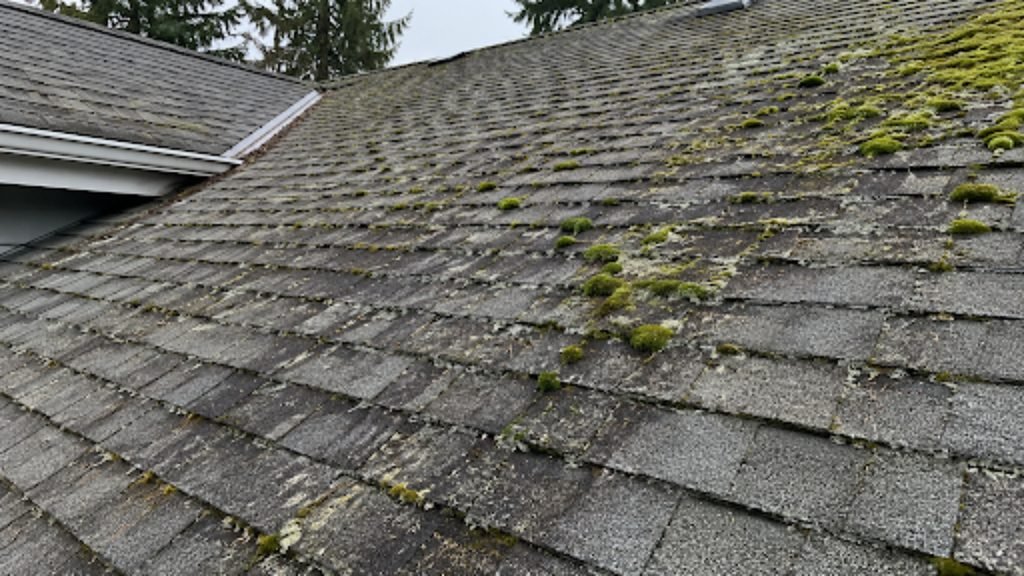
Green moss growth and dark algae streaking covering sections of an aging asphalt shingle roof.
Dark streaks on a roof are usually algae. Moss looks different: thick, green or brown clumps that soak up water. These growths are more common on shaded roof sections and beneath overhanging trees. Algae streaks are mostly cosmetic at first. Moss is the bigger worry because it holds moisture against the roof and can lift shingles.
Commonly seen on: Asphalt shingle roofs, wood shake roofs, and tile roofs, mostly on shaded sides.
What it can turn into: Shingle wear, trapped moisture, and lifted shingles that let water in.
How to be sure: Look from the ground, especially at shaded slopes. Algae usually appears as flat, dark streaks, while moss forms raised green or brown patches. Don’t scrape moss off or pressure wash your roof. It can strip the granules and damage the shingles.
13. A Sudden Spike in Your Electricity Bill
Not every roof problem shows up on a ceiling. Sometimes, the warning sign appears on your utility bill.
Your roof and attic work together to keep indoor air in and outdoor air out. Roof damage, air leaks, or inadequate attic insulation can affect your home’s energy efficiency. Wet insulation stops insulating well, and gaps let hot or cold air slip through. Your heating and cooling system then runs longer to keep up, and your bill climbs.
In Utah, this can happen twice a year: furnaces work harder in cold winters, and air conditioners work harder in hot summers.
Commonly seen on: Older roofs and homes with thin or damaged attic insulation.
What it can turn into: Higher monthly bills, extra wear on your furnace and AC, and hidden moisture damage in the attic.
How to be sure: Compare this month’s bill with the same month last year. Weather changes your bill too, so a year-over-year comparison is fairer than month-to-month. If the jump is large and nothing else has changed, look for other signs on this list, such as stains, damp insulation, or daylight through the roof boards. Rooms that feel hotter or colder than usual may provide another clue.
A spike alone doesn’t prove roof damage. An aging HVAC system or a rate change can cause it too, so use it as a sign to book an inspection.
What to Do When You Spot a Sign
You don’t need to know roofing to protect your roof. You just need to notice it, note it, and call.
- Stay off the roof. A wet or icy roof is dangerous, and walking on it can cause more damage.
- Take photos and write down when it showed up: after snow, after rain, after a shower, or after a cold night. That timing helps a roofer find the source faster.
- Book an inspection. Rooval Roofing offers free roof inspections with photos of everything we find. If a small repair is all you need, we’ll tell you.
Call the same day if water is dripping into your home, water is near a light or wiring, or your ceiling is sagging.
Also Read: Signs You Need a New Roof: Lifespans, Inspection Standards & Insurance Rules
Get a Free Roof Inspection in Utah
Not sure what you’re looking at? That’s what we’re here for. Rooval Roofing is a family-owned roofer based in Lehi, serving homeowners across Utah County, Salt Lake County, and Davis County. We’ll inspect your roof for free, show you photos of what we find, and tell you honestly whether you need a repair, a replacement, or neither.
Frequently Asked Questions
Look for stains on ceilings or upper walls, drips from lights or fans, damp insulation in the attic, or peeling paint near the ceiling line. If a stain grows after rain or snowmelt, the leak is active.
Yes. Water can soak into insulation and roof boards for weeks before it shows on a ceiling. That’s why a look in the attic matters.
Melting snow can back up at the roof edge or around flashing and work its way under the roofing. A stain near an outside wall after a melt is a common sign.
Clips that hug the shingle or gutter are safe. Nails, staples, and clips forced under shingles can leave holes or break the shingle seal.
A few can be normal. Frost or rust on many nail tips means moist air is reaching your cold attic, and over time that can rot the roof boards.