A roof inspection covers four areas: the shingles and roof surface, the flashing and anything that passes through the roof, the gutters and drainage, and the attic and ceilings inside. You can check all four from the ground, an upstairs window and the attic. Anything that means getting onto the roof is a job for a roofer.
Jump to the printRoof Inspection Checklist for Utah Homeowners able checklist ↓
A ceiling stain is often the first sign of a roof problem, and by then water may have been getting in for some time. A quick look at the roof from outside and a check of the attic can help you spot problems before they need bigger repairs. In Utah, snow, hail, wind and strong sun all wear on a roof, so check it each spring and fall.
Key Takeaways
- Stay off ladders against the house and off the roof. If you can’t see it from the ground, a window or the attic, leave it to a roofer.
- Check again after hail, high wind, heavy snow and the first thaw.
- Photograph anything you find. If water is coming in, call a roofer the same day.
- Just bought your home? Your home inspection report or the seller’s disclosure may list the roof’s age. Use this checklist to record the roof’s condition now, so you can spot changes later.
- Print the free one-page checklist and keep it with your house records.
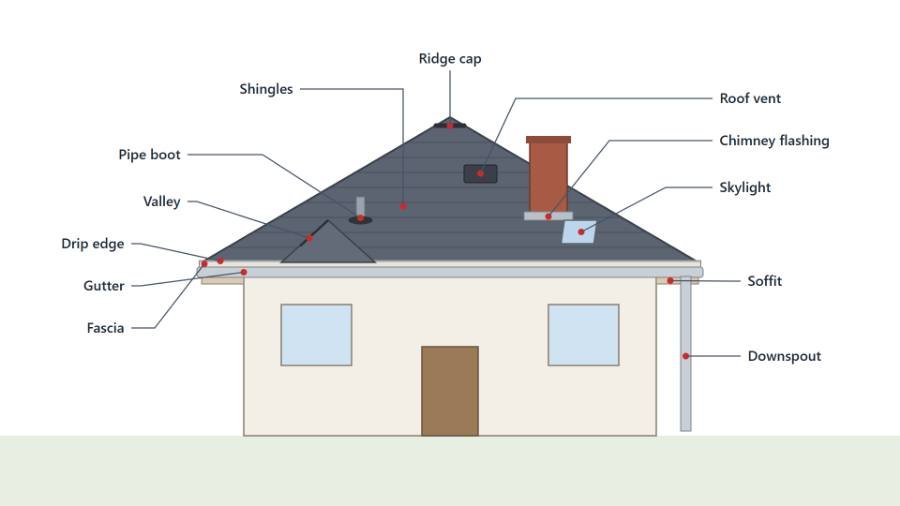
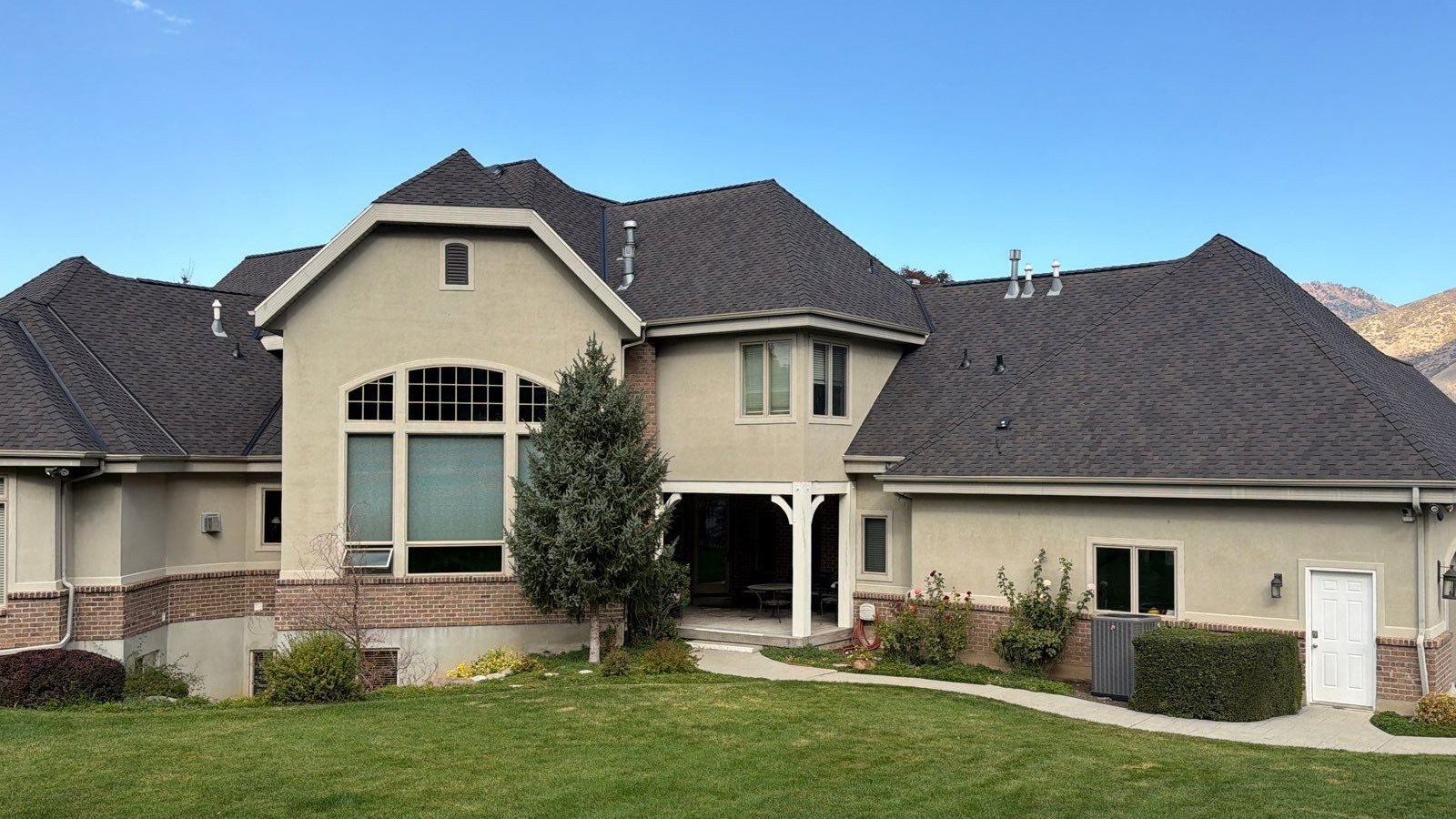
The parts of a roof this checklist covers.
How to Inspect Your Roof From the Ground
You can check most of a roof without leaving the ground. After a storm, inspect only from ground level, and at any time of year stay off the roof itself. Work through these steps in order.
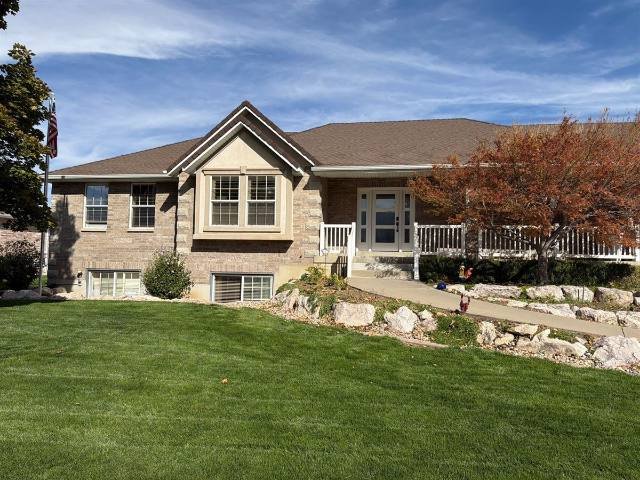
From the yard you can see most of the roof surface, the gutters and the fascia.
- Walk around the house. Look at every slope you can see. Binoculars help, and so does your phone camera zoomed in.
- Look out of upstairs windows. A window over a lower roof, a porch roof or a dormer (a window that sticks out of the roof) gives you a closer view. Look, but don’t climb out.
- Check the attic. Most attics have a hatch in a closet or hallway ceiling. Standing on a step ladder at the hatch, you can often see the rafters and insulation without going in. If you do go in, bring a flashlight and step only on the joists (the beams under the insulation); the ceiling between them won’t hold your weight. Damp spots and frost are easier to see on a cold morning or the day after rain or snowmelt.
- Leave the roof to a roofer. That includes ladders against the eaves (the lower edges of the roof), which are a fall risk too.
When to check: in spring once the snow has melted, in fall before the first snow, after hail, high wind or heavy snow, and whenever a new ceiling stain appears. Have a professional look at the roof at least once a year; how often to inspect your roof in Utah explains why.
Roofing Inspection Checklist: 4 Areas to Check
The notes in parentheses show where to look from. Items marked Utah deserve extra attention in our climate.
1. Roof Surface and Shingles
Asphalt shingles have an estimated life of about 20 years for 3-tab and about 30 years for architectural shingles. Three-tab shingles are flat and single-layer; architectural shingles are thicker and layered. Utah’s sun, hail and freeze-thaw cycles can shorten a roof’s life.
- Missing shingles (ground, zoom): gaps, bare patches, or shingle pieces in the yard after wind.
- Curling or buckling shingles (ground, zoom): edges that cup or lift, or shingles with a wavy hump in the middle.
- Cracked shingles (ground, zoom): splits across the shingle.
- Granule loss (ground, gutters): dark, smooth patches where the sand-like coating has worn off, or heavy granules in the gutters and at downspout outlets.
- Ridge caps (ground, zoom): the shingles along the peak. Look for cracked, missing or lifted pieces.
- Popped nails (ground, zoom): nail heads pushing up under or through the shingles.
- The sunniest slopes (Utah, ground): the slopes facing south and west get the most sun. Compare them with the shadier slopes; curling, cracking and faded patches can show up there first.
- A sagging roof (ground): stand back and look along the peak and the lower edge. A peak or slope that dips needs a roofer right away.
- Moss on the roof or dark streaks (ground): note where they are, and don’t scrub or pressure-wash the shingles, which can loosen and remove the granules.
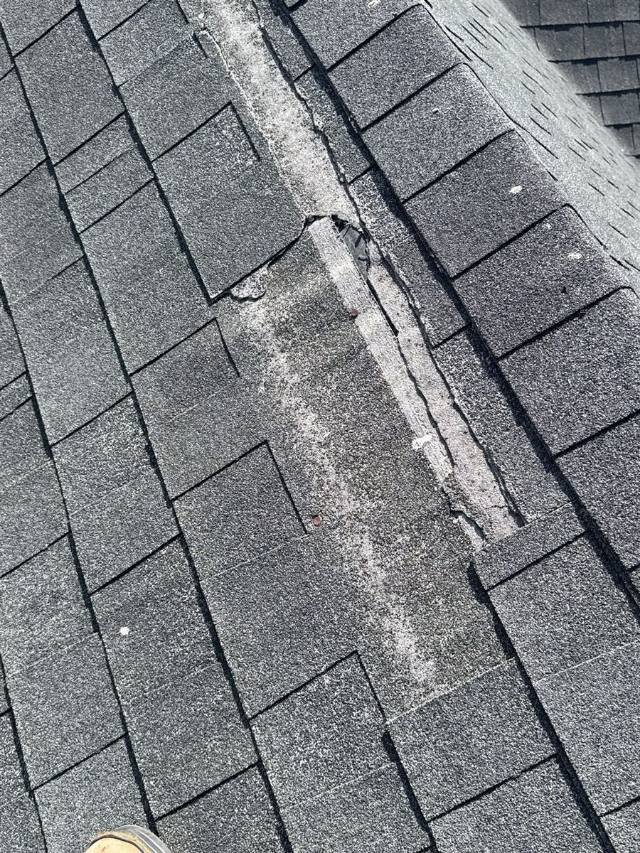
Missing shingles leave the layer underneath open to sun and water.
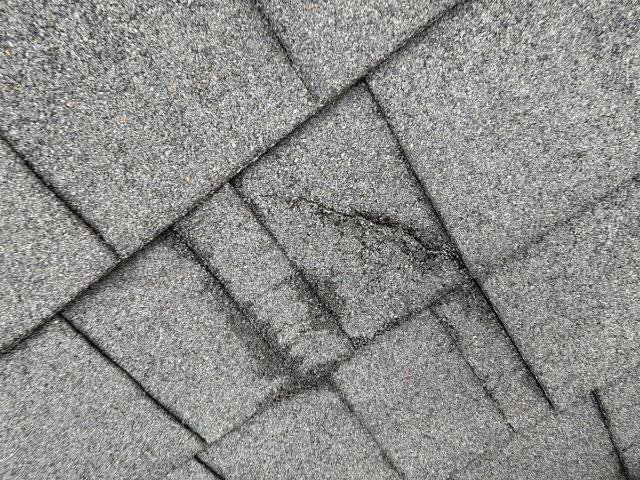
Cracks like these let water reach the nails and the roof deck.
2. Flashing and Roof Penetrations
Flashing is the metal that seals the joints where the roof meets a chimney, a wall or a vent. Those joints are among the most leak-prone parts of a roof, so they deserve a close look.
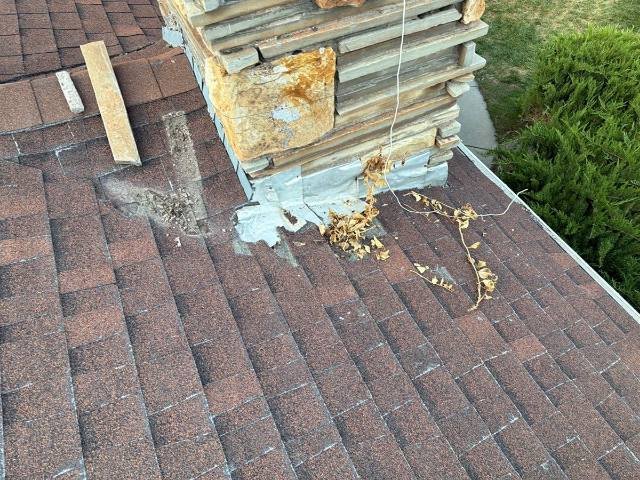
The joint where the chimney meets the roof is a common place for leaks to start.
- Chimney flashing and the chimney (ground, zoom): metal that is rusted, lifted or pulled away from the brick; cracked mortar; a missing or damaged chimney cap.
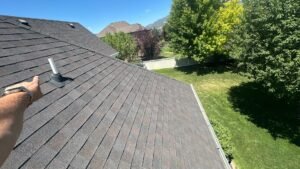
- Pipe boots (ground, zoom): the rubber collars around plumbing vent pipes. Look for cracks, splits or a collar that has slid down the pipe.
- Roof vents and skylights (ground, upstairs window): cracked vent covers, broken pieces, or sealant that has pulled away.
- Swamp coolers, solar mounts and satellite dishes (Utah, ground): each one is fastened through the roof. Check that it sits level and nothing around it looks loose or stained.
- Where the roof meets a wall (ground, upstairs window): loose flashing, or stains and rot on the siding below it.
- Drip edge (ground): the metal strip along the roof’s lower edge. Look for bent, loose or missing sections.
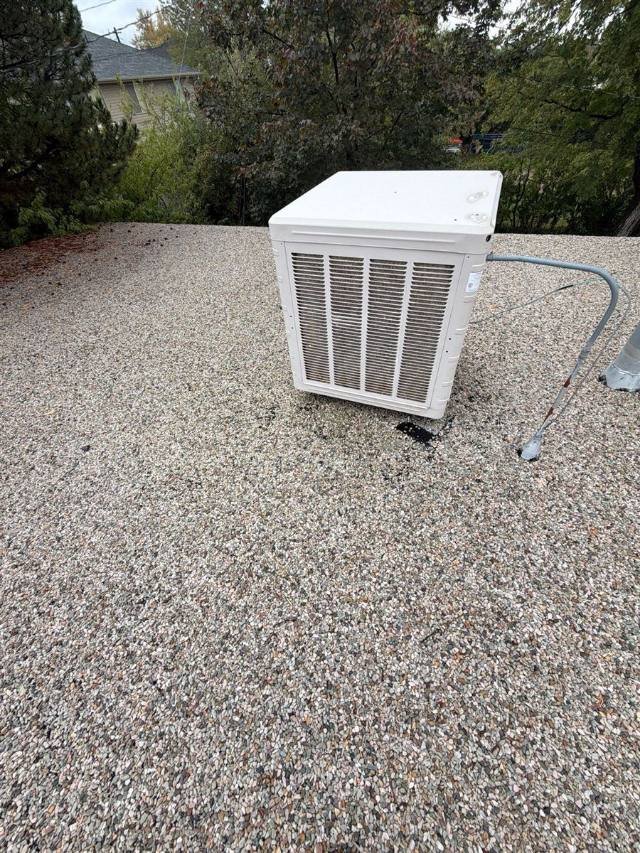
A rooftop swamp cooler is fastened through the roof, so check around its base.
Why Flashing Fails
See where flashing most often fails on Utah homes and how a roofer repairs it:
3. Gutters, Valleys and Drainage
- Gutters (ground): overflow marks down the siding, standing water, or a run that dips between brackets.
- Gutters pulling away (ground): loose brackets, or a gutter separating from the fascia.
- Downspouts (ground): disconnected sections, or water dumping against the foundation.
- Valleys (ground, zoom): the channels where two slopes meet. Look for leaves and debris, worn shingles or rusted metal, and keep valleys and gutters clear.
- Fascia and soffit damage (ground): the fascia is the board behind the gutter, and the soffit is the underside of the roof overhang. Soft, stained or rotting wood and bubbled paint are signs of water getting in.
- Ice along the eaves (Utah, ground, winter): thick ridges of ice at the roof’s lower edge. Ice that builds up in the gutters can back meltwater under the shingles and into the house.
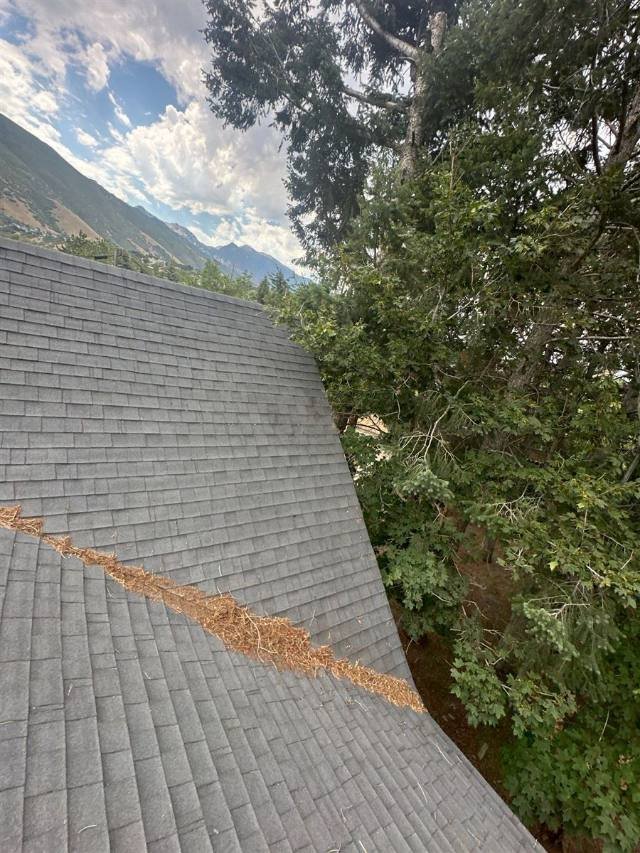
Debris in a valley holds water against the shingles.
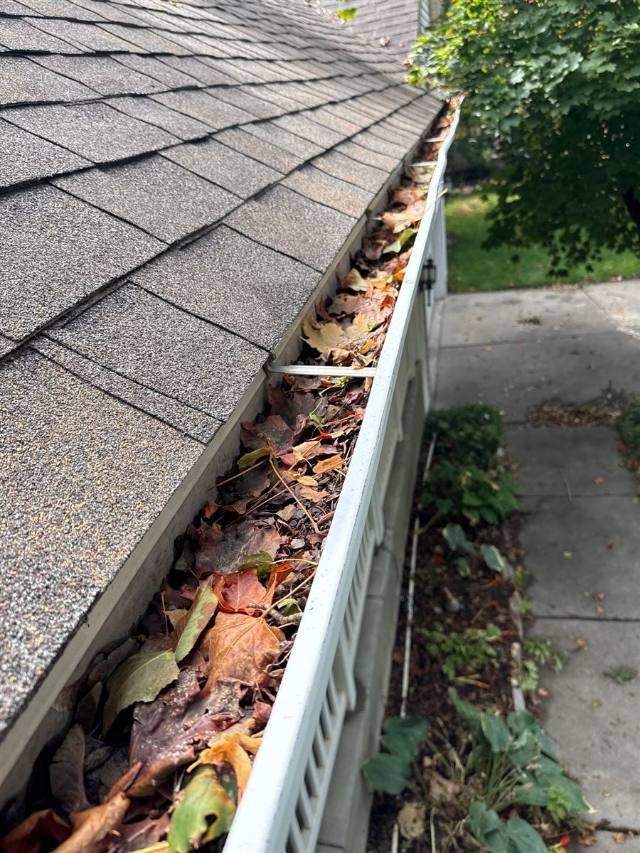
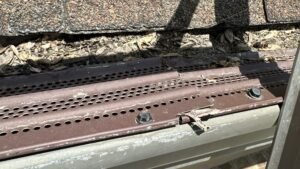
A clogged gutter can overflow and send water behind the fascia.
4. Attic and Interior Ceilings
If you’re trying to trace a roof leak, check the underside of the roof deck from the attic. The roof deck is the layer of boards the shingles are nailed to. Look for moisture or staining, particularly around chimneys, vent pipes and valleys.
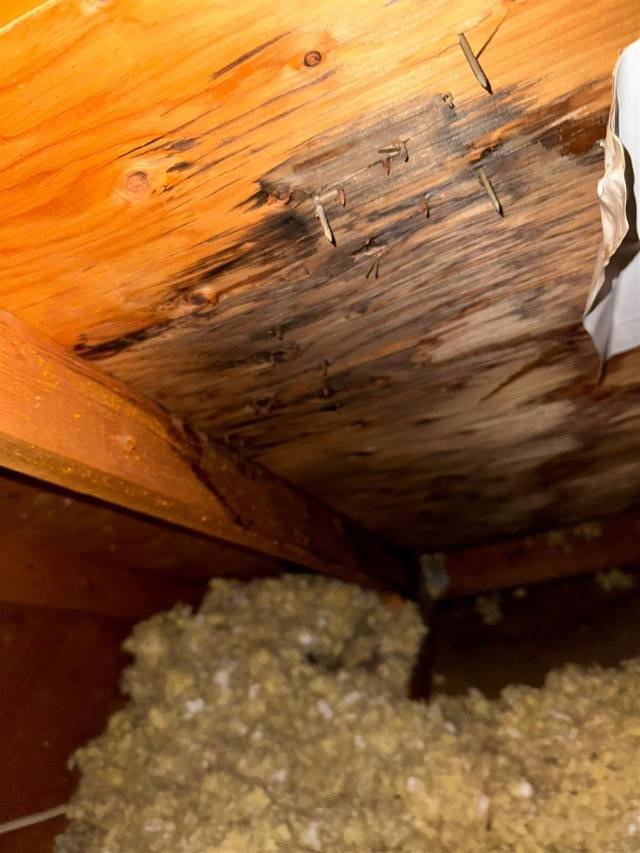
Dark stains on the underside of the roof deck are a sign of moisture getting in.
- Daylight through the roof deck (attic, lights off): pinpoints of light anywhere other than at the vents.
- Wet insulation or fresh, damp stains (attic): moisture that needs checking right away. Damp insulation near the eaves can point to a roof leak or an ice dam.
- Old, dry stains or dark rings on the roof deck and rafters (attic): signs of a past leak that still need a roofer’s look.
- Blocked soffit vents (attic): insulation packed against the eaves where air should flow in from the soffits.
- Frost or rust on nail tips (Utah, attic, winter): a sign that moisture is building up in the attic.
- Mold, mildew or a musty smell (attic).
- Bathroom or kitchen fans that vent into the attic (attic): fan ducts should run outside, because a fan that vents into the attic is a major source of attic moisture.
- Ceiling stains (inside, top floor): note where each one is and when it appeared. Stains on top-floor ceilings are a roof warning sign.
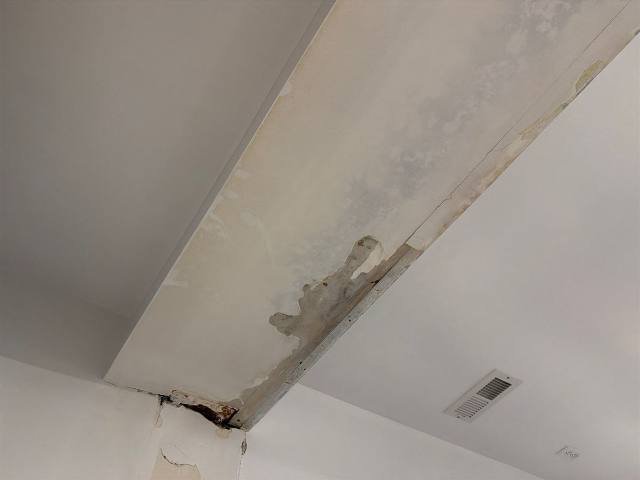
A new or growing ceiling stain means it is time to call a roofer.
Is Your Attic Getting Enough Airflow?
Frost on nails, icicles and a musty attic can trace back to poor airflow, and this guide shows how ridge and soffit vents work together:
Free Printable Roof Inspection Checklist and Form (PDF)
Write down the date, the roof’s age and material, and the date of the last big storm, then work down the list. Photograph anything that hits a red flag.
| What to check | Look from | Red flag | How soon |
| Roof surface | |||
| Missing shingles | Ground, zoom | Any missing | Book an inspection |
| Curling, buckled or cracked shingles | Ground, zoom | More than 3 or 4 shingles affected | Book an inspection |
| Granule loss | Ground, gutters | Bare, dark patches, or more than a small handful of granules after a storm | Book an inspection |
| Ridge caps and popped nails | Ground, zoom | Cracked or lifted caps; nails pushing up | Book an inspection |
| Sagging roof | Ground | Any sag or dip in the roofline | Call now |
| Flashing and penetrations | |||
| Chimney flashing and cap | Ground, zoom | Rusted, lifted or pulled away; cracked mortar | Book an inspection |
| Pipe boots | Ground, zoom | Cracked or split rubber | Book an inspection |
| Vents, skylights, roof-to-wall joints | Ground, window | Cracked covers or sealant pulled away | Book an inspection |
| Swamp cooler, solar, dish mounts | Ground | Loose, tilted or stained around the base | Book an inspection |
| Gutters and drainage | |||
| Gutters overflowing | Ground | Overflow marks or standing water | Keep an eye on it |
Gutters pulling away | Ground | Loose brackets or a gutter pulling off the fascia | Book an inspection |
| Valleys | Ground, zoom | Debris, worn shingles or rusted metal | Book an inspection |
| Fascia and soffit damage | Ground | Soft, stained or rotting wood | Book an inspection |
| Ice along the eaves (winter) | Ground | Thick ice ridges at the roof edge | Book an inspection |
| Attic and ceilings | |||
| Daylight through the roof deck | Attic | Light anywhere other than vents | Call now |
| Wet insulation or fresh, damp stains | Attic | Any | Call now |
| Old dry stains, mold or a musty smell | Attic | Any | Book an inspection |
| Frost or rust on nails | Attic | Any | Book an inspection |
| Ceiling stains | Top floor | A new or growing stain | Call now |
Utah Roof Checks After Hail, Wind and Snow
- After hail. Check gutters, vents and other metal around the house for fresh dents. Dents on other items around the house are a good sign that hail has hit, and real hail damage on shingles is scattered in a random pattern. Hail an inch or larger can damage roofs.
- After high wind. Walk the yard for shingle pieces, then check each slope for wind-damaged shingles: gaps, lifted or creased edges, and loose ridge caps.
- After heavy snow and the first thaw. Look for thick ice along the eaves, then check top-floor ceilings and the attic for new damp spots in the days after the melt.
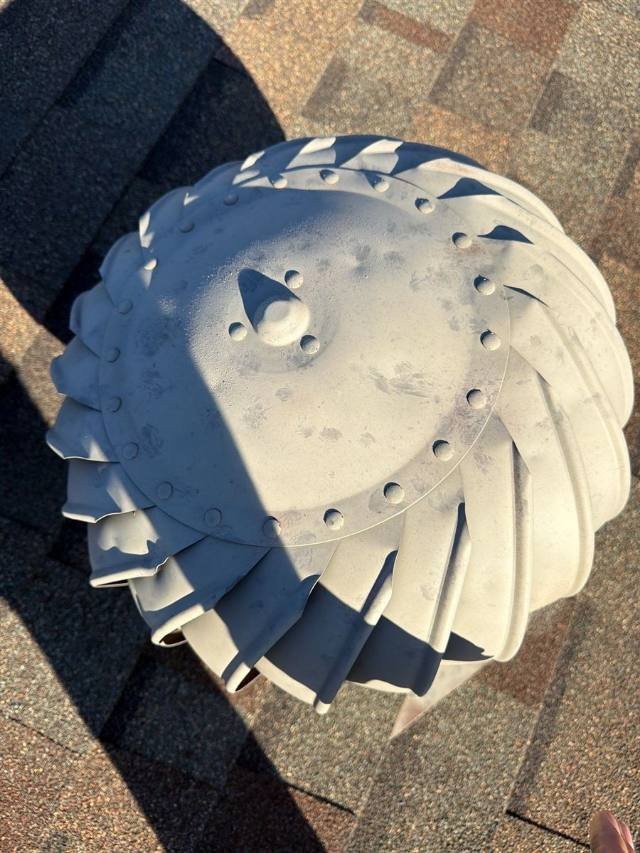
Dents on soft metal like this vent are a sign hail has hit the roof.
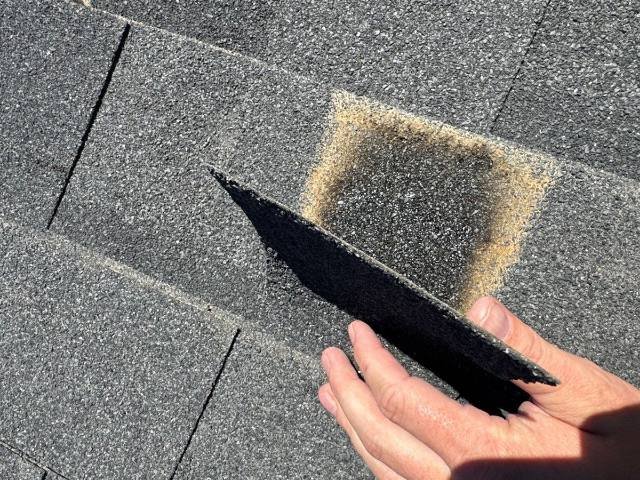
A creased tab has been lifted by wind and may no longer seal.
Checking for Hail Damage?
Our hail guide covers the signs a roofer looks for after a storm:
What to Do If You Find Roof Damage
- Call now if water is coming in, the attic insulation is wet, a ceiling stain is new or growing, the roof sags or you can see daylight through the roof deck. Call Rooval Roofing at (385) 424-8810. In most cases we can be on your roof the same day or the You keep the full photo record whether or not you hire us. Book a free roof inspection.next. We stop the water first with a tarp or temporary seal, then schedule the permanent repair once the roof is dry. If you plan to make an insurance claim, check with your insurer before the permanent repair.
- Book an inspection for anything else on the red-flag list, or anything in the lists above that worries you. A roofer can tell you whether it is a small repair or something bigger.
- Keep an eye on overflowing gutters, and note them on your checklist for next time.
- If it may be storm damage, the Utah Insurance Department advises you to:
- call your insurance company or agent as soon as possible;
- take photos or video of the damage;
- save receipts for temporary repairs;
- wait for your insurer to inspect before permanent repairs.
If you need a roof inspection for an insurance claim, our inspection photos can go straight into your claim records.
Repair or Replace?
These two guides explain how to tell a small repair from a bigger job:
What Does a Professional Roof Inspection Include?
A roofer can check the parts you can’t see from the ground. A residential roof inspection covers the roofing materials, drainage, flashing, skylights, chimneys and everything else that passes through the roof.
Every Rooval Roofing inspection follows the same four steps:
- We walk the property first. We photograph all four sides of the house before anyone goes up.
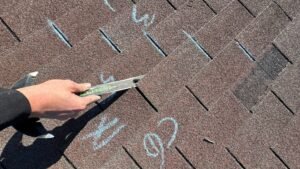
- We document every slope. We photograph each slope and mark every problem spot so it shows clearly in your photos.
- We check the attic. When the attic is accessible, we look for moisture and staining on the underside of the roof deck, signs that may not be visible on the shingles.
- We check before we recommend. We flex a shingle by hand to see whether it still bends without cracking, then tell you whether the roof needs a repair, a replacement or nothing yet.
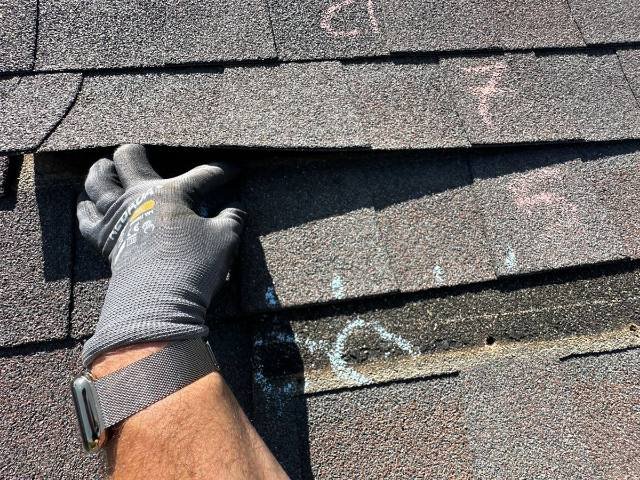
On an inspection, each problem spot is marked so it shows clearly in your photos.
You keep the full photo record whether or not you hire us. Book a free roof inspection.
Frequently Asked Questions
A professional roof inspection may cost anywhere from $100 to $500, depending on the roof, location, and scope of the inspection. Some companies, like Rooval Roofing though, offer free roof inspections. If you’re buying a home, a general home inspection also typically includes a visual check of the roof.
A home inspection doesn’t pass or fail a roof. The inspector reports anything that is badly deficient or near the end of its service life. On a roof, that can include active leaks, missing or damaged shingles, failed flashing or a sagging deck.
Before the first snow, have the gutters and valleys cleared, check the pipe boots and chimney flashing from the ground, make sure insulation isn’t blocking the soffit vents, and look in the attic for damp insulation or stains. A small flashing or gutter problem is easier to fix in the fall than in January.
A roof inspection report typically includes photos of the roof’s condition, documented damage or areas of concern, and recommendations for repairs or further evaluation. Rooval Roofing’s report includes photos of every roof slope and problem spot, the location of each issue, and a recommendation that may be to leave the roof as it is for now.